Exports: A journey of Vietnam’s position growth, affirmation

From the difficult years of wartime, when exports were limited to a handful of basic goods, Vietnam has grown into a major trading nation in the region and one of the world’s leading export-driven economies, with total trade turnover approaching 800 billion USD.

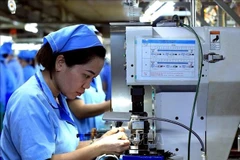
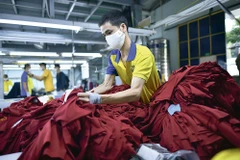
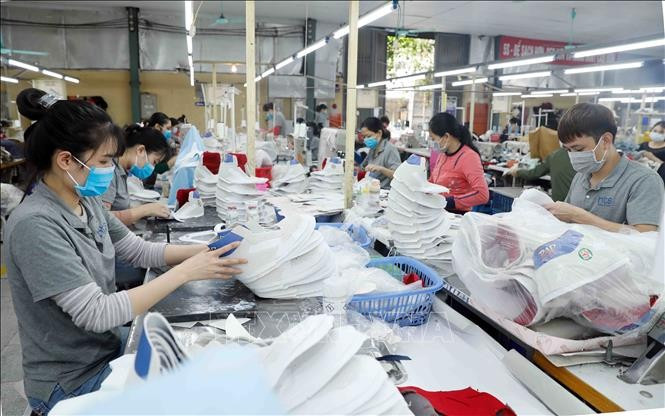
Producing shoes for export to the EU at Truong Xuan footwear company in Hanoi. (Photo: VNA)

Hanoi (VNA) – Over the past 80 years of national construction and development, Vietnam’s export journey has vividly reflected historic milestones, the country’s dynamic economic transformation, and its rising position on the international stage.

From the difficult years of wartime, when exports were limited to a handful of basic goods, Vietnam has grown into a major trading nation in the region and one of the world’s leading export-driven economies, with total trade turnover approaching 800 billion USD. The country has consistently posted trade surpluses in recent years, making significant contributions to GDP growth as well as the cause of industrialisation and modernisation.

Driving force for growth

Experts noted that in the early years of the Doi Moi (renewal) period, despite limited resources and economic hardships, exports of agricultural products, minerals and light industrial goods played a vital role in generating foreign exchange and opening gateways to international markets. From the first shipments of rice and coffee to the world, to textiles and footwear exported to the Soviet Union and Eastern Europe, and later expanding to the US, Japan and the EU, Vietnam steadily laid the foundation for an export-oriented economy.

As Vietnam normalised ties with many countries, joined the Association of Southeast Asian Nations (ASEAN), and later acceded to the World Trade Organisation (WTO) in 2007, the country's exports recorded breakthrough growth.

According to experts, export successes have stemmed not only from production efforts but also from a strategy of deep international integration. Vietnam has signed a series of new-generation free trade agreements (FTAs), including high-standard and comprehensive deals such as the Comprehensive and Progressive Agreement for Trans-Pacific Partnership (CPTPP), the EU–Vietnam Free Trade Agreement (EVFTA), and the Regional Comprehensive Economic Partnership (RCEP).

Minister of Industry and Trade Nguyen Hong Dien said many activities have been organised to connect Vietnamese producers with foreign buyers through trade promotion channels and the overseas trade office network. At the same time, efforts have been made to support enterprises with tailored market information, remove trade barriers, and help them maintain traditional markets while expanding into new ones.

In the past seven years, Vietnam has consistently ranked among the world’s top 20 economies in terms of trade scale, while also standing among the 15 most attractive destinations globally and regionally for foreign direct investment (FDI).

Overcoming challenges

However, experts also pointed out that Vietnam’s exports face new challenges. While export turnover has grown rapidly, reliance on the foreign-invested sector remains high, especially in electronics, phones and computers.

Most domestic enterprises still participate in lower value-added segments and a strong domestic supply chain has yet to be established. In addition, strict sustainability requirements, carbon emission reduction commitments, and environmental and labour standards from markets such as the EU, US and Japan are placing increasing pressure on exporters. Without timely adaptation, businesses risk losing competitiveness or even facing new trade barriers.

Nguyen Anh Son, Director of the Ministry of Industry and Trade’s Agency of Foreign Trade, forecast that the 2025–2030 period will witness intensified global competition for resources, markets, technologies and high-quality human resources. Sustainable development, green growth and circular economy will become inevitable global trends.

Therefore, Vietnam must proactively and flexibly adapt, seize opportunities from supply chain shifts, and shield domestic enterprises from geopolitical risks and protectionism. Three key factors have been identified: diversifying markets, strengthening internal capacity, and accelerating technological transformation./.

VNA
See more

An art performance at 2026 Dak Lak Durian Festival. (Photo: VNA)

Dak Lak Durian Festival seeks to elevate Vietnam’s agricultural brand globally

Dak Lak has about 41,000ha of durian, with this year’s output estimated at nearly 500,000 tonnes. The province has 280 growing-area codes covering around 7,500ha, along with 41 packing facilities approved for export. In 2025, Dak Lak’s durian sector contributed about 1.1 billion USD to the country’s export turnover.

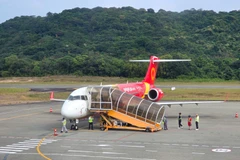
Delegates cut the ribbon to inaugurate the Ho Chi Minh City-Shenzhen direct air route. Photo: baodautu.vn

Vietravel Airlines launches direct Ho Chi Minh City-Shenzhen route

Vietravel Airlines' new route connects Tan Son Nhat International Airport (SGN) in Ho Chi Minh City with Shenzhen Bao'an International Airport (SZX), meeting growing demand for travel between the two markets for investment, trade, tourism and visiting relatives.

Thanks to digital transformation among local officials, Tam Dao commune of Phu Tho province has achieved an almost 100% on-time rate for processing administrative applications, helping improve public services for residents. (Photo: VNA)

Institutional reform fuels private sector's growth in Phu Tho province

The private sector is increasingly emerging as a key growth engine of the economy. To unleash its potential and ensure sustainable development, the northern province of Phu Tho is stepping up institutional and administrative reforms to cut costs, shorten procedures, and build a more transparent, business-friendly investment climate.

Hoa Phat Wharf inside the Dung Quat Economic Zone (Photo: VNA)

Dung Quat EZ, Quang Ngai IPs draw nearly 19.4 bln USD

The Dung Quat Economic Zone and Quang Ngai industrial parks have so far attracted 441 projects worth around 19.4 billion USD, according to the Dung Quat Economic Zone and Quang Ngai Industrial Parks Authority (DEZA).

The Kim Long Motor Hue factory (Photo: VNA)

Hue courts capital to turn industrial zones into growth engine

The economic and industrial zones in Hue city host more than 200 active investment projects worth over 152 trillion VND (5.84 billion USD), with 139 already operational. Since the start of 2026, they have generated about 32 trillion VND, contributed 4.2 trillion VND to the state budget and brought in 730 million USD in exports, while employing more than 46,000 workers.

Processing cashew nuts for export at Nguyen Thong Co., Ltd. in Dak Lak province. (Photo: VNA)

Vietnam’s exports to New Zealand post strong growth

According to the Customs Department, two-way trade reached 844 million USD in the first half of 2026, of which Vietnam’s exports to New Zealand totaled 399.7 million USD, up 18.8% year-on-year, while imports stood at 444 million USD.

Starting from September 2026, agricultural products from the Mekong Delta are expected to be transported directly from Cai Cui Port to Guangxi, China. (Photo: VNA)

Investing in logistics to boost agricultural production and exports

Logistics is increasingly becoming a major bottleneck for exports as transport costs rise and requirements for data management, low emissions and supply chain transparency become more stringent, requiring coordinated investment in logistics infrastructure, data infrastructure and transport capacity.

Harvesting rice in the Mekong Delta (Photo: VNA)

Vietnam seen as gateway for Canadian farm produce to ASEAN

As Canada steps up trade diversification and seeks to reduce its dependence on the North American market, Vietnam could serve both as a market for Canadian goods and a base for Canadian businesses to build production capacity and expand operations in the region.

Illustrative image (Photo: VNA)

Turkish cooperatives open sourcing channel for Vietnamese businesses

The Vietnam Trade Office recommended that Vietnamese businesses in agriculture and food actively study cooperative networks in different localities in Türkiye and consider them an additional channel for accessing raw materials, processing partners, and distribution networks.

Delegates at the signing ceremony (Photo: VNA)

VPI, Beicip-Franlab Asia deepen oil, gas cooperation

Under the MoU, VPI and Beicip-Franlab Asia will undertake advanced studies in geology, geophysics, and reservoir engineering to support exploration, field development, and oil and gas resource assessment.