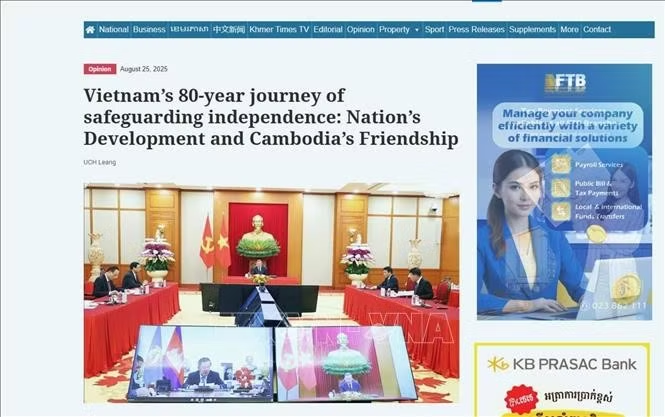
Phnom Penh (VNA) – The August Revolution’s victory in 1945 and the Declaration of Independence on September 2, 1945, marked a historic turning point for the Vietnamese people, bringing the nation into a new era of freedom, independence, and development as well as helping it safeguard cultural heritage and promote Vietnamese values to the world, a Cambodian scholar has written.
In an article posted on the Khmer Times on August 25, Uch Leang, Acting Director of the Asia-Africa and Middle East Research Department at the Cambodia Institute of International Relations under the Royal Academy of Cambodia (RAC), highlighted that Vietnam’s August Revolution and the declaration of independence inspired national liberation movements across the globe, affirming a universal truth of the era: every nation has the right to independence, freedom, and the pursuit of happiness.
The Cambodian scholar said that over the past eight decades, Vietnam has strengthened its political and diplomatic standing, becoming a trusted partner and an active and responsible member of the international community. Economic reforms and the transition toward a socialist-oriented market economy, combined with openness and integration, have driven Vietnam’s robust growth.
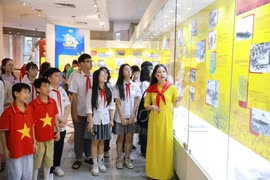
Besides, culture has been seen as the spiritual foundation of the society and the intrinsic strength and driver of sustainable development. Uch Leang observed that the Vietnamese culture does not only assert its unique identity at home but also shines internationally, elevating the nation’s image in an era of globalisation.
He noted that Vietnam’s cultural heritage has never been more widely preserved and promoted than today. The country now counts nearly 50 UNESCO-recognised heritage items, spanning cultural and natural sites as well as global geoparks. By blending preservation with innovation, Vietnam has breathed new life into its millennia-old traditions, transforming them into a dynamic source of soft power that fuels socio-economic development.
Touching on the Vietnam – Cambodia relations, he said that the sound ties have been demonstrated through regular high-level visit and multiple signed cooperation documents.
Reviewing highlights in the Vietnam – Cambodia friendship and cooperation, he said two-way trade surpassed 10 billion USD in 2024, with vast economic potential. Beyond commerce, Vietnam has supported Cambodia in human resources development through scholarships, training programmes, and collaboration in healthcare, agriculture, and infrastructure. In defence and security, the two countries continue joint border patrols and exchanges to ensure peace and order along shared frontiers.
Regional experts assessed that strengthening Cambodia–Vietnam friendship and comprehensive cooperation not only benefits both countries but also contributes significantly to peace, stability, and development in Southeast Asia. In a complex world marked by geopolitical competition and non-traditional security challenges such as climate change and pandemics, enhancing neighbourly cooperation is more vital than ever, he wrote.
Vietnam and Cambodia can complement each other in development initiatives. Vietnam possesses a dynamic economy and abundant human resources, while Cambodia holds advantages in agriculture, tourism, and strategic geographical positioning. Bilateral cooperation will create new opportunities, contributing to improved living standards for citizens of both nations. Additionally, positive neighbourly relations provide the foundation for a common voice on ASEAN issues, helping elevate the region's international standing./.

Unity, innovation propel Vietnam into new era: Italian researcher
The aspiration for independence, self-reliance, and resilience, together with the leadership of the Communist Party of Vietnam, created the strength that led to the victory of the August Revolution and laid the foundation for Vietnam's subsequent development.