Laos sets major goals in five-year socio-economic development plan

Laos targets average annual gross domestic product (GDP) growth of at least 6%. By 2030, GDP per capita is projected to reach 3,104 USD, while gross national income (GNI) per capita is expected to rise to 2,914 USD.

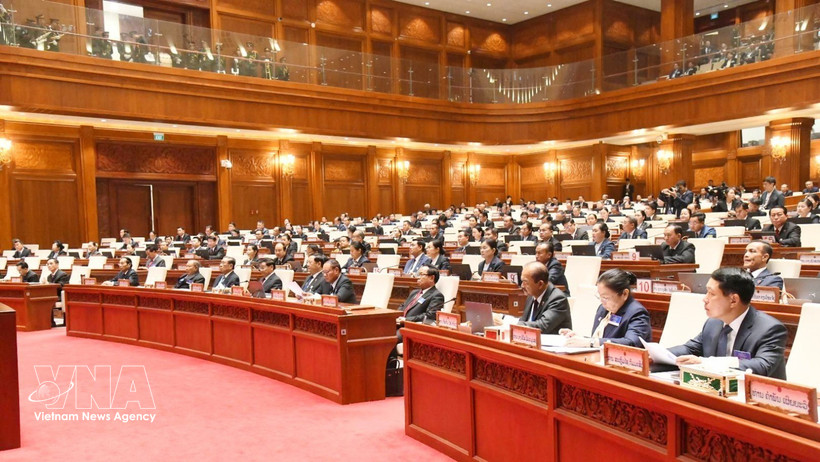
Deputies attend the first session of the 10th National Assembly of Laos. (Photo: VNA)

Vientiane (VNA) – Reporting to the first session of the 10th National Assembly of Laos on March 23 on the direction of the country’s 10th five-year national socio-economic development plan for 2026–2030, Prime Minister Sonexay Siphandone said the strategy aims to advance the country’s development and enable it to graduate from least-developed status in a sustainable and high-quality manner through five principal objectives.

First, on the economy, Laos targets average annual gross domestic product (GDP) growth of at least 6%. By 2030, GDP per capita is projected to reach 3,104 USD, while gross national income (GNI) per capita is expected to rise to 2,914 USD.

Second, in the cultural and social sphere, the plan seeks to increase enrolment of five-year-old children to 90% and reduce lower secondary school dropout rates to below 8%. Health indicators are to be further improved, the poverty rate reduced to single digits, and the quality of human resources and vocational training strengthened.

Third, on the environment, Laos aims to raise forest coverage to 65%, cut emissions while enhancing greenhouse gas absorption capacity, and expand meteorological and hydrological monitoring systems in disaster-prone areas.

Fourth, regarding international cooperation and integration, the country plans to upgrade and renovate around 1,450 kilometres of transport routes along ASEAN economic corridors, alongside administrative reforms to shorten the time required for export-import licensing and certification.

Finally, in governance and justice, the Lao government intends to improve administrative efficiency, expand one-stop public service models and increase the rate of resolution for criminal and civil cases./.
VNA

See more

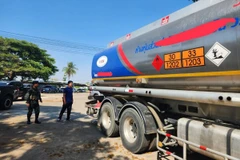
Officials inspect the 10-wheel tanker found smuggling fuel to Myanmar in Mae Sot border district on Sunday. (Photo:bangkokpost.com)

Thailand seizes 20,000 litres of diesel bound for Myanmar

Authorities of Thailand's Tak province have ordered intensified patrols and stricter inspections to prevent fuel stockpiling and illegal cross-border exports. They also called on local residents to report any suspicious signs related to fuel hoarding or smuggling.

Illustrative image (Photo: Internet)

Wildfires surge to 96 hotspots in Thailand

According to the provincial forest fire and haze prevention centre, satellite data from the Suomi NPP VIIRS system recorded the hotspots at 02:13. The fires were spread across multiple districts though firefighting teams have been working around the clock to contain the blazes.

In major cities such as Hanoi and Ho Chi Minh City, demand for pet-related services is surging. (Photo: VNA)

Vietnamese pet market attractive to RoK businesses

RoK pet food companies are increasingly targeting Vietnam as a key growth market, leveraging the country’s rapidly developing pet economy and rising demand for premium pet care products in Southeast Asia.

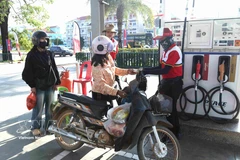
Residents refuel at a petrol station in Stung Treng province, north-eastern Cambodia. (Photo: VNA)

Cambodia introduces energy-saving measures amid Middle East conflict

Despite these challenges, the government noted that Cambodia’s fuel and electricity supply remains stable, supporting economic activities and public service delivery, based on assessments conducted with the Ministry of Mines and Energy, Electricité du Cambodge (EDC), and fuel import companies.

Coordinating Minister for Economic Affairs Airlangga Hartarto in a press statement at the Presidential Palace Complex, Jakarta on March 19. (Photo: ANTARA)

Indonesia pushes sustainable energy transition

Diesel plants remain widely used but should gradually be replaced by renewable energy sources, particularly solar power, due to their economic and environmental advantages, said an Indonesian minister.

Illustrative Image (Photo: bangkokpost)

Asian Durian Brand Conference held in Thailand

The first Asian Durian Brand Conference took place in Chanthaburi province, Thailand, from March 21–22, drawing wide participation from private enterprises, organisations and industry associations involved in the durian sector from both Thailand and China.

Foreign tourists in Thailand. (Photo: nationthailand.com)

Thailand considers cutting visa-free stay to 30 days

The Thai Foreign Ministry’s visa committee had concluded that a 60-day stay may be longer than necessary for most travellers and could create loopholes for people seeking to remain in Thailand without the appropriate visa.

Indonesian President Prabowo Subianto in a meeting discussing energy efficiency to anticipate the threat of an oil crisis stemming from the war in the Gulf countries in the Middle East at the Presidential Palace in Jakarta on March 19. (Photo: ANTARA)

Indonesia to roll out energy-saving measures to ensure stability

According to the Presidential Secretariat, the measures aim to maintain a sustainable energy supply while supporting economic stability. Close coordination among ministries is expected to ensure policies are effectively implemented, well-targeted, and do not disrupt public economic activities.

Singapore probes largest mobile network disruption

Singapore probes largest mobile network disruption

The Infocomm Media Development Authority (IMDA) has launched an investigation into mobile network disruptions affecting Singtel, the island nation’s largest telecom operator, between March 16 and 18.

Prime Minister Anutin Charnvirakul (centre) chairs a special meeting of the Joint Management and Monitoring Centre for the Situation in the Middle East on March 19. (Photo: Bangkok Post)

Middle East tensions prompt Thailand to act on fuel shortages

Thai Prime Minister Anutin Charnvirakul emphasised that Thailand’s oil reserves are sufficient for around 100 days, up from 62 days at the onset of the crisis, adding that emergency fuel injections into the supply system are being accelerated and the situation is expected to return to normal within one to two weeks.