Vietnamese pet market attractive to RoK businesses

RoK pet food companies are increasingly targeting Vietnam as a key growth market, leveraging the country’s rapidly developing pet economy and rising demand for premium pet care products in Southeast Asia.

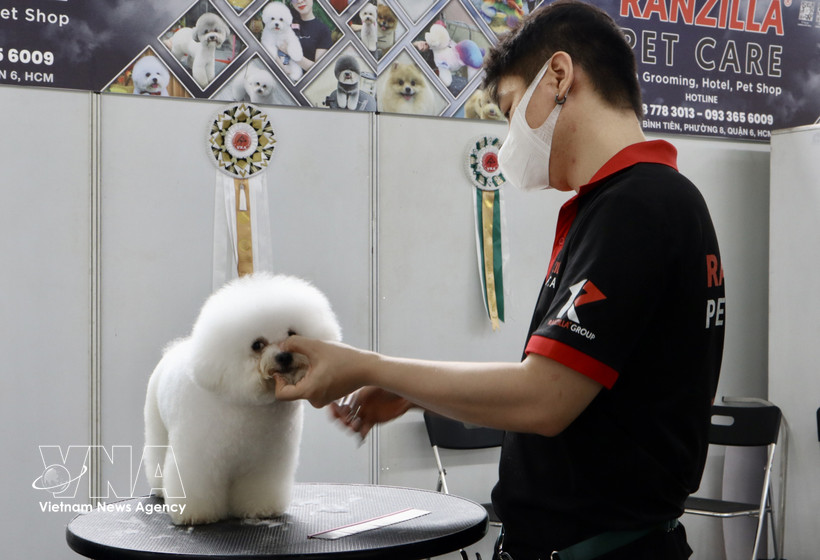
In major cities such as Hanoi and Ho Chi Minh City, demand for pet-related services is surging. (Photo: VNA)

Seoul (VNA) – Vietnam has emerged as a strategic destination for exporters of pet food and accessories from the Republic of Korea (RoK). RoK-made pet food accounts for around 30–40% of total purchases in certain segments, reflecting strong brand recognition and growing trust among Vietnamese consumers.

According to market research firm Euromonitor International, the RoK’s animal feed exports to Vietnam have reached 27.2 million USD, underscoring the country’s increasing importance as an overseas market for Korean companies seeking new revenue streams beyond a saturated domestic industry.

Pushing exports to Vietnam comes as the country’s pet economy is undergoing a period of rapid expansion. Statistics show that the pet population in Vietnam is expected to exceed 33 million by 2026. The pet market is projected to grow from about 500 million USD in 2023 to over 700 million USD by 2027, representing an annual growth rate of approximately 11%.

This growth is driven not only by the rising number of pet owners but also by a shift toward higher-value spending.

In major cities such as Hanoi and Ho Chi Minh City, demand for pet-related services is surging. Dog training centres charge around 3 million VND (114 USD) per month and report stable booking rates.

Pet hotels and boarding facilities are also frequently fully booked during peak travel seasons, reflecting owners’ willingness to spend more on convenience and quality care.

Spending is increasingly diversifying beyond basic pet food to include services such as grooming, veterinary care, and training—areas where Korean companies see opportunities to introduce premium products and specialised offerings.

For Korean firms, Vietnam’s growth contrasts with the more stable situation at home. Data from the KB Financial Group Research Institute show that, as of 2024, 5.91 million households in the RoK, accounting for 26.7% of the total, own pets, with the total pet population estimated at 15.5 million.

The pet food market in the RoK is also sizeable, reaching around 2.2 trillion KRW (1.7 billion USD) in 2025, but growth is gradually stabilising. While consumer spending continues to rise, with data from KB Kookmin Card indicating that spending on pet-related products increased by about 30% between 2021 and 2024, companies are increasingly looking abroad to sustain growth momentum.

Major RoK food companies have been expanding their pet food portfolios as part of this outward-looking strategy. Pulmuone recorded a 35% year-on-year increase in pet food sales, with some products posting standout growth. Meanwhile, HY reported a 34.6% rise, and Dongwon F&B achieved double-digit growth while expanding exports to more than 10 countries, including Vietnam.

Given the promising outlook, RoK pet food companies are increasingly targeting Vietnam as a key growth market, leveraging the country’s rapidly developing pet economy and rising demand for premium pet care products in Southeast Asia./.
VNA

See more

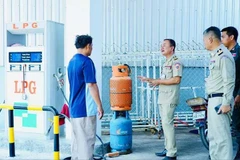
Residents refuel at a petrol station in Stung Treng province, north-eastern Cambodia. (Photo: VNA)

Cambodia introduces energy-saving measures amid Middle East conflict

Despite these challenges, the government noted that Cambodia’s fuel and electricity supply remains stable, supporting economic activities and public service delivery, based on assessments conducted with the Ministry of Mines and Energy, Electricité du Cambodge (EDC), and fuel import companies.

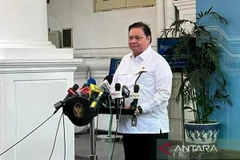
Coordinating Minister for Economic Affairs Airlangga Hartarto in a press statement at the Presidential Palace Complex, Jakarta on March 19. (Photo: ANTARA)

Indonesia pushes sustainable energy transition

Diesel plants remain widely used but should gradually be replaced by renewable energy sources, particularly solar power, due to their economic and environmental advantages, said an Indonesian minister.

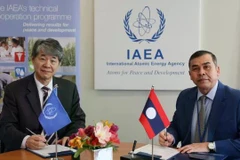
Hua Liu, IAEA Deputy Director General and Head of the Department of Technical Cooperation, and Khampheng Douangthongla, Ambassador and Permanent Representative of Laos to the United Nations in Vienna, sign the Lao Country Programme Framework (CPF) for 2026-2033. (Photo: IAEA)

Laos promotes use of nuclear technology to support sustainable development

Under the newly signed framework, cooperation for 2026–2033 will focus on technical and professional support in radiation and nuclear-related fields, including human resource development, enhanced radiation safety capacity, and applications across industry, energy, agriculture, nutrition, water resources, environmental protection, education, research, and international integration.

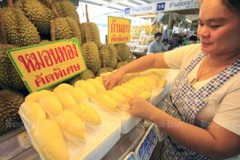
Illustrative Image (Photo: bangkokpost)

Asian Durian Brand Conference held in Thailand

The first Asian Durian Brand Conference took place in Chanthaburi province, Thailand, from March 21–22, drawing wide participation from private enterprises, organisations and industry associations involved in the durian sector from both Thailand and China.

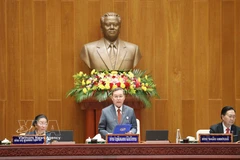
Politburo member and President of Laos’ ninth National Assembly Xaysomphon Phomvihane delivers the opening address at the session. (Photo: VNA)

Laos opens first session of 10th National Assembly

Addressing the opening ceremony, Xaysomphon Phomvihane said the session will consider and adopt a number of key national matters, including validation of deputies’ mandates, election of senior state leaders, and approval of the country’s 10th five-year socio-economic development plan for 2026–2030.

Foreign tourists in Thailand. (Photo: nationthailand.com)

Thailand considers cutting visa-free stay to 30 days

The Thai Foreign Ministry’s visa committee had concluded that a 60-day stay may be longer than necessary for most travellers and could create loopholes for people seeking to remain in Thailand without the appropriate visa.

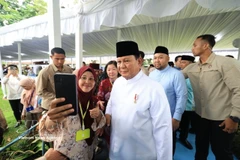
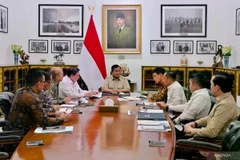
Indonesian President Prabowo Subianto in a meeting discussing energy efficiency to anticipate the threat of an oil crisis stemming from the war in the Gulf countries in the Middle East at the Presidential Palace in Jakarta on March 19. (Photo: ANTARA)

Indonesia to roll out energy-saving measures to ensure stability

According to the Presidential Secretariat, the measures aim to maintain a sustainable energy supply while supporting economic stability. Close coordination among ministries is expected to ensure policies are effectively implemented, well-targeted, and do not disrupt public economic activities.

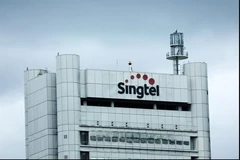
Singapore probes largest mobile network disruption

Singapore probes largest mobile network disruption

The Infocomm Media Development Authority (IMDA) has launched an investigation into mobile network disruptions affecting Singtel, the island nation’s largest telecom operator, between March 16 and 18.

Prime Minister Anutin Charnvirakul (centre) chairs a special meeting of the Joint Management and Monitoring Centre for the Situation in the Middle East on March 19. (Photo: Bangkok Post)

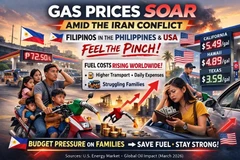
Middle East tensions prompt Thailand to act on fuel shortages

Thai Prime Minister Anutin Charnvirakul emphasised that Thailand’s oil reserves are sufficient for around 100 days, up from 62 days at the onset of the crisis, adding that emergency fuel injections into the supply system are being accelerated and the situation is expected to return to normal within one to two weeks.

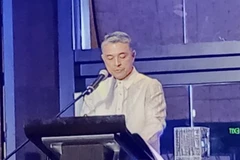
Secretary of Environment and Natural Resources Juan Miguel Cuna speaks during the 2026 World Water Day event at the Diamond Hotel in Manila on March 19, 2026. (PNA photo by Marita Moaje)

Philippines faces risk of water shortages

DENR Undersecretary Carlos Primo David underscored the department’s programmes to bring potable water to the country's remote provinces, targeting 250 small islands where drinking water is scarce.