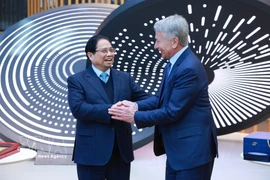
Philippines nears upper-middle-income status: WB

The WB classifies those with a GNI per capita between 4,496 USD and 13,935 USD as upper-middle-income economies.

Hanoi (VNA) – The World Bank (WB) has assessed that the Philippines is approaching upper-middle-income status, based on current growth trends in gross national income (GNI) per capita.

The country’s English-language newspaper Philippine Star cited the multilateral lender as saying that the Philippines is projected to be close to the upper-middle-income threshold.

The bank’s list of new income classification and thresholds will be updated on July 1.

Data released by the WB last year showed that the Philippines remained a lower-middle-income country, with its GNI per capita reaching 4,470 USD in 2024.

The bank classifies economies with a GNI per capita calculated using the Atlas method of 1,136 USD to 4,495 USD as lower-middle-income countries. Meanwhile, those with a GNI per capita between 4,496 USD and 13,935 USD are classified as upper-middle-income economies. High-income ones are those with a GNI per capita of over 13,935 USD.

The Philippines has been part of the lower-middle-income group since 1987./.
VNA

See more

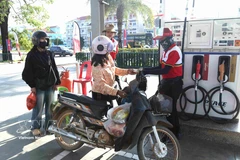
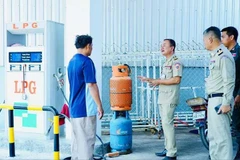
Residents refuel at a petrol station in Stung Treng province, north-eastern Cambodia. (Photo: VNA)

Cambodia introduces energy-saving measures amid Middle East conflict

Despite these challenges, the government noted that Cambodia’s fuel and electricity supply remains stable, supporting economic activities and public service delivery, based on assessments conducted with the Ministry of Mines and Energy, Electricité du Cambodge (EDC), and fuel import companies.

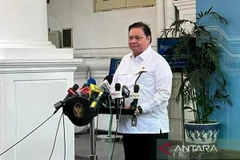
Coordinating Minister for Economic Affairs Airlangga Hartarto in a press statement at the Presidential Palace Complex, Jakarta on March 19. (Photo: ANTARA)

Indonesia pushes sustainable energy transition

Diesel plants remain widely used but should gradually be replaced by renewable energy sources, particularly solar power, due to their economic and environmental advantages, said an Indonesian minister.

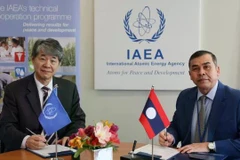
Hua Liu, IAEA Deputy Director General and Head of the Department of Technical Cooperation, and Khampheng Douangthongla, Ambassador and Permanent Representative of Laos to the United Nations in Vienna, sign the Lao Country Programme Framework (CPF) for 2026-2033. (Photo: IAEA)

Laos promotes use of nuclear technology to support sustainable development

Under the newly signed framework, cooperation for 2026–2033 will focus on technical and professional support in radiation and nuclear-related fields, including human resource development, enhanced radiation safety capacity, and applications across industry, energy, agriculture, nutrition, water resources, environmental protection, education, research, and international integration.

Illustrative Image (Photo: bangkokpost)

Asian Durian Brand Conference held in Thailand

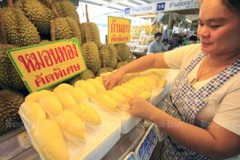
The first Asian Durian Brand Conference took place in Chanthaburi province, Thailand, from March 21–22, drawing wide participation from private enterprises, organisations and industry associations involved in the durian sector from both Thailand and China.

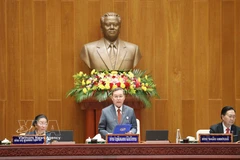
Politburo member and President of Laos’ ninth National Assembly Xaysomphon Phomvihane delivers the opening address at the session. (Photo: VNA)

Laos opens first session of 10th National Assembly

Addressing the opening ceremony, Xaysomphon Phomvihane said the session will consider and adopt a number of key national matters, including validation of deputies’ mandates, election of senior state leaders, and approval of the country’s 10th five-year socio-economic development plan for 2026–2030.

Foreign tourists in Thailand. (Photo: nationthailand.com)

Thailand considers cutting visa-free stay to 30 days

The Thai Foreign Ministry’s visa committee had concluded that a 60-day stay may be longer than necessary for most travellers and could create loopholes for people seeking to remain in Thailand without the appropriate visa.

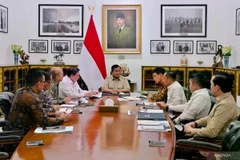
Indonesian President Prabowo Subianto in a meeting discussing energy efficiency to anticipate the threat of an oil crisis stemming from the war in the Gulf countries in the Middle East at the Presidential Palace in Jakarta on March 19. (Photo: ANTARA)

Indonesia to roll out energy-saving measures to ensure stability

According to the Presidential Secretariat, the measures aim to maintain a sustainable energy supply while supporting economic stability. Close coordination among ministries is expected to ensure policies are effectively implemented, well-targeted, and do not disrupt public economic activities.

Singapore probes largest mobile network disruption

Singapore probes largest mobile network disruption

The Infocomm Media Development Authority (IMDA) has launched an investigation into mobile network disruptions affecting Singtel, the island nation’s largest telecom operator, between March 16 and 18.

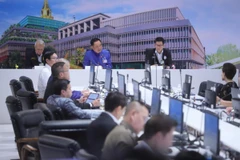
Prime Minister Anutin Charnvirakul (centre) chairs a special meeting of the Joint Management and Monitoring Centre for the Situation in the Middle East on March 19. (Photo: Bangkok Post)

Middle East tensions prompt Thailand to act on fuel shortages

Thai Prime Minister Anutin Charnvirakul emphasised that Thailand’s oil reserves are sufficient for around 100 days, up from 62 days at the onset of the crisis, adding that emergency fuel injections into the supply system are being accelerated and the situation is expected to return to normal within one to two weeks.

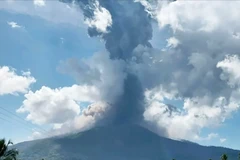
Mount Lewotobi Laki-laki erupts in October 2025. (File photo: AP)

Indonesia: Mount Lewotobi erupts

Indonesia’s Center for Volcanology and Geological Hazard Mitigation has urged residents to avoid activities within a 4-kilometre radius of the crater and to wear masks to protect their respiratory systems from volcanic ash.