Cambodia introduces energy-saving measures amid Middle East conflict

Despite these challenges, the government noted that Cambodia’s fuel and electricity supply remains stable, supporting economic activities and public service delivery, based on assessments conducted with the Ministry of Mines and Energy, Electricité du Cambodge (EDC), and fuel import companies.

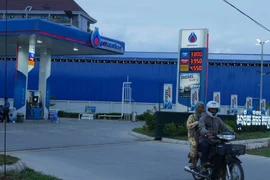
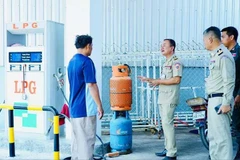
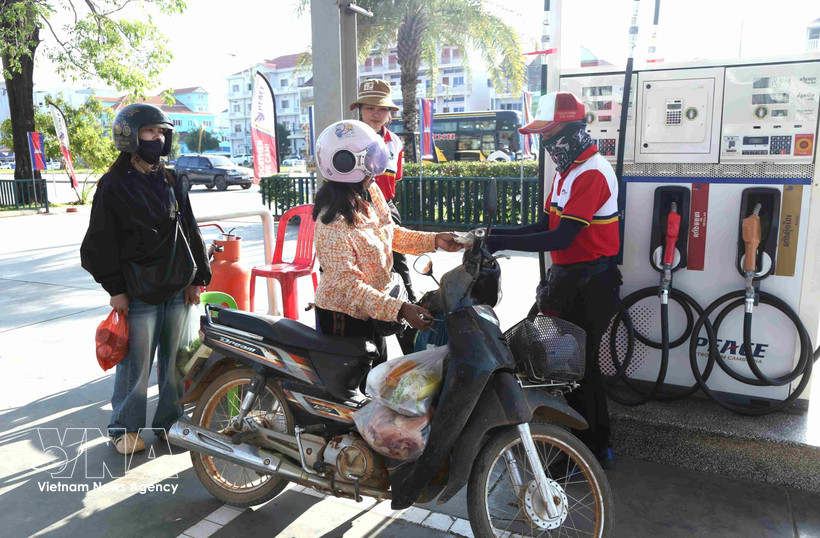
Residents refuel at a petrol station in Stung Treng province, north-eastern Cambodia. (Photo: VNA)

Phnom Penh (VNA) – The Cambodian government has issued a directive mandating energy-saving measures across all ministries, agencies and state institutions in response to surging global energy prices linked to tensions in the Middle East.

The move comes as ongoing conflicts in the Middle East continue to disrupt global oil supply chains, leading to sharp increases in fuel prices, including in Cambodia. The rising cost of fuel is also expected to impact electricity production, as it remains a key input, the local Khmer Times reported.

Despite these challenges, the government noted that Cambodia’s fuel and electricity supply remains stable, supporting economic activities and public service delivery, based on assessments conducted with the Ministry of Mines and Energy, Electricité du Cambodge (EDC), and fuel import companies.

To address the situation, the government has called for stricter measures to reduce fuel consumption.

All ministries and institutions are encouraged to limit in-person meetings and long-distance travel, and to promote the use of online platforms unless absolutely necessary.

The Ministry of Mines and Energy will issue detailed guidelines on energy-efficient practices and work with the Ministry of Information to raise public awareness through media channels.

Government institutions are mandated to adopt energy-saving practices in office operations, while local administrations will work with EDC to improve the efficiency of public lighting systems./.

VNA

See more

Malaysia considers establishing strategic petroleum reserve

Malaysia considers establishing strategic petroleum reserve

Malaysia, which was previously a net exporter, has now become a net importer due to declining domestic production and rising consumption, with demand estimated at around 800,000 barrels per day compared to production of about 400,000 barrels per day.

Indonesia to halt diesel imports from July

Indonesia to halt diesel imports from July

The move is part of the Indonesian Government’s efforts to strengthen national energy independence by utilising palm oil as an alternative fuel, said Agriculture Minister Andi Amran Sulaiman.

Malaysia’s growing microplastics crisis is largely self-inflicted, driven by domestic waste, weak recycling practices and everyday plastic use, said experts. (Photo: New Straits Times)

Malaysia seeks solutions to microplastic crisis

Microplastics originating from domestic waste and wastewater are increasingly entering the food chain, posing serious threats to seafood safety and the livelihoods of coastal communities.

The new mass emergency alert system SG Alert, which will be used during emergencies such as major fires, chemical or terror incidents, seen on an Apple and Android device on Apr 17, 2026. (Photo: CNA)

Singapore launches new national emergency alert system

SG Alert in Singapore uses cell broadcast technology, enabling alerts to be delivered within seconds without requiring mobile data or collecting personal information. Unlike conventional SMS, which may be delayed during network congestion or depend on internet connectivity, the system ensures fast and reliable message delivery. Alerts can be sent islandwide or targeted to specific affected areas.

Malaysia establishes ‘war room’ to ensure water security

Malaysia establishes ‘war room’ to ensure water security

The establishment of the war room reflects the Malaysian government’s commitment to shift from a reactive approach to a more proactive, data-driven one in managing national water challenges, particularly amid increasingly unpredictable weather conditions caused by global climate change