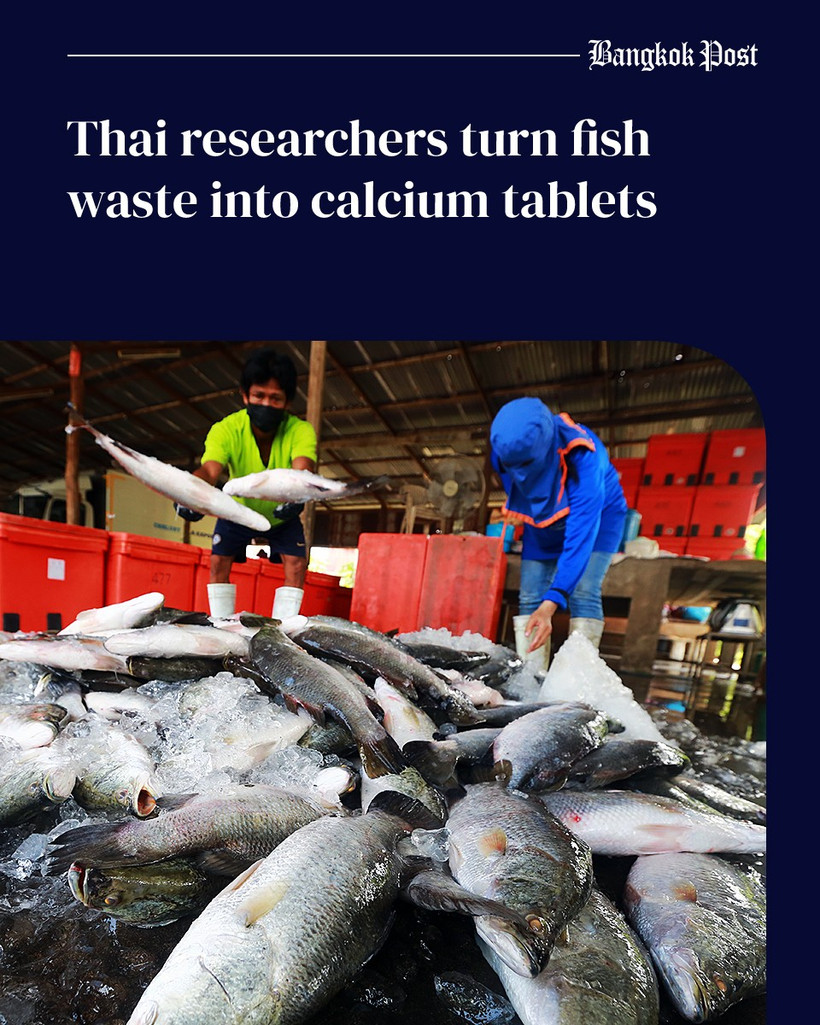
Bangkok (VNA) - Researchers at Rajamangala University of Technology, Thanyaburi (Thailand) have developed a method to extract calcium from by-products from the fish processing industry, turning what is essentially waste into a high-value product.
A team from the Faculty of Integrative Medicine led by Assoc Prof Watchara Damjuti, developed a method to extract calcium from discarded parts of blackchin tilapia, including heads, bones, scales and tails - materials typically treated as waste and a source of pollution.
Laboratory analysis found the product to be free from heavy metals and microbial contamination, with a calcium content of 12-15%, comparable to calcium derived from other species of fish such as salmon.
The research team said the supplement could help strengthen bones and teeth, reduce the risk of osteoporosis, and support muscle and nerve function. This provides an accessible alternative source of calcium for consumers of all ages, particularly older adults.
In Thailand, the recommended calcium intake is about 1,000 milligrammes per day, yet many people fall short, partly due to low dairy consumption.
Beyond dietary supplements, the extracted bio-calcium has potential applications in personal care and health products, including toothpaste. Researchers noted the method also reduces waste, odour and wastewater contamination from fish-processing industries.
Assoc Prof Watchara said this demonstrates how scientific research, integrative medicine, and sustainable resource management can work together to create value./.