Thailand changes its approach to dealing with fuel crisis

After scrapping the fuel price cap, state assistance will be directed to the poor, as well as drivers, farmers, fishermen, contractors, and operators in sectors directly affected by the energy crisis.

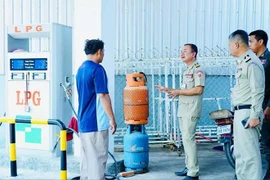
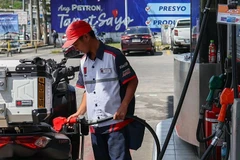
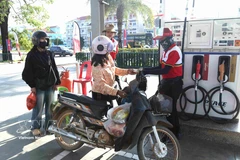
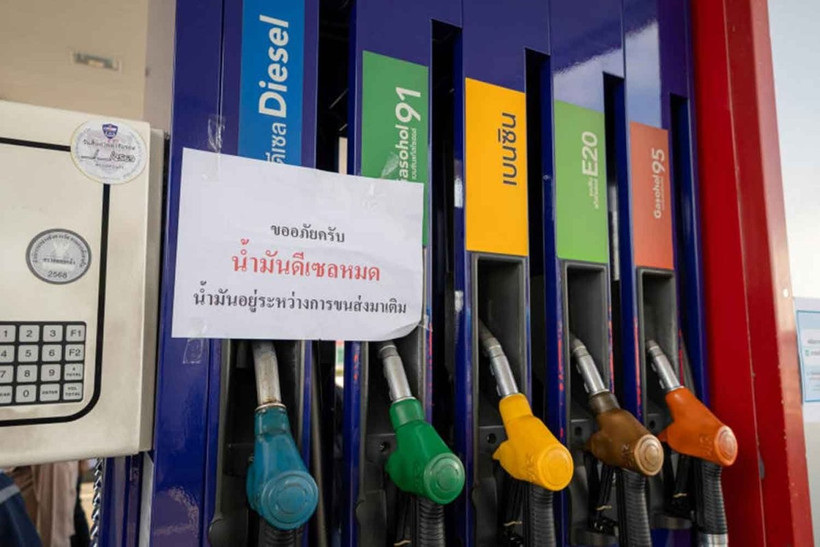
A petrol station in Phitsanulok ran out of diesel fuel on March 16. (Photo: Public Relations Department)

Bangkok (VNA) – Thailand has abandoned attempts to cap domestic fuel prices, which have been driven up by the Middle East conflict, and will instead offer targeted assistance to the sectors hardest hit by high prices.

The government will allow domestic energy prices to move in line with market forces, Thai Deputy Prime Minister and Finance Minister Ekniti Nitithanprapas told a television news programme on March 25, adding that price suppression had led to market distortions, hoarding, and unnecessary budget losses.

On March 2, the Thai government announced price caps on the most widely used transport fuels, saying it would not allow diesel prices to exceed 33 THB (1.01 USD) per litre. As a result, the state Oil Fuel Fund spent 20 billion THB over three weeks to subsidise fuel prices, at a rate of about 1 billion THB per day. However, subsidies continued to rise, reaching 27 THB per litre for diesel and 9.70 THB for petrol, costing the fund about 2.5 billion THB per day.

After scrapping the fuel price cap, state assistance will be directed to the poor, as well as drivers, farmers, fishermen, contractors, and operators in sectors directly affected by the energy crisis. Those earning less than 100,000 THB per year will receive monthly subsidies.

Approximately 13.4 million Thais fall into this group, and the Ministry of Finance is studying appropriate subsidy levels, Ekniti said.

In the public transport and logistics sectors, about 360,000 truck drivers and 30,000 public transport drivers will receive fuel subsidies. The assistance will also cover drivers of passenger vans, taxis, and motorcycle taxis.

The Thai Ministry of Commerce is preparing to offer lower-priced fertiliser to help farmers. About half of the country’s fertiliser supplies come from the Middle East and shipments have been disrupted by the closure of the Strait of Hormuz.

Meanwhile, the Ministry of Transport will provide fishermen with B20 diesel (diesel containing 20% palm oil), which is 5 THB per litre cheaper than conventional diesel. Contractors undertaking public sector projects will also receive compensation to offset rising construction material and fuel costs, ensuring project progress.

In addition, businesses in the industrial and service sectors will be offered preferential loans to support liquidity./.
VNA

See more

Philippines receives first Russian oil shipment in five years

Philippines receives first Russian oil shipment in five years

On March 24, Philippine President Ferdinand Marcos Jr. declared a national energy emergency through an executive order, allowing the government to fast-track fuel procurement, make advance payments for fuel contracts, and ensure the availability of fuel and other essential goods amid rising prices.

Philippines declares energy emergency over Middle East tension (Photo: BBC)

Philippines declares energy emergency

The Philippine Government on March 24 announced an "imminent danger of a critically low energy supply" as tensions in the Middle East threaten fuel supplies and the stability of the country’s power system.

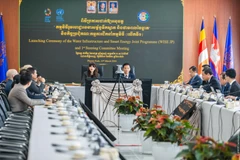
Delegates at the event (Photo: cambodia.un.org)

Cambodia accelerates access to climate-resilient water services

Funded by the UN Joint Sustainable Development Goals (SDG) Fund, the Water Infrastructure & Smart Energy Joint Programme (WISE JP) introduces a pioneering financial model that combines commercial and low-interest capital - a revolving blended‑finance facility - dedicated to ensuring climate‑smart water systems.

Illustrative image (Photo: Internet)

Wildfires surge to 96 hotspots in Thailand

According to the provincial forest fire and haze prevention centre, satellite data from the Suomi NPP VIIRS system recorded the hotspots at 02:13. The fires were spread across multiple districts though firefighting teams have been working around the clock to contain the blazes.

In major cities such as Hanoi and Ho Chi Minh City, demand for pet-related services is surging. (Photo: VNA)

Vietnamese pet market attractive to RoK businesses

RoK pet food companies are increasingly targeting Vietnam as a key growth market, leveraging the country’s rapidly developing pet economy and rising demand for premium pet care products in Southeast Asia.

Residents refuel at a petrol station in Stung Treng province, north-eastern Cambodia. (Photo: VNA)

Cambodia introduces energy-saving measures amid Middle East conflict

Despite these challenges, the government noted that Cambodia’s fuel and electricity supply remains stable, supporting economic activities and public service delivery, based on assessments conducted with the Ministry of Mines and Energy, Electricité du Cambodge (EDC), and fuel import companies.

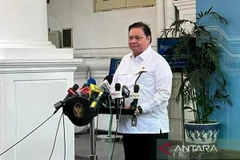
Coordinating Minister for Economic Affairs Airlangga Hartarto in a press statement at the Presidential Palace Complex, Jakarta on March 19. (Photo: ANTARA)

Indonesia pushes sustainable energy transition

Diesel plants remain widely used but should gradually be replaced by renewable energy sources, particularly solar power, due to their economic and environmental advantages, said an Indonesian minister.

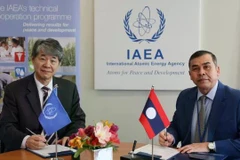
Hua Liu, IAEA Deputy Director General and Head of the Department of Technical Cooperation, and Khampheng Douangthongla, Ambassador and Permanent Representative of Laos to the United Nations in Vienna, sign the Lao Country Programme Framework (CPF) for 2026-2033. (Photo: IAEA)

Laos promotes use of nuclear technology to support sustainable development

Under the newly signed framework, cooperation for 2026–2033 will focus on technical and professional support in radiation and nuclear-related fields, including human resource development, enhanced radiation safety capacity, and applications across industry, energy, agriculture, nutrition, water resources, environmental protection, education, research, and international integration.