Hanoi (VNA) — Vietnam, a country that has steadfastly pursued socialism, has gained remarkable achievements in a wide scope of sectors that includes the economy, politics, society, and culture, according to a Chinese expert on Vietnamese affairs.
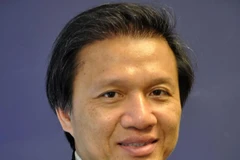
Economically, Vietnam exemplifies the successful fusion of socialism and a market economy, Prof., Dr. Pan Jin’e from the Research Institute of Marxism under the Chinese Academy of Social Sciences, said in an interview with Vietnam News Agency correspondents in Beijing.
Since the 1986 reforms, Vietnam has gradually built a “socialist-oriented market economy,” shifting from a planned to an open economy. In 2024, GDP reached 476.3 billion USD, per capita GDP exceeded 4,700 USD, and labour productivity rose to 9,182 USD per worker, she noted.
Pan highlighted that poverty reduction and social equity have advanced notably. Through the National Target Programme on Sustainable Poverty Reduction, Vietnam cut its multidimensional poverty rate from a majority at independence to 1.93%. The World Bank recognises Vietnam as a “model for poverty reduction among developing countries,” she said.
Green economy and sustainable development have gained traction, with renewable energy accounting for 8% of the energy mix by 2024 and a target of carbon neutrality by 2050 drawing global attention.
Politically, Vietnam has made clear progress. Firstly, it established the theory of a socialist rule-of-law State “of the people, by the people, and for the people,” blending Marxism with local realities to balance political stability and social vitality, a breakthrough in Marxist theory on proletarian state power.
Secondly, comprehensive reforms - from Party to administrative and social management - have perfected Vietnam’s democratic political system, ensuring social stability and development under the leadership of the Communist Party of Vietnam.
Thirdly, Vietnam has realised strong national unity and cultural identity, rooted in loyalty to the nation and devotion to the people.
Socially, Vietnam pursues “development for the people,” making strides in education, healthcare, employment, and social security. Education is free from preschool to public high school; primary school enrolment reached 99.7% in 2024, with a target of 35% university enrolment by 2030. The government’s “Science, Technology and Innovation Development Strategy to 2030” aims to raise high-tech industrial products to 45% and foster a skilled workforce for future growth.
Healthcare insurance coverage reached 93.35% in 2024, nearing universal health coverage, with life expectancy rising from 40 years in 1945 to 75.8 years today -comparable to middle-income countries.
Trends in employment and urbanisation indicate that the labour force is expected to reach 51.9 million in 2024, with 38.3% of individuals living in urban areas. There is a notable shift from rural to non-agricultural sectors. Youth unemployment remains low at 4.2%, which is below the Southeast Asia average.
These successes stem from decades of struggle against colonialism and invasion. Vietnam’s history is a heroic example for developing countries overcoming backwardness through socialist leadership, the regime’s strengths, and the unity and resilience of its people, supported by international solidarity and proletarian internationalism.
Pan affirmed that these achievements and experiences provide a solid foundation for the Communist Party of Vietnam, under the leadership of General Secretary To Lam, to lead the country into a new era. They form a rich spiritual asset vital for Vietnam’s goal of becoming a developed socialist nation by mid-century, fulfilling President Ho Chi Minh’s dream of a nation “standing shoulder to shoulder with the great powers.”
Regarding Vietnam’s development and contributions to global socialism, the Chinese scholar described Vietnam’s accomplishments as offering a “Vietnamese solution” to the world socialist movement.
Vietnam presents a new theoretical model and developmental path for socialism globally, serving as a reference for developing countries.
Practically, Vietnam has paved a path to modernisation for developing nations, achieving a “low starting point, high growth” miracle through renovation and opening. The World Bank recognises Vietnam for market-oriented reforms while maintaining political stability, a model for transitioning countries. Vietnam’s flexibility in foreign investment attraction and private sector development offers new ideas for socialist countries integrating into the global economy.
In regional and global governance, Vietnam actively integrates into mechanisms such as ASEAN, RCEP, and CPTPP, and promotes initiatives like the “Two Corridors, One Belt” economic corridor and China-Vietnam cross-border railway projects.
As a non-permanent member of the UN Security Council, Vietnam advocates for “peace, cooperation, and development.” The country actively contributes to addressing climate change and promotes South-South cooperation. The UN Development Programme has recognised Vietnam for enhancing the international voice of socialist countries through multilateralism, reflecting the revolutionary spirit in modern diplomacy.
Pan concluded that Vietnam’s achievements in socialist building confirm Marx’s view on diverse development paths.
She emphasised that Vietnam’s experience revitalises the global socialist movement and opens “another possibility” for developing countries to explore the path of modernisation. “Socialism is not an abstract doctrine but a creative practice rooted in the country and responsive to the era’s needs,” making this Vietnam’s most valuable contribution to the global socialist movement./.
VNA