Vietnam’s socialist path highlighted on 80th National Day

Vietnam’s accomplishments are not only evident in institution building or economic growth, but also reflect the resilience and vitality of the socialist system, according to a Chinese observer.

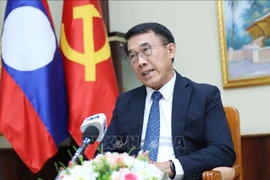
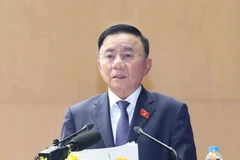
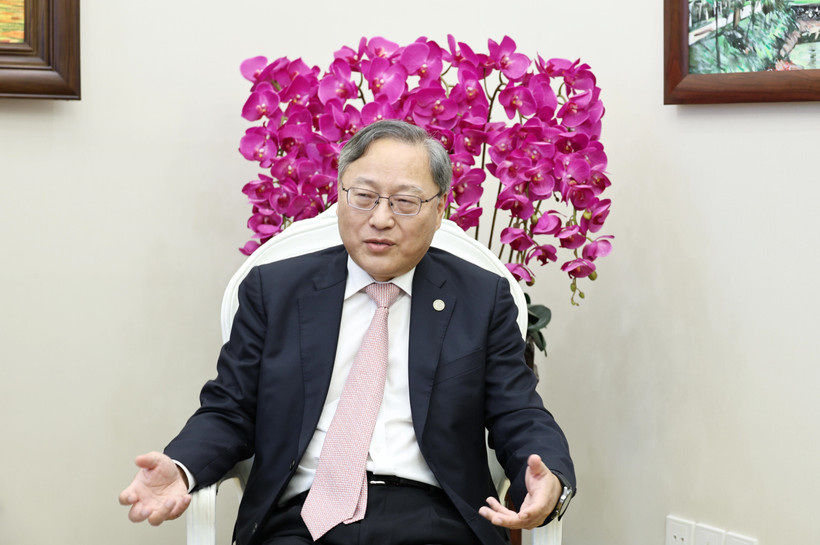
Zhang Jianguo, former Director-General of the Western Europe Department under the International Liaison Department of the Communist Party of China Central Committee and Secretary-General of China’s Charhar Institute. (Photo: VNA)

Beijing (VNA) – As Vietnam prepares to mark the 80th anniversary of its National Day (September 2), an international observer have pointed to the country’s achievements as a testament to the vitality and development of the socialist system.

Speaking to the Vietnam News Agency, Zhang Jianguo, former Director-General of the Western Europe Department under the International Liaison Department of the Communist Party of China Central Committee and Secretary-General of China’s Charhar Institute, said Vietnam’s 80-year socialist journey is a historical story of struggle, moving from national independence to national prosperity.

According to Zhang, Vietnam’s accomplishments are not only evident in institution building or economic growth, but also reflect the resilience and vitality of the socialist system.

He noted that the Communist Party of Vietnam (CPV) had led the nation through a dual revolution: winning independence through resistance wars against the French colonialists and the US imperialists, and then consolidating sovereignty after the national reunification in 1975 by establishing a framework of comprehensive Party leadership, which laid a stable political cornerstone for later development.

Throughout this process, Vietnam closely combined national independence with the path of socialism, creating a historical story of “unity between national liberation and class liberation”, while consolidating the great national solidarity.

The turning point, Zhang stressed, came with the Doi moi (Renewal) policy launched in 1986. By moving away from a centrally planned economy and embracing a socialist-oriented market mechanism alongside proactive international integration, Vietnam has achieved rapid economic transformation. Its GDP rose from 24.66 billion USD in 1996 to 408.8 billion USD in 2022, maintaining an average annual growth rate of around 6% and becoming a key driver of economic growth in Southeast Asia.

In 2022, total foreign trade reached 732.5 billion USD, underscoring the country’s extensive integration into the global economy.

Living standards have also improved markedly. Poverty has fallen from more than 50% in the early years of reforms to single digits. While education coverage have expanded nationwide, healthcare infrastructure has continued to improve, and average life expectancy has increased significantly. These achievements clearly reflect the strength and adaptability of Vietnam’s chosen development path of socialism, he opined.

Zhang said Vietnam has demonstrated that socialism and reforms towards a market economy could interact positively, offering developing nations a model of institutional resilience and door-opening vitality.

Looking ahead, he identified three core advantages underpinning Vietnam’s growth potential.

First, ensuring political stability: The CPV has maintained political and social stability, along with sustainable economic development, through regular elections and policy continuity. The policy line of continued reform and opening-up, adopted at the CPV’s 13th National Congress in 2021, received broad consensus and has provided a policy guarantee for long-term development.

Second, Vietnam’s demographic advantage continues to be unlocked: Of its 100 million people, 70% are of working age (15–64), with labour costs at just one-third of those in eastern China and half of Malaysia’s. This provides a core competitive edge in attracting labour-intensive industries. More importantly, the education level of Vietnam’s younger generation has improved significantly, while English proficiency ranks among the highest in ASEAN. This creates a workforce capable of taking on not only mid-level industries but also higher-value sectors like such as electronics assembly and software development.

Third, opportunities for regional economic integration: As a key member of ASEAN, Vietnam participates in multiple international free trade agreements, giving it a dual advantage of access not only to the ASEAN and Chinese markets but also to those in Europe and the Americas.

He stressed that international cooperation will be a driving force for Vietnam’s future. Closer collaboration with China in industrial chains such as auto parts and new energy, with the European Union in standardisation like green production certification, and with ASEAN in market integration like unified logistics rules will help Vietnam move from being a major manufacturing base to becoming a smart manufacturing power./.

VNA
See more

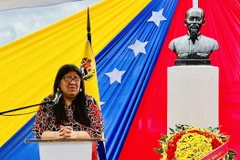
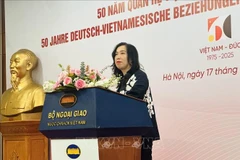
Venezuelan Vice Minister of Foreign Affairs Tatiana Pugh speaks at the ceremony on December 17. (Photo: VNA)

Vietnam, Venezuela mark 36th anniversary of diplomatic ties in Caracas

Venezuelan Vice Minister of Foreign Affairs Tatiana Pugh affirmed that over more than three decades, the bilateral solidarity, friendship, and cooperation have grown deeper despite complex and unpredictable global and regional developments, serving as a reliable mainstay for the interests of the two peoples and for peace, stability, cooperation, and development in their respective regions and worldwide.

☀️ Morning digest on December 18

☀️ Morning digest on December 18

The PM's urgent dispatch detailing key tasks to drive economic growth, Vietnam's endorsement of the joint statement to strengthen the global partnership against online scams, and the conclusion of a four-year partnership to strengthen child justice in Vietnam are among news highlights on December 17 evening.

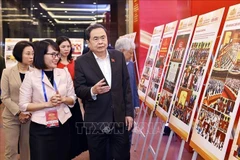
NA Chairman Tran Thanh Man checks photo display for the award ceremony (Photo: VNA)

NA Chairman attends rehearsal for fourth Dien Hong awards

More than 10 months after the competition’s launch, the organising board received 3,508 entries from 125 media outlets nationwide. After initial screening, 659 works proceeded to preliminary judging, from which a preliminary jury selected 91 entries for the final round. The final jury ultimately selected 64 works for awards.

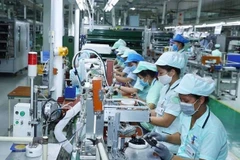
Illustrative image (Source: VNA)

PM directs tasks to boost economic growth

To fully realise the 2025 socio-economic development plan, while creating momentum for 2026, PM Pham Minh Chinh urged ministers, heads of ministry-level agencies, and chairpersons of People’s Committees of provinces and centrally-run cities to strictly follow resolutions of the Party, the National Assembly and the Government, along with the Prime Minister’s directives.

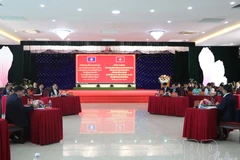
At the meeting between the Dien Bien Party Committee’s Commission for Information, Education and Mass Mobilisation and the propaganda information and training commissions of the Party committees of the Lao provinces of Phongsaly, Oudomxay and Luang Prabang, held in Vietnam's northwestern mountainous province on December 17. (Photo: dienbientv.vn)

Dien Bien strengthens cooperation, exchanges with three northern Lao provinces

A meeting between the Dien Bien Party Committee’s Commission for Information, Education and Mass Mobilisation and the propaganda information and training commissions of the Party committees of the Lao provinces of Phongsaly, Oudomxay and Luang Prabang was held in Vietnam's northwestern mountainous province on December 17.

Politburo member and permanent member of the Party Central Committee’s Secretariat Tran Cam Tu speaks at the meeting with Lao Cai voters on December 17. (Photo: VNA)

Secretariat’s permanent member meets with Lao Cai voters

Lao Cai must continue to prioritise the building of a truly clean and strong Party and political system, advance the implementation of socio-economic development tasks, and ensure the mobilisation of all available resources to meet growth targets, the Secretariat’s permanent member emphasised.

State President Luong Cuong (in black suite) attends the national political-military conference in Hanoi on December 17. (Photo: VNA)

State President outlines key directions for strengthening national defence

It is necessary to build a modern, elite, and highly capable People’s Army, improve overall combat strength, maintain combat readiness, and adapt training to new operational conditions, President Cuong said, noting that the military must safeguard air, sea, border, domestic, and cyber spaces, and modernise weapons and equipment to meet the requirements of a modern defence force.

Prime Minister Pham Minh Chinh speaks at the meeting between the Government’s standing members and ministries, sectors and localities on December 16 on preparations for the ground-breaking and inauguration ceremonies for projects celebrating the 14th National Party Congress. (Photo: VNA)

PM mandates readiness for project groundbreaking and inauguration ceremonies

VTV is responsible for working with the Voice of Vietnam and the Vietnam News Agency (VNA) in developing a detailed script for the ground-breaking, inauguration ceremonies for projects celebrating the 14th National Party Congress to be sent to the Ministry of Construction, relevant ministries, localities, and corporations for coordination and implementation across all sites.

Deputy Prime Minister Tran Hong Ha meets with ambassadors and chargés d’affaires of the European Union (EU) in Vietnam on December 16. (Photo: VNA)

Deputy PM Tran Hong Ha meets EU diplomats in Vietnam

Given the strong partnership built over the past 35 years, the EU hopes to soon elevate relations with Vietnam to a comprehensive strategic partnership, said Deputy Head of the EU Delegation to Vietnam Rafael de Bustamante Tello.