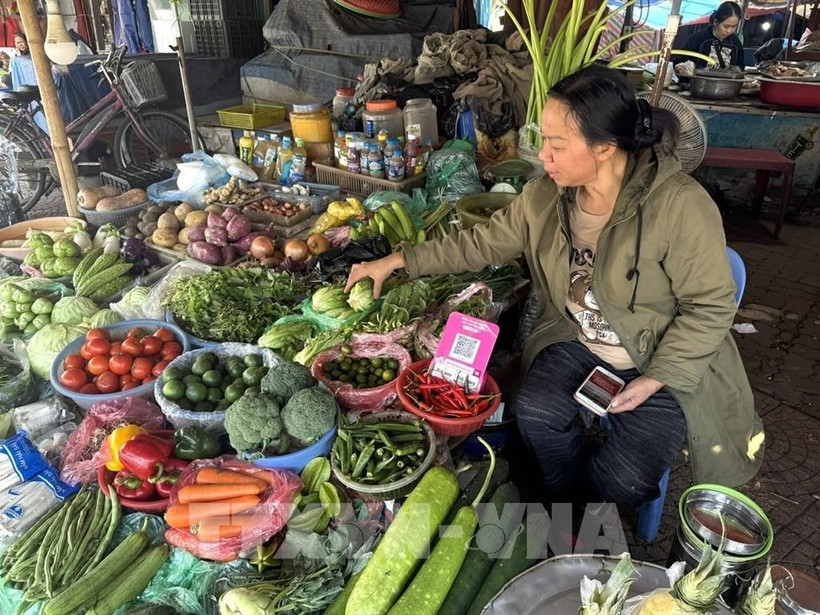
Hanoi (VNA) - Retail vegetable prices in Hanoi have surged by 30% to more than 100% after consecutive storms and prolonged rainfalls at the end of October and early November, leaving shoppers cutting back on spending, traders struggling to source goods, and suburban farmers grappling with severe losses caused by historic flooding.
At local wet markets such as Nhan Chinh, Nga Tu So and Yen Hoa, leafy vegetables have risen sharply compared with pre-storm levels. Morning glory, previously priced at 8,000–10,000 VND (0.30 – 0.38 USD) per bunch, is now selling for 20,000–30,000 VND. Other items such as chayote, tomatoes and cucumbers have become harder to find, with prices in some places doubling.
Bui Van Quy, a trader from Dong Anh supplying Nhan Chinh market, said vegetable volumes from suburban areas had dropped sharply after two consecutive storms. Many suppliers reported waterlogged and damaged produce. Supply is low while demand remains high, pusing prices up, he said.
Shoppers, too, are feeling the strain. Hoang Thu Huyen, a resident of Nguyen Tuan street, said prices change almost every time she visits the market. Some days she only dares to buy half a bunch of morning glory because it’s too expensive. Household spending has clearly gone up, she noted.
Small wholesalers report that several vegetable-growing communes on Hanoi’s outskirts have suffered localised flooding, disrupting supply. Many traders are now travelling further afield to source vegetables from neighbouring provinces such as Hung Yen, Phu Tho and Bac Ninh, pushing transport costs sharply higher.
Outlying districts including Gia Lam, Dong Anh, Soc Son and Me Linh, major vegetable suppliers for the capital, have all recorded extensive crop damage after Storms No. 10 and 11. Prolonged flooding destroyed leaves and roots, while greenhouses and drainage systems were also damaged.
Beyond crop losses, farmers are facing shortages of seeds, labour and long recovery times. Short-cycle vegetables such as morning glory, mustard greens and Malabar spinach need at least 20–30 days before harvesting again, meaning supplies to Hanoi will remain tight for several more weeks.
Experts predict vegetable prices may remain high for at least another 10–15 days, as new crops have yet to be harvested. Recent flooding in the central and Central Highlands regions has also affected the quantity of vegetables transported to Hanoi. This places additional pressure on urban consumers and the food service sector.
Local authorities in suburban districts have begun supporting farmers with drainage, crop restoration, short-cycle seeds and technical guidance on soil rehabilitation.
The recent price surge in Hanoi’s vegetable market is a direct result of extreme weather, major natural disasters and disruptions across the agricultural supply chain. In this context, closer coordination between authorities, distributors, cooperatives and producers is essential to stabilise supplies and cushion market impacts. In the longer term, investments in safe production models, weatherproof greenhouses, drainage infrastructure and disaster forecasting will be critical to strengthening Hanoi’s vegetable sector against increasingly severe climate risks./.