Hanoi (VNA) - The Ministry of Finance is taking various scenarios under consideration to cope with global uncertainty to complete its budget collection target as set by the National Assembly, Minister Ho Duc Phoc told Vietnam News Agency’s reporter on the occasion of Lunar New Year 2023.
The following is the full interview:
Reporter: Amidst global uncertainty, together with the formidable challenges domestically, such as rising inflation and bottlenecks in the capital market, realty market, stock market, and disbursement of public investment, what are the Ministry of Finance’s measures to ensure the target of budget collection for the whole year?
Minister Ho Duc Phoc: The 15th National Assembly’s 4th meeting approved the target of 1.62 quadrillion VND in state budget collection in 2023, up 0.4% year-on-year amidst the global economic recession with rising inflation, fierce competition among powers, climate change, as well as many other non-traditional security issues.
In this context, the sector will sharpen focus on the following measures:
First, we will strictly follow the Party’s orientations, and the National Assembly and Government’s resolutions on fiscal policy to speed up economic recovery and development, control inflation and stabilize the macro economy.
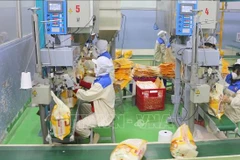
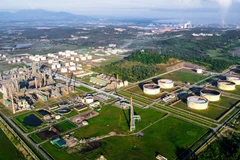
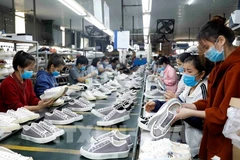
 It is necessary to develop a rational estimate of state budget collection amidst global headwinds. (Photo: VietnamPlus)
Second, we will review and make amendments to tax laws under the Tax System Reform Strategy by 2030.
Besides, we will carry out an array of measures to support enterprises, and local people to respond to upcoming challenges.
Administrative reform in the management of state budget collection is also part of our focus to ensure we will realise the set target at least by the end of 2023.
Third, we plan to restructure the state budget to improve effectiveness and efficiency.
The financial sector is determined to closely manage the state budget over-expenditure, public debt, as well as operation of the off-state budget funds.
Fourth, the sector will continue to improve the legal system on price management; flexibly manage prices based on supply and demand forecasts of commodities, especially for energy, building materials, iron and steel groups.
Fifth, it will also take necessary measures to stabilise and develop a transparent and sustainable capital market, opening up medium and long-term capital sources for investment and development.
It will focus on perfecting legal and institutional frameworks, strengthening supervision, and improving efficiency in law enforcement in this market.
Reporter: Under the 15th National Assembly’s decision, 35% of the state budget spending will be set aside for investment for development as compared to 29.5% in 2022. Could you please specify the reason behind this?
Minister Ho Duc Phoc: As priority is given to stabilisation of the macro-economy, control of inflation, and maintenance of major balances, it is necessary to arrange larger investment for economic recovery as well as socio-economic development.
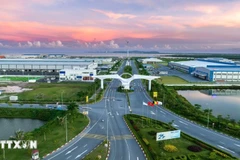
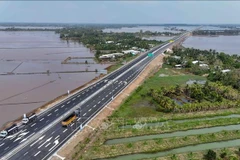
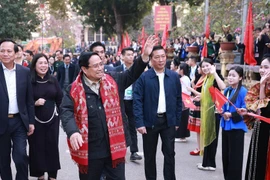
 The Government has ordered ministries, sectors and localities to take drastic action to carry out public investments. (Photo: VietnamPlus)
The Ministry of Finance will work to put forth disbursement of public investment for key projects.
Sufficient capital will be arranged to implement the economic recovery and socioeconomic development programme, which was adopted by the National Assembly.
The capital will be prioritised for projects which have great impact on sustainable development, and approved national target programmes. Besides, the capital will be given to new projects with full investment procedures.
Strict punishment will be meted out to anyone who bars the disbursement of public capital.
The Ministry of Finance will work closely with the Ministry of Planning and Investment to examine and instruct localities to carry out public investments, and report to the Prime Minister on the progress.
Reporter: The business community has made the largest contribution to the state budget. Could you please tell us the Ministry of Finance’s actions to remove bottlenecks for enterprises in 2023?
Minister Ho Duc Phoc: The COVID-19 pandemic, which broke out in 2020, has left critical impact on business production and local livelihoods. In this context, the Ministry of Finance studied and recommended competent authorities issue several measures such as extension of deadlines for payment of taxes and land rental fees to support affected firms and residents.
Together with the issued measures, the ministry will continue studying and recommending rational solutions in 2023, including reduction of import taxes for materials, environmental tax for petrol and oil, and land fees, among others.
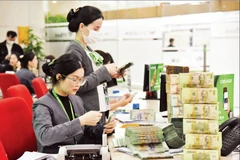
 The Ministry of Finance will work closely with the Ministry of Planning and Investment to examine and instruct the implementation of public investment projects. (Photo: VietnamPlus)
We will further our efforts to complete tax policies with a view to making them compatible with international regulations, and preparing necessary resources to carry out the strategy to develop socio-economy during 2021-2030.
A sound tax system will help improve business climate, promote competitiveness and encourage investment.
Additionally, the ministry will continue to complete its institution, enhance administrative reform in a comprehensive and effective fashion, while modernising the taxation and customs departments.
Reporter: Disbursement of public investment remains sluggish although it plays an important role in bolstering economic growth in the nation. What are the measures to handle the issue?
Minister Ho Duc Phoc: There are a number of reasons behind the slow progress of public investment disbursement. Like many other countries in the world, Vietnam was battered by COVID-19 in 2022, which resulted in high input and logistics costs, while foreign experts could not come to the country due to the prolonged lockdown.
Ministries, sectors and localities felt bewildered when they carried out new projects under the National Assembly’s resolution in July 2021, which hindered the disbursement progress.
There were severe shortcomings in regulations and policies, while coordination mechanisms between ministries and localities remained unclear, making it hard to put forth the settlement of site clearance work.
Additionally, many sectors and localities did not strictly follow the National Assembly’s resolution and the Prime Minister’s decision in allocation of public investment capital and they were requested to adjust their allocation plans.
The slow progress was also spurred by poor inspection, examination and construction of several organisations and enterprises.
To deal with the situation, the Government issued Resolution No.124/NQ-CP as a push to release stagnant public investment disbursement, which set the target for the progress at 95-100% by the end of 2022.
The Government also issued Directive No.19/CT-TTg on promoting public investment disbursement, and carrying out the national target programmes in 2022, and improving the quality of plans for public investments in 2023.
Right in 2022, the Ministry of Finance ordered competent ministries, agencies and localities to pay due regard to plan building work, making meticulous preparation to allocate capital for projects in 2023.
Prestigious contractors should be chosen for the projects while investors should make payments via the national public service portal to save time and costs.
Payment procedures have been simplified and shortened to 1-3 working days.
Reporter: Thank you very much!