Forum delves into credit shortage for SMEs

A forum on measures to improve capital access for small- and medium-sized enterprises (SMEs) took place in Hanoi on August 8, looking at difficulties of both firms and banks in the matter.
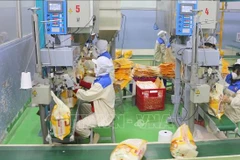
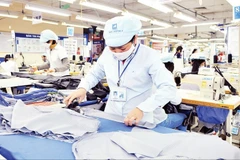
Forum delves into credit shortage for SMEs ảnh 1Workers at Trung Dung Co Ltd, a manufacturer of elastic threads and yarn in Tan Trieu Commune in Hanoi’s suburban district Thanh Tri. The company employs around 200 employees. (Photo: VNA)

Hanoi (VNA) - A forumon measures to improve capital access for small- and medium-sized enterprises(SMEs) took place in Hanoi on August 8, looking at difficulties of both firmsand banks in the matter.

According a report of the VietnamChamber of Commerce and Industry (VCCI), loans provided for SMEs account for 21percent of the total outstanding loans. Up to 60 percent of SMEs are stillunable to access or use bank capital, particularly start-ups who begin withideas and plans rather than capital and assets.

The SME Development Fund, set upin 2014 with total capital of 2 trillion VND (88 million USD), has so far lent145 billion VND to 19 businesses, heard the forum.

VCCI Chairman Vu Tien Loc saidthe credit shortage for SMEs is blamed on three parties. The first is the Statewhose representatives are the State Bank of Vietnam and other relevantministries and agencies. The second is banks and financial institutions, andthe third is the micro, small and medium-sized enterprises (MSMEs).

On the state side, there arestill many legal regulations that do not encourage investment and creativebusinesses, according to Loc. Banks and other financial institutions are stillin favour of State-owned enterprises and enterprises having asset collateral.

However, he pointed to the factthat the digital economy, startups and agricultural businesses do not have alot of assets, while such important resources as business projects and ideasare less likely to be considered proper collateral.

Meanwhile, a majority of nearly700,000 MSMEs in Vietnam do not have collateral assets, many demonstrate lowtransparency and weak governance, Loc noted, adding that is the reason whybanks and other financial institutions say no to them.

Sharing the VCCI Chairman’sopinion, Nguyen Quoc Hung, head of the central bank’s Credit Department,admitted difficulties that the business group still faced in accessing bankloans are due to their lack of not only collateral but also attention toupdating business activities and preparing financial statements. Theirfinancial data is often slowly updated, inaccurate and not reviewed byindependent audit, affecting the evaluation process for bank loans.

He said weak performance ofauthorities and guarantee funds at localities is also added to the problem.

Experts at the forum recommendthat the three parties involved ought to work together to clear the riddle.

VCCI Chairman Loc said the Stateneeds to step up reform in terms of legal framework, which would encourage bankloans offered to SMEs and startups.

He suggested that banks consideraccepting mortgages in the form of ideas, business and production plans fromstartups and high-tech agricultural companies, while financial and insuranceinstitutions should better interact with the group to facilitate them.

Loc also stressed the necessityof a transparent management system and capacity building for drafting businessplans among enterprises.

Hung, meanwhile, suggested buildinga mechanism to tackle risks associated with loans for SMEs.

According to financial expert CanVan Luc, the State needs to quickly implement an effective legal framework forsupporting SMEs, while strengthening the role of business associations and cooperationamong financial institutions and credit guarantee funds.

Meanwhile, small businessesshould also improve transparency, disclosure and willingness to work withcredit institutions.-VNA
VNA

See more

Hai Phong targets 4.3 billion USD in FDI in 2026 (Photo: VNA)

Hai Phong city targets 4.3 billion USD in FDI in 2026

Hai Phong’s investment appeal is underpinned by a rapidly expanding development space, including the Southern Coastal Economic Zone covering more than 20,000 hectares, a planned free trade zone, deep-water ports at Lach Huyen, and 12 industrial parks newly established in 2025.

The relocation of check-in counters aims to better meet the travel needs of residents and visitors. (Photo: VNA)

Vietjet shifts domestic check-in at Tan Son Nhat from January 13

During the recent New Year 2026 holiday peak, Vietjet added 380 flights, equivalent to nearly 78,000 additional seats, on many key domestic routes linking Hanoi and Ho Chi Minh City with destinations such as Vinh, Thanh Hoa, Hai Phong, Da Nang, Phu Quoc, Nha Trang and Da Lat.

Commercial banks are providing approximately 88% of total green credit outstanding in Vietnam. (Photo: nhandan.vn)

Capital sources expanded for sustainable growth

According to the State Bank of Vietnam (SBV), by the end of November 2025, outstanding green credit was estimated at around 750 trillion VND (28.55 billion USD), with an average growth rate exceeding that of overall credit in the economy.

Customers select goods at a supermarket. (Photo: VNA)

Retail market expands sharply, sustainability challenges persist

According to a report on recently released by the Ministry of Industry and Trade’s Agency for Domestic Market Surveillance and Development, the size of the market reached more than 7 quadrillion VND (about 266 billion USD) in 2025, up around 10% compared with 2024.

Oil rigs at the Bach Ho oil field. (Photo: VNA)

Resolution 79: State economy to lead growth

Resolution 79 is described as a “clear action declaration” by the Politburo, saying the state economy is not only responsible for maintaining macroeconomic stability, but must also become the force leading a new growth model that is green and sustainable.

Workers at Garment 10 Corporation produce apparel for export. (Photo: Nhan Dan)

Vietnam leverages export advantages within RCEP region

In 2025, seafood exports to China alone exceeded 2.2 billion USD, up about 33% compared to 2024. Shipments to Japan fetched nearly 1.7 billion USD, a year-on-year increase of 14.6%, while those to the Republic of Korea and Australia grew by 9.6% and 3.2%, respectively.

Certificates of membership in the Vietnam International Financial Centre in Da Nang are awarded at the conference on January 9. (Photo: VNA)

Da Nang continues targeted investment promotion approaches

According to Chairman of the Da Nang People’s Committee Pham Duc An, the city prioritises building sustainable economic ecosystems and focuses on key breakthrough sectors with strong spillover effects, including high technology and digital transformation, logistics, urban infrastructure, finance, processing and manufacturing industries, high-tech agriculture, and the pharmaceutical and medicinal herb industry.

In 2025, Hyundai sales reached 53,229 vehicles across the Vietnamese market. (Illustrative photo: Yonhap/VNA)

Hyundai sales in Vietnam rise almost 23% in December

In 2025, sales reached 53,229 vehicles across the market, a result considered a testament to the efforts by TC Group, Hyundai Thanh Cong, and the entire Hyundai dealership network nationwide amidst a volatile market.

Hydroponic vegetable cultivation model at the High-Tech Agricultural Park (Photo daibieunhandan.vn)

HCM City accelerates shift toward ecological urban agriculture

​The city’s agricultural sector is undergoing a strong transformation, restructuring toward higher value-added and sustainable development. In recent years, the sector has maintained steady growth, with agricultural, forestry and fisheries output rising by an estimated 2.5% annually.