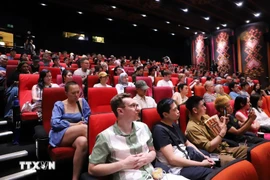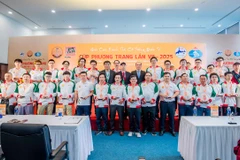
Hanoi (VNA) – At the third Da Nang Asian Film Festival (DANAFF), a workshop under the “Project Incubation” programme is betting on Vietnam’s young directors to break into the global film market.
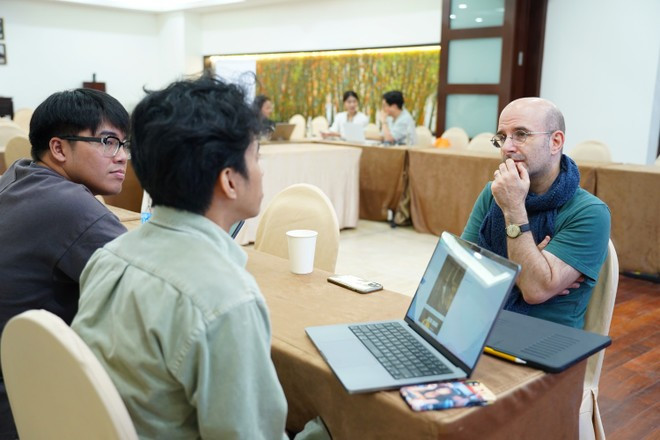
The “Genre Films Project” workshop, led by French producer Leonard Haddad and Korean counterpart Kim Young Min, is sharpening the skills of emerging filmmakers, helping them craft pitches and stories that can compete on an international stage.
Haddad, a veteran with over 20 years steering Asian cinema into Europe, spoke with VietnamPlus about the hurdles and opportunities for Vietnamese filmmakers. His insights painted a picture of a global film market at once ravenous for originality and shackled by preconceptions, where Vietnamese voices must carve out space amid fierce competition.
Common pitfalls for new directors
As head of Asian Film at Metropolitan Filmexport, a French production and distribution company, Haddad’s job is to introduce Asian cinema, whether from Hong Kong, the Republic of Korea, Japan, and now tentatively Vietnam, to French audiences.
He described the challenge of breaking through in a market where Vietnamese films are a rarity, only flickering onto screens perhaps once every two years. It’s tough, he admitted, but that’s what makes it exciting.
For Haddad, the art of storytelling is only part of the equation. A filmmaker’s idea, no matter how brilliant, is inert without a pitch that resonates. “Having an idea is one thing. Presenting it effectively is another,” he said. A successful pitch demands an intuitive grasp of how a story will land with investors who hold the purse strings, producers who shape the process, and audiences who ultimately judge the work.
From the first spark of a concept to the final frame onscreen, consistency is the thread that binds a filmmaker’s vision. Haddad and Kim, with their contrasting but complementary perspectives, are guiding Vietnamese talent toward broader Asian and European markets.
Shattering stereotypes
Haddad was candid about the lens through which French audiences view Vietnamese cinema, one clouded by exoticism. “There’s still an almost stereotypical view of Asia,” he said, conjuring images of verdant rice paddies, agrarian life, and traditional Ao Dai.
While France prides itself on openness to global cultures, he acknowledged a conservative streak in its film market. As a distributor, he sees his role as dual: catering to existing tastes while challenging clichés and making room for new narratives.
He urged Vietnamese filmmakers to embrace diverse storytelling and avoid being pigeonholed. “Be as varied as possible. Don’t box yourself in,” he advised. By digging into Vietnam’s history, family dramas, and cultural roots, filmmakers can craft stories that are distinctly Vietnamese yet universally resonant.
Asked what advice he would give to young Vietnamese directors, Haddad framed their path as a choice between two roads. “You can hope for a ‘lottery ticket’ - a one-off chance to make a film, or join a rising wave of filmmakers”. He bet on the latter.
Vietnam’s domestic market, pulsing with energy and appetite, is a potent asset, he argued. Rather than mimicking Hollywood or Korean glitzy dramas, filmmakers should lean into local stories. “Tell Vietnamese stories, about history, culture, traditions, in a Vietnamese way,” he said.
Stick to that vibe, Haddad argued, and it’s not just one hit flick, it’s a whole lineup the world will know as pure Vietnam.
Haddad’s parting words were blunt and optimistic: “Be unique. Be honest. Tell your stories in your way, and the world will listen”./.