Southeast Asian gong festival brings vibrant rhythms to Da Lat

The event brought together artisan troupes from three Southeast Asian countries – Laos, Cambodia, and Malaysia, alongside representatives from Vietnam’s Dak Lak, Gia Lai, Quang Ngai, and Phu Tho provinces.

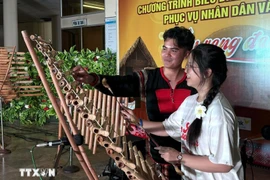
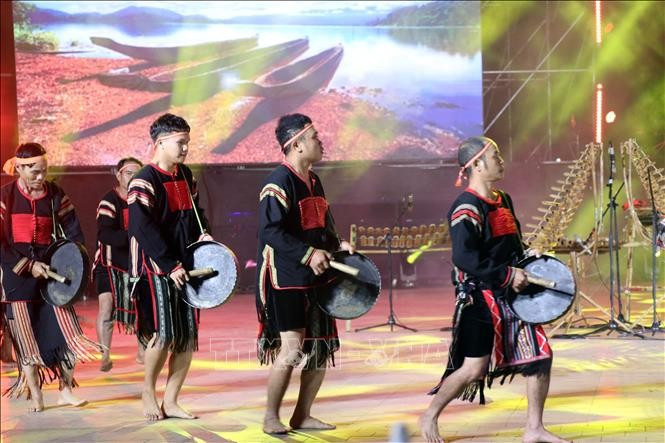
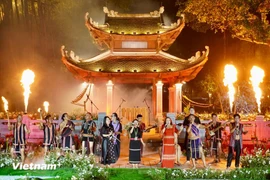
A performance at the Southeast Asian Gong Harmony Night 2025. (Photo: VNA)

Lam Dong (VNA) – The Southeast Asian Gong Harmony Night 2025 was held on December 20 evening at Lam Vien Square in Xuan Huong-Da Lat ward, Lam Dong province, drawing thousands of local residents and visitors to a vibrant celebration of regional cultural heritage.

The event was organised by the People’s Committee of Lam Dong province as part of the Southeast Asian Gong Festival 2025. It brought together artisan troupes from three Southeast Asian countries – Laos, Cambodia, and Malaysia, alongside representatives from Vietnam’s Dak Lak, Gia Lai, Quang Ngai, and Phu Tho provinces. Artisans from various localities and representatives of Lam Dong’s tourism businesses also took part in.

Opening the festival, Vice Chairman of the Lam Dong provincial People’s Committee Dinh Van Tuan noted that 2025 marks the 20th anniversary of the Space of Gong Culture in the Central Highlands being recognised by UNESCO as a Masterpiece of the Oral and Intangible Cultural Heritage of Humanity. He stressed that this heritage is not only a source of pride for the Central Highlands provinces but also an invaluable asset of the Vietnamese culture and humanity at large.

The gong harmony night was a highlight of the festival hosted by Lam Dong, he said, reaffirming the province’s commitment to safeguarding and promoting cultural heritage, creating favourable conditions for artisans and communities to practice and pass down heritage values, expanding international exchanges, and developing sustainable cultural tourism to enhance Vietnam’s standing on the global cultural landscape.

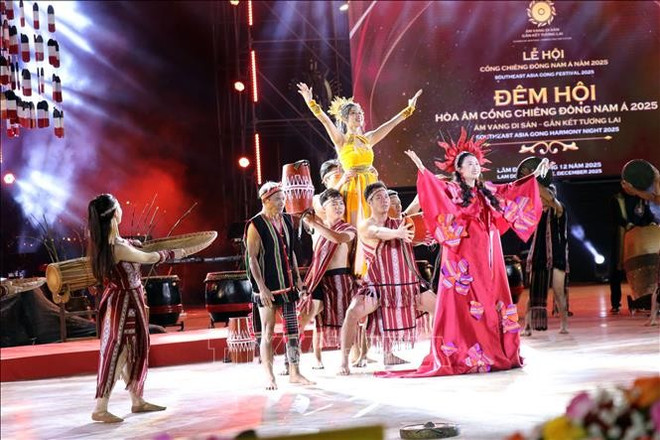
The programme opened with the traditional Yang worship ritual. The stage recreated a traditional village setting, featuring a communal longhouse, jars of ruou can (jar wine), and a sacred fire glowing amid resonant gong sounds. Performances by local gong troupes from localities such as Dam Rong and Dinh Trang Thuong followed.
nghi-le.jpg
The festival opens with the traditional Yang worship ritual. (Photo: VNA)

From Vietnam’s northwestern mountains, Thai ethnic artisans brought melodies evoking highlands, clouds and endless xoe dances, while Muong gong performances blended drums and communal footsteps to create a warm and inclusive festive atmosphere.

The most anticipated performances came from international troupes. Malaysia’s gong ensemble, reflecting the country’s rich cultural crossroads, delivered lively and rhythm-driven pieces imbued with tropical vitality. The Lao troupe presented gentle and welcoming sounds symbolising openness, harmony, and shared respect for heritage. Meanwhile, the Cambodian ensemble offered solemn and ancient rhythms imbued with ritual significance, recalling sacred temples and the profound cultural depth of the Land of Pagodas./.
VNA

See more

Farmers in Ninh Phuc flower village, Dong Hoa Lu ward, Ninh Binh province, are completing the final steps to bring beautiful and high-quality potted plants to market (Photo: VNA)

Spring colours fill Ninh Binh as farmers gear up for Tet market

As Tet approaches, traditional craft villages in the province are entering their busiest period. In kumquat and flower-growing villages, farmers are completing the final stages of care to ensure their products meet market demand in both quality and appearance.

International friends experience how a bowl of pho is prepared. (Photo: VNA)

Vietnamese Pho Day showcases culture, connectivity in Beijing

Vietnamese Ambassador to China Pham Thanh Binh described pho as a “national dish” and a cultural symbol of Vietnam. He said the event aimed to build bridges bringing international friends closer to Vietnam's culinary culture, thereby enhancing mutual understanding and people-to-people exchanges.

A performance staged at the political-artistic programme entitled “Duong len phia truoc” (The road ahead) held in Hanoi on February 4. (Photo: VNA)

Art programme marks Party’s 96th anniversary

The programme aimed to revisit the nation’s revolutionary traditions and reaffirm the Party’s comprehensive leadership throughout the revolutionary process, from the struggle for national independence to national construction and development during the renewal period and international integration.

The ritual to release of carp to bid farewell to the Kitchen Gods at the Thang Long Imperial Citadel. (Photo: baovanhoa.vn)

Traditional Tet rituals showcased at Thang Long Imperial Citadel

Running from February 1 to 25, the programme brings to life the festive atmosphere of Tet during the Le Trung Hung (Revival Le) Dynasty (1533–1789) alongside the folk Tet traditions of ancient Thang Long, helping to spread and honour Vietnam’s rich cultural heritage.

Tourists experience a cyclo ride around Hoan Kiem Lake (Photo: VNA)

Strategy to help enhance Vietnam’s prestige, appeal on international arena

The target is set out in the Government’s strategy to promote Vietnam’s global image for the 2026–2030 period, with a vision to 2045, approved by the Prime Minister on January 27. The strategy underlines that promoting Vietnam's image abroad is not merely information activities, but a strategic "soft" tool serving the country's development.

The opening ceremony of the first Spring Fair 2026. (Photo: VNA)

Spring Fair 2026 showcases Vietnam’s finest performing arts

According to the Organising Committee, the artistic programme of Spring Fair 2026 is designed to honour traditional cultural values, inspire national pride and promote confidence in Vietnam’s future. By bringing a wide range of art forms into an open, friendly public space, the fair allows audiences to experience high-quality performances in a festive setting.