Fukuoka Prize Laureate honours distinguished Vietnamese architect

Vietnamese architect Vo Trong Nghia has been honoured with the Arts and Culture Prize for his outstanding contributions to ecological architecture and for introducing innovative design concepts.

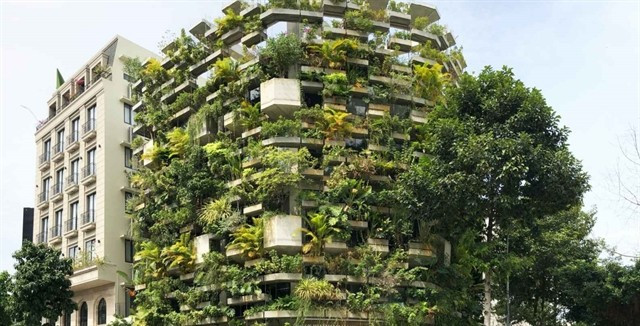
The Urban Farming Office in Ho Chi Minh City by Vo Trong Nghia. (Photo: Courtesy of Vo Trong Nghia Architects)

Hanoi (VNS/VNA) - Vietnamese architect Vo Trong Nghia has been announced as one of the winners of the 35th Fukuoka Prize Laureate 2025. The founder and principal of VTN Architects has been honoured with the Arts and Culture Prize for his outstanding contributions to ecological architecture and introducing innovative design concepts.

Established in 1990 by the city of Fukuoka, this annual award recognises individuals with exceptional achievements in academic research, arts and culture in Asia. It comprises three categories: Grand Prize, Academic Prize, and Arts and Culture Prize.

The 49-year-old architect will receive the award in Fukuoka on September 16.

Born in 1976 in Quang Binh, he is a distinguished figure in Southeast Asian architecture, known for his designs that embrace regional environments, vegetation and structures which use bamboo and wood. His work merges local traditions with modern construction techniques, advancing sustainable architecture.

After graduating as valedictorian from Nagoya Institute of Technology, with a scholarship from the Japanese government, Nghia pursued a master's degree in architecture at the University of Tokyo, earning the prestigious Furuichi Award for his thesis.

In 2006, he established Vo Trong Nghia Architects (VTN Architects), with offices in Ho Chi Minh City and Hanoi, and has continued to serve as its CEO.

In 2022, he obtained a PhD in architecture from Waseda University in Japan in 2022. Two years later, in 2024, he was appointed as the Norman R. Foster Visiting Professor at Yale School of Architecture, and from this year, he also serves as a visiting professor at the University of Pennsylvania.

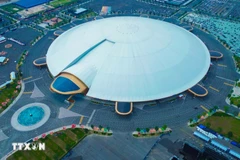
His notable projects include Gio va Nuoc (Wind and Water) Café in Ho Chi Minh City (2006) and the Grand World Phu Quoc Welcome Centre (2021), both of which prominently feature bamboo as a key structural and decorative element.

Other remarkable works include Thang House (2021) in Da Nang, integrating urban greenery, and the Bat Trang House, a ceramic brick structure designed in 2020 with an advanced ventilation and insulation system.

He is also recognised for his Buddhist and ancestral worship temple, a modern reinterpretation of traditional Vietnamese architecture, completed in Bến Tre in 2021. His Farming Office in Ho Chi Minh City (2022) embodies open, sustainable architecture, reducing energy consumption. Additionally, he designed the Vietnam Pavilion at the World Expo in Shanghai (2010).

His work has received multiple accolades, including the Vietnam National Architecture Award (2012), the Prince Claus Award (Netherlands, 2016), and six gold medals from the Architects Regional Council Asia (ARCASIA). In 2014, the World Economic Forum recognised him as one of the Young Global Leaders.

According to the Embassy of Japan in Vietnam, Nghia remains dedicated to ecological architecture, addressing Vietnam’s urban challenges through integrated greenery, innovative ventilation and insulation techniques.

"With his pioneering efforts, Nghia is fully deserving of the Fukuoka Asian Arts and Culture Prize 2025," the embassy noted./.

VNA
See more

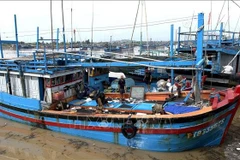
Fishermen in the Dong Tac fishery port of Phu Yen ward, Dak Lak province, prepare for a new trip after storm. (Photo: VNA)

Dak Lak supports fishermen in occupational transition

As of December 5, 2025, Dak Lak had 2,556 fishing vessels, with an annual marine catch of around 68,000 tonnes. An estimated 2,900 workers are in need of occupational transition, as most have limited educational backgrounds, unstable incomes and are increasingly ageing.

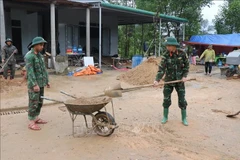
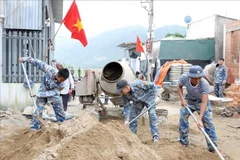
Forces are urgently building houses for people affected by natural disasters (Photo: VNA)

Quang Tri: Housing campaign brings hope for landslide-affected communities

The project was inaugurated on December 31, 2025. Over 18 days of construction, teams moved more than 30,000 cu.m of soil, sand, stone, and gravel; installed 200 anti-landslide gabions; built 130 m of drainage channels; planted 2,000 sq.m slope grass; and assisted residents with repairs, moving belongings, and clearing their homes to quickly restore livelihoods.

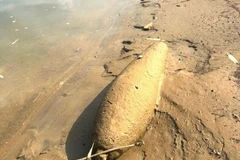
The device, which still had its detonator intact, was discovered by residents along the Lo River in Bac Muc hamlet, Ham Yen commune. (Photo: VNA)

Wartime bomb safely detonated in Tuyen Quang

Measuring approximately 20 cm in diameter and 80 cm in length, the bomb posed a serious safety risk due to its live detonator and the potential for detonation if disturbed.

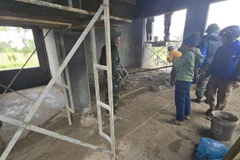
Military personnel are working tirelessly to rebuild and repair homes damaged by natural disasters in Khanh Hoa province under the Quang Trung campaign (Photo: VNA)

Khanh Hoa: forces race against time to complete Quang Trung campaign

Seventy personnel were mobilised to build the houses simultaneously, with tasks clearly assigned. Despite bad weather, they worked tirelessly, including night shifts, to ensure timely completion, said Senior Lieutenant Colonel Bui Van Tam, Deputy Chief of Staff of Brigade 162.

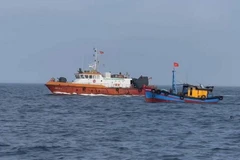
Illustrative image (Photo: VNA)

Quang Tri tightens control of vessels to prevent IUU fishing

Amid rising demand for offshore fishing in the early days of the new year, local authorities in the central coastal province of Quang Tri have stepped up controls on vessels entering and leaving ports to ensure compliance with regulations and prevent illegal, unreported and unregulated (IUU) fishing.

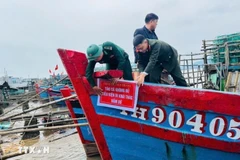
Fishing vessels that fail to meet requirements are barred from going to sea. (Photo: VNA)

Quang Ninh steps up digitalisation, enforcement to lift EC’s IUU fishing warning

By early 2026, Quang Ninh had established a transparent fisheries data ecosystem. All 4,116 fishing vessels of six metres or longer operating in the province have been registered and fully updated on the national system VNfishbase. Notably, information of all local vessel owners has been verified and synchronised with the national VNeID system, enabling faster and more accurate traceability and identification of fishermen.

Canada’s Secretary of State for International Development Randeep Sarai speaks with beneficiary households of a project supporting the recovery of agricultural production after natural disasters in Lao Cai. (Photo: baolaocai.vn)

Canada supports sustainable livelihood recovery in Lao Cai

Canada’s Secretary of State for International Development Randeep Sarai expressed his hope that Canada’s support for Vietnam in general, and for Lao Cai province in particular, would help local residents quickly stabilise their livelihoods.