Ha Giang targets 3.5 million visitors in 2025

In the first quarter of 2025, Ha Giang recorded over 848,000 tourist arrivals, including nearly 108,000 international visitors and more than 740,000 domestic travellers.

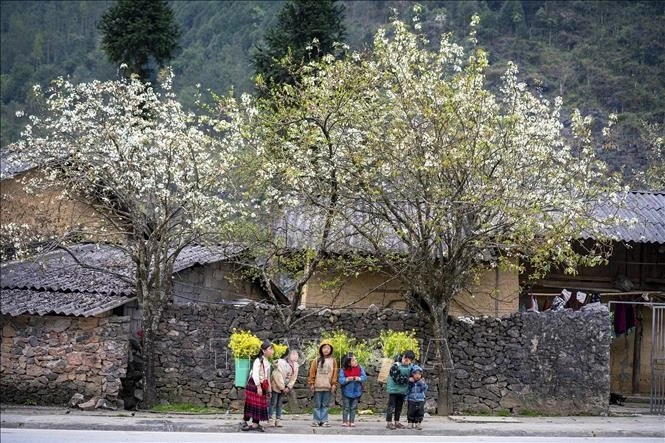
With its pristine natural beauty and rich ethnic heritage, Ha Giang aims to welcome around 3.5 million tourists in 2025. (Photo: VNA)

Ha Giang (VNA) – Located in Vietnam’s northern mountainous region, Ha Giang has long been a draw for adventure seekers and culture enthusiasts alike, with its pristine natural beauty and rich ethnic heritage. The province aims to welcome around 3.5 million tourists in 2025.

A tourism boom in early 2025

In the first quarter of 2025, Ha Giang recorded over 848,000 tourist arrivals, including nearly 108,000 international visitors and more than 740,000 domestic travellers.

Tourism revenue reached an estimated 2.3 trillion VND (89.1 million USD), marking a notable increase compared to previous years and highlighting the province’s rapid development as an ecotourism hub.

Ha Giang leaves a lasting impression on visitors, who are captivated by its rugged landscapes and warm hospitality. Nguyen Duc Anh, a traveller from Ho Chi Minh City, commented on the region’s progress over multiple visits, appreciating both the improved service quality and the province’s enduring charm. First-time visitors, such as Maria Gonzales from Spain, are often struck by Ha Giang’s unspoiled beauty and its deep-rooted traditions. The local cuisine, in particular, made a strong impression on her.

Iconic attractions and cultural experiences

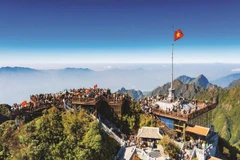
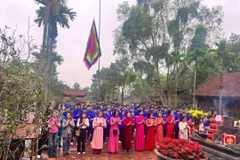
Ha Giang’s renowned landmarks continue to attract visitors throughout the year. Key attractions include the Vuong Family’s Palace, the Lung Cu National Flagpole, Lo Lo Chai Cultural Village in Dong Van, Ma Pi Leng Pass, and boat tours on the Nho Que River.

Other must-visit sites include Pa Vi Ha Mong Cultural Tourism Village in Meo Vac district, the Zero Kilometer Marker, Cam (Forbidden) Mountain in Ha Giang city, Vi Xuyen National Martyrs Cemetery, Hill 468, Hoang Su Phi terraced fields, and Suoi Thau Plateau in Xin Man district.Beyond its natural beauty, Ha Giang’s deep cultural traditions enhance its appeal.

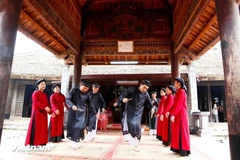
Visitors can experience unique ethnic festivals, such as the fire dancing festival of the Pa Then ethnic group, the coming-of-age ceremony of the Dao ethnic people, and the mesmerising Khen dance of the Mong ethnic group. These vibrant cultural elements contribute to Ha Giang’s charm, attracting those eager to explore the local heritage.

A commitment to sustainable tourism

Ha Giang is prioritising sustainable tourism by enhancing service quality while preserving ethnic cultural values. Community-based tourism initiatives in districts such as Dong Van, Meo Vac, and Quan Ba have successfully combined economic growth with environmental and cultural conservation. These projects not only provide income for local residents but also offer visitors a chance to experience ethnic minority life firsthand.

The province is also committed to green tourism and maintaining fair prices during peak seasons. By fostering trust and goodwill among travellers, Ha Giang continues to improve its reputation as a welcoming destination.

To support this growth, the Ha Giang People’s Committee has implemented a series of initiatives, including infrastructure improvements, market development, and cross-border trade facilitation. Plans to develop the Xin Man–Do Long and Sam Pun–Dien Bong border gates aim to boost economic and cultural exchanges with neighbouring Chinese provinces.

Ha Giang is also expanding its tourism products by promoting interprovincial travel routes and collaborating with international organisations on sustainable tourism development. The province is rolling out the "Ha Giang Tourism Branding and Positioning" programme to enhance its global tourism presence. A dedicated workforce development plan for 2025 and beyond aims to raise service standards and attract even more visitors.

Ha Giang continues to forge both domestic and international partnerships to promote tourism, with events such as the annual Buckwheat Flower Festival remaining key attractions.With a well-planned strategy and a firm commitment to sustainable tourism, Ha Giang is poised to solidify its position as one of Vietnam’s top ecotourism travel destinations./

VNA

See more

A rammed-earth house of the Mong ethnic community in the mountainous province of Tuyen Quang. (Photo: VNA)

Heritage fuels distinctive destination brands across Vietnam

As localities move beyond resource-based tourism towards value-driven cultural development, they are creating distinctive destination brands while reinforcing Vietnam's position as a culturally rich and compelling destination on the global tourism map.

Foreign tourists explore Hoi An ancient town in Da Nang city. (Photo: VNA)

Tourism sector pivots to quality-led growth in second half of 2026

According to the Vietnam National Authority of Tourism (VNAT), Vietnam welcomed 12.3 million international visitors in the first six months of 2026, up 15% year-on-year. The figure is the highest first-half number in recent years and puts the country close to halfway towards its target of 25 million foreign arrivals this year.

Travel guide Lonely Planet describes Da Nang as an outdoor lover’s paradise. (Photo: VNA)

Da Nang proves Lonely Planet right as Asia’s must visit summer destination

According to Lonely Planet, Da Nang stands out for its harmonious blend of beautiful beaches, an energetic yet relaxed lifestyle, a rich culinary scene and a diverse range of experiences spanning nature, culture, leisure and entertainment. The city is also praised as an ideal gateway to central Vietnam, offering convenient access to Hoi An, Hue and My Son Sanctuary.

Sun PhuQuoc Airways' new aircraft livery (Photo: Sun Group)

Vietnam's newest airline races from Phu Quoc onto the global stage

Sun PhuQuoc Airways, the airline of Sun Group, officially launched in October 2025 and began commercial flights the following month, entering a Vietnamese aviation market riding a wave of post-pandemic recovery, but also grappling with rising costs, fleet constraints, talent shortages, infrastructure pressure, and intensifying service competition. Less than a year in, this newcomer has already made its presence felt.

A Korean tourist family poses for a photo in the coastal city of Da Nang. (Photo: VNA)

Vietnam remains second most popular destination for Korean tourists

Japan remained the top destination, attracting about 951,000 Korean visitors, accounting for 40.6% of total outbound tourists. Vietnam ranked second with approximately 278,000 visitors, followed by the US with 100,000, Taiwan (China) with 79,000, Thailand with 64,000, the Philippines with 61,000 and Hong Kong (China) with 59,000.

Tourists explore a tourist attraction in Hue city. (Photo: VNA)

Wellness tourism helps Hue shape identity as Asia’s emerging "healing city"

The development of wellness tourism is also aligned with the Politburo's Resolution No. 57-NQ/TW on breakthroughs in science and technology development, innovation and national digital transformation. For Hue, the strategy provides an opportunity to combine modern medicine with traditional healthcare, biotechnology, indigenous medicinal herbs and tourism to create high-value services.

Keo Hanh Thien Pagoda is recognised as a special national relic in 2016. (Photo: VNA)

Digitalising rural heritage to boost tourism

Authorities in Xuan Hong commune of the northern province of Ninh Binh are leveraging digital technology to preserve cultural heritage and promote rural tourism, with the centuries-old Keo Hanh Thien Pagoda serving as the centrepiece of the initiative.

Discover Moscow offers a comprehensive hub of practical travel information, seasonal itinerary ideas and useful tips for visitors planning a trip to the Russian capital. (Screenshot)

Discover Moscow debuts Vietnamese-language tourism platform

Accessible at https://discover.moscow/vi, the platform provides a one-stop source of travel information, featuring practical guidance, seasonal itineraries and planning tips for visitors. It showcases the city's key attractions, cultural routes, parks, events, restaurants, shopping destinations and family-friendly activities, enabling travellers to organise their trips before arriving in Moscow.

Boat tours in Cam Thanh village, Da Nang city, generate significant income for local residents. (Photo: VNA)

Rural tourism draws strength from indigenous culture

Vietnam currently has more than 600 agricultural and rural tourism models, generating over 25 trillion VND (956 million USD) in annual revenue. The sector has become an important source of income for many rural communities seeking to diversify their livelihoods.

Located about 200 km from Hanoi, Ta Xua in Son La province is widely regarded as one of the most spectacular cloud-hunting destinations in northern Vietnam. (Photo: VNA)

Ta Xua sets sights on sustainable tourism

Ta Xua is rolling out a campaign titled “Bringing Ta Xua to the world” and aims to establish the image of “Ta Xua - a sea of clouds, majestic nature and Mong cultural identity” during the 2028-2030 period.