Half a century of Vietnam–Germany relations: shaping a strategic vision ahead

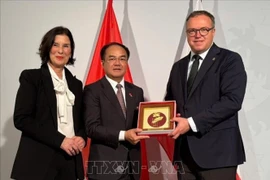
The book “Innovation and Cooperation: The Future of Germany–Vietnam Relations” has been launched as a policy-oriented study offering strategic insights for bilateral ties in the new phase, marking the 50th anniversary (1975–2025) of diplomatic relations between the two countries.

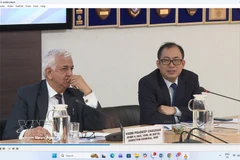
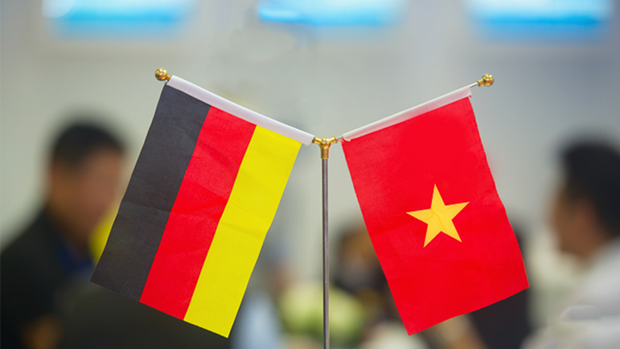
(Illustrative photo: VietnamPlus)

Hanoi (VNA) – Marking the 50th anniversary (1975–2025) of diplomatic relations between Vietnam and Germany, the book “Innovation and Cooperation: The Future of Germany–Vietnam Relations” has been launched as a policy-oriented study offering strategic insights for bilateral ties in the new phase.

Co-edited by Prof. Dr. Andreas Stoffers, Country Director of the Friedrich Naumann Foundation for Freedom (FNF) in Vietnam, and Ludwig Graf Westarp, Vice Chairman of the Vietnam–Germany Association and a lecturer at Dortmund University of Technology, the publication brings together in-depth contributions from policymakers, academics and business representatives of both countries. It charts the transformation of Germany–Vietnam relations from a traditional aid- and education-based model to a modern strategic partnership centred on mutual interests and shared gains.

The editors underline two core pillars for the future of bilateral relations. The first is strong institutional cooperation, with the EU–Vietnam Free Trade Agreement (EVFTA) identified as the key legal and economic foundation. The second is technological innovation, with Industry 4.0 highlighted as a driving force for improving both the quality and sustainability of cooperation.

According to the book, the EVFTA goes beyond boosting trade and investment, also serving as a catalyst for institutional reform and higher labour, environmental and governance standards in Vietnam. This shift, the authors note, has helped elevate Germany–Vietnam economic ties from a focus on volume to one on value. At the same time, as Vietnam advances its industrialisation and modernisation agenda and pursues its net-zero emissions target by 2050, Germany’s support in smart manufacturing, renewable energy, automation and high-quality workforce training, particularly through the dual vocational training model, is seen as critical.

By integrating policy, economic and technological perspectives, the book argues that Germany–Vietnam relations have evolved into a partnership of regional and global significance. It points to clear complementarities: Germany, a leading engine of the European Union, is seeking a stable and reliable partner in Southeast Asia, while Vietnam needs advanced technologies and high-quality markets to fulfil its development ambitions.

The authors conclude that the combination of institutional cooperation anchored in the EVFTA and technological innovation focused on Industry 4.0 transfer and application forms the blueprint for deepening the strategic dimension of bilateral ties. In this partnership, Germany brings capital, technology and high standards, while Vietnam offers a dynamic market, a strategically important geopolitical position and a young, adaptable workforce.

Analyses by Prof. Andreas Stoffers and Ludwig Graf Westarp stress that only by advancing “cooperation” and “innovation” in tandem can Vietnam–Germany relations continue to rank among the most durable and effective strategic partnerships in Asia, while remaining resilient amid global economic and geopolitical shifts./.
VNA

See more

Vietnamese, Chinese soldiers begin conducting joint border patrol (Photo: VNA)

Vietnamese, Chinese soldiers conduct joint border patrol

The patrol was carried out in two time frames, lasting a total of seven hours. During the operation, both sides deployed three working teams with 48 officers and soldiers, used six vehicles, held 12 on-site meetings, distributed 300 information leaflets, provided outreach to 300 border residents, and patrolled a total distance of 150 km.

Party General Secretary To Lam, head of the Central Steering Committee for Prevention and Control of Corruption, Wastefulness, and Negative Phenomena, speaks at the event (Photo: VNA)

Party leader chairs 29th meeting of central steering committee for corruption control

Since the beginning of the year, Party committees and inspection commissions at all levels have disciplined more than 330 Party organisations and 9,600 Party members. The Party Central Committee and its Politburo, Secretariat, and Inspection Commission disciplined 23 officials under Party Central Committee management, including six prosecuted cases.

Ambassador Do Hung Viet, Permanent Representative of Vietnam to the UN (Photo: VNA)

Vietnam continues to affirm standing, distinct identity at UN: Ambassador

The close attention and direct engagement of high-ranking Vietnamese Party and State leaders in key UN activities delivered the country’s powerful messages on upholding the values of peace, strengthening multilateral cooperation, addressing common challenges, and promoting sustainable development.

Minister of National Defence Gen. Phan Van Giang (R) welcomes Minister of Defence Industry of Azerbaijan Vugar Mustafayev on December 25. (Photo: qdnd.vn)

Vietnam, Azerbaijan push defence industry ties during Hanoi talks

Vietnam – Azerbaijan defence ties have progressed in line with directions of the two countries’ leaders and defence ministries, as well as the signed cooperation agreements, yielding positive results, particularly in the exchange of delegations at various levels and in the defence industry.

All members of the NA Standing Committee present at the session vote in favour of resolutions on administrative unit standards and urban classification. (Photo: VNA)

Resolutions on urban classification and administrative unit standards approved

The draft resolution streamlines urban classification around three key areas - role and socio-economic conditions, urbanisation level, and infrastructure development. It also integrates green, smart, climate-resilient, and digital transformation requirements, while promoting decentralisation in urban management.

Prime Minister Pham Minh speaks at the working session. (Photo: VNA)

PM requests development of modern, hi-tech, dual-use defence industry

In 2026, the entire military must focus on building a revolutionary, regular, elite, and modern force; strictly implementing the Party Central Committee’s directives on Party building and rectification; flexibly, substantively, and effectively conducting defence diplomacy; and promoting self-reliance and resilience in the defence industry, logistics, and technical operations.

☕ Afternoon briefing on December 24

☕ Afternoon briefing on December 24

Outstanding domestic and international events of 2025 selected by the VNA, the Christmas atmosphere in Vietnam, and a seminar aimed at exploring cooperation opportunities between Vietnam and Russia in the digital era are among news highlights on December 24.

The closing of the 13th Party Central Committee's 15th plenum on December 23 (Photo: VNA)

📝OP-ED: Party Congress personnel: No room for rumours!

As Vietnam stands on the threshold of a promising new development phase brimming with opportunities and high expectations, staying alert to fake news, rumours, and baseless accusations is not merely a voice of rationality but a civic duty towards the nation’s future.