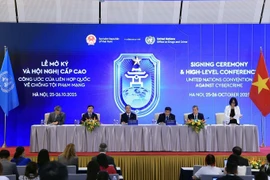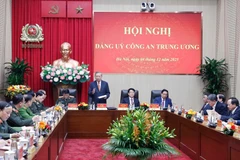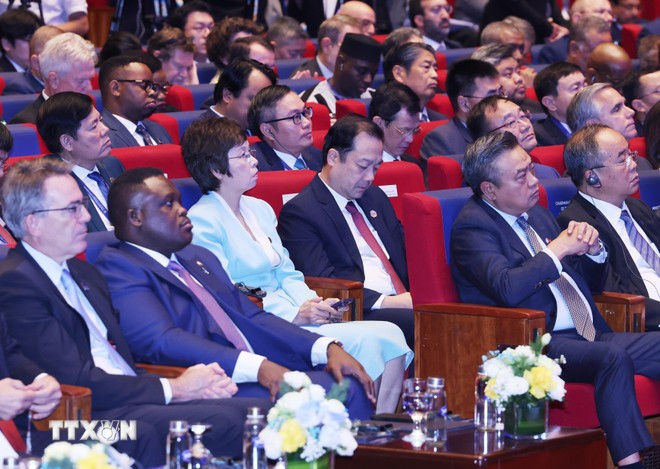
Hanoi (VNA) – The signing ceremony for the United Nations Convention against Cybercrime (Hanoi Convention), themed “Countering Cybercrime – Sharing Responsibility – Securing Our Future,” took place in Hanoi on October 25, marking a significant step forward in global efforts to safeguard cyberspace – a shared asset of all humanity.
The event was not merely a legal formality but also a pivotal platform for dialogue, cooperation, and exchange among governments, international organisations, and the private sector. It aims to advance the implementation of the UN convention and strengthen coordination against increasingly complex cyber threats.
A testament to multilateralism
The Hanoi ceremony, according to Ghada Waly, Executive Director of the UN Office on Drugs and Crime (UNODC), serves as a resounding statement that multilateralism works and that the international community remains serious about addressing cybercrime.
“UNODC is proud to support Vietnam in hosting this landmark event,” Waly said, adding that the organisation will continue to rely on Vietnam’s leadership and partnership in translating the new convention into concrete action.
She highlighted that rapid advances in software and artificial intelligence are redefining the scope, scale, and sophistication of cyber threats.
Ransomware that once only locked hard drives can now paralyse entire supply chains, demanding billions of dollars in ransom, she noted. She further stated that phishing, once confined to clumsy fake emails, has evolved into highly automated deception campaigns, while AI can convincingly impersonate police officers, bankers, or even family members to defraud victims.
Addressing this challenge, the Hanoi Convention is viewed as a paradigm shift that fills urgent gaps in the global response to cybercrime and provides a practical launch pad for collective action, according to Waly.
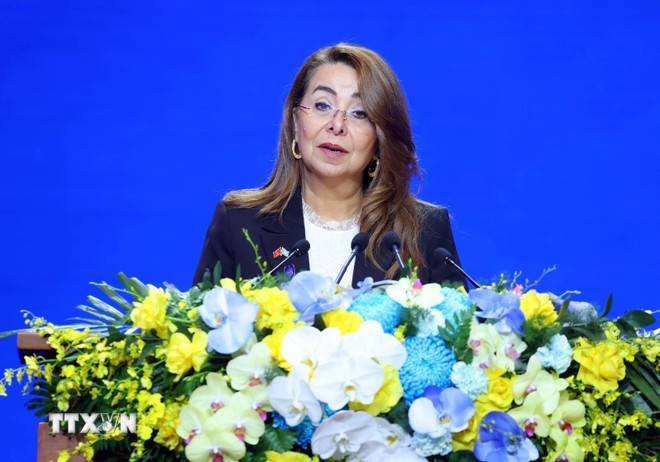
To seize the historic opportunity provided by the Hanoi Convention, she stressed that the international community must achieve two objectives – first, ensuring that the convention enters into force as early as possible by promoting signature and ratification by all UN member states.
The second goal, she said, is to pave the way for its full and effective implementation, including legislative reforms, partnership building, and enhanced technical capabilities.
This requires bold and sizable investment of political and financial resources, particularly to build capacity in developing countries, she noted, adding that it also requires collaboration with the private sector and civil society to unlock the convention’s full potential.
Joint efforts for a safer digital future
Russian Ambassador to Vietnam Gennady Bezdetko described the Hanoi signing as a valuable platform for countries to exchange best practices in combating information-related crimes.
In today’s context, the need for comprehensive international cooperation to ensure that digital transformation takes place safely and sustainably, as well as for the establishment of a unified approach to global information security, modern ICT use, and electronic data protection, has become increasingly urgent, he said.
The ambassador reaffirmed Russia’s determination to promote dialogue and mutual understanding among nations to build a secure, open, and equitable digital future.
He noted that cybersecurity collaboration, including joint efforts to prevent cybercrime, remains an important component of the multifaceted partnership between Vietnam and Russia, as both nations face similar challenges in cyberspace.
The signing of the Hanoi Convention is a historic milestone in the international community’s collective pursuit of global information security, Bezdetko said.
Associate Professor Bui Hoai Son, Standing Member of the National Assembly’s Committee for Culture and Society, said the UN’s selection of Hanoi as the host city for the convention’s signing ceremony carries profound implications not only in legal terms but also politically and culturally.
For the first time in history, Vietnam’s capital is directly associated with a global UN convention, Son stated, elaborating that this affirms Hanoi’s position as the heart of a nation cofidently asserting its independence and responsibility in a new era of global integration./.