Hanoi Convention: Global pact to boost cooperation in combating cybercrime

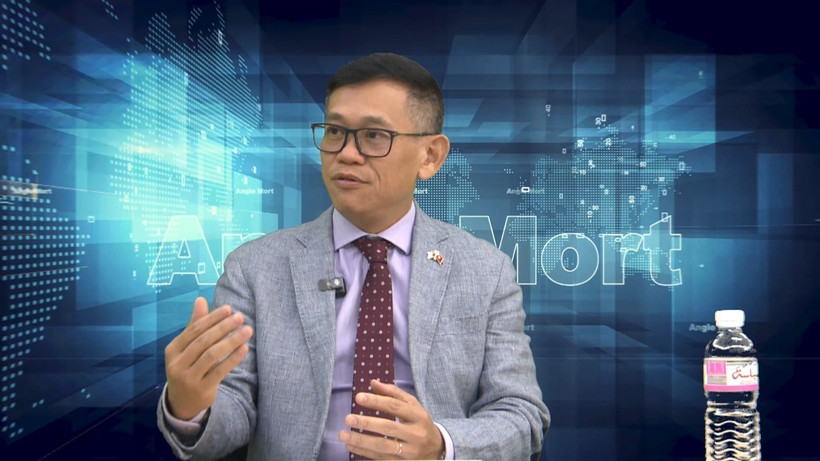
Vietnamese Ambassador to Algeria Tran Quoc Khanh said the United Nations Convention against Cybercrime, known as the Hanoi Convention, provides special support for developing nations through financial assistance, technology transfer, and human resource training to help bridge the global digital divide

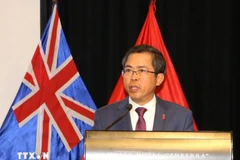
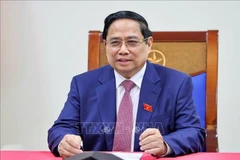
Vietnamese Ambassador to Algeria Tran Quoc Khanh (Photo: VNA)

Algiers (VNA) — The United Nations Convention against Cybercrime, known as the Hanoi Convention, includes legal and technical cooperation mechanisms such as information exchange, investigation assistance, extradition, recovery of illicit assets, and sharing of training and capacity-building experience in cybersecurity, according to Vietnamese Ambassador to Algeria Tran Quoc Khanh.

Notably, it provides special support for developing nations through financial assistance, technology transfer, and human resource training to help bridge the global digital divide, he said at a recent television programme in Algeria.

The signing ceremony of the convention in Hanoi on October 25–26 is expected to see the participation of representatives from more than 100 UN member states, the ambassador noted.

Khanh highlighted that this landmark agreement represents the culmination of six years of intensive negotiations that began in 2019. The goal of these discussions was to establish a comprehensive legal framework that would allow countries to collaborate more effectively in combating transnational cybercrime and ensuring a secure and healthy digital environment for the global community.

He also said that Algeria played an active role throughout the drafting process, chairing the negotiation group during several key phases. The North African nation’s engagement, he added, underscores its commitment to advancing international cooperation on cybersecurity and reinforces Africa’s standing in global issues.

According to the ambassador, the negotiation process initially faced significant hurdles due to differences in perspectives and development levels among countries. Some viewed the issue through an economic lens, while others approached it from social or technical standpoints. However, through dialogue and cooperation, member states ultimately agreed on a comprehensive solution balancing their interests.

When asked about the possibility of forming a “digital Interpol,” Khanh clarified that the convention would not replace existing mechanisms but rather create a unified legal foundation to enhance coordination among international bodies such as Interpol and the United Nations in data sharing and cybercrime response. Each country retains full judicial sovereignty but can participate in a common cooperation framework to improve the efficiency of investigation and prosecution, he said.

Beyond discussions on the Hanoi Convention, the ambassador also reflected on the long-standing friendship between Vietnam and Algeria.

He identified three priority areas for bilateral cooperation - agriculture and food security, health care and pharmaceuticals, and digital transformation and energy.

Cooperation could expand into clean energy and digital technologies to support sustainable growth in the future, the ambassador suggested./.
VNA

See more

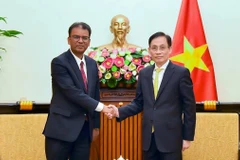
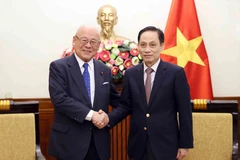
Minister of Foreign Affairs Le Hoai Trung receives Non-Resident Ambassador of Nepal to Vietnam Dhan Bahadur Oli in Hanoi on December 13, 2025. Photo courtesy of the Ministry of Foreign Affairs.

Vietnam, Nepal seek to promote deeper, substantive cooperation

Nepalese leaders attach great importance to relations with Vietnam and wish to learn from its experience and development models in socio-economic development and international integration, said Non-Resident Ambassador of Nepal to Vietnam Dhan Bahadur Oli.

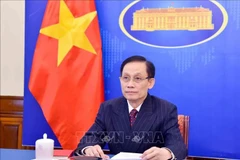
Vietnamese Minister of Foreign Affairs Le Hoai Trung (Photo: VNA)

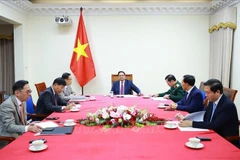
Vietnamese, Lao foreign ministers hold online talks

The two ministers agreed to maintain close coordination in the time ahead and to expand cooperation under the new framework and orientation, underscoring the significance of the two countries’ “great friendship, special solidarity, comprehensive cooperation, strategic cohesion”.

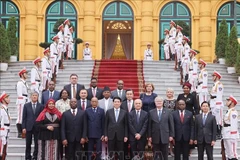
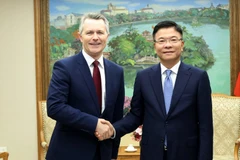
State President Luong Cuong (fourth from left, first row) and newly-appointed foreign ambassadors in Hanoi on December 12, 2025. (Photo: VNA)

State President receives newly-appointed foreign ambassadors

Receiving Egyptian Ambassador Hany Mostafa Mohamed Mostafa Hassan, President Cuong affirmed that Vietnam highly evaluates Egypt’s role, position, and contributions to regional peace and stability. He also congratulated the African country on its achievements in implementing the 2030 Vision.

An overview of the seminar on the Party’s leadership in ensuring macroeconomic stability, renewing the growth model, restructuring the economy and promoting international integration (Photo: VNA)

Vietnam, Cuba exchange theoretical views on Party’s leadership in macroeconomic stability

The two sides explored in depth the Party’s role in leadership, orientation, oversight and strategic coordination in economic management; approaches to implementing economic restructuring programmes alongside the renewal of the growth model; measures to respond to global economic volatility, inflationary pressures and shifts in global trade; and the building of effective strategic advisory bodies to ensure the Party’s comprehensive leadership in a changing context.

Vietnam’s Ambassador to Australia Pham Hung Tam (Photo: VNA)

Australia–Vietnam Policy Institute serves as bridge for bilateral relations

Established in 2022, AVPI serves as a forum for exchanging ideas among businesses, government agencies, non-profits, universities, and scholars in Australia on Vietnam. The institute acts as a platform for policy dialogue, focusing on research and insights on strategic relations and bilateral economic ties.

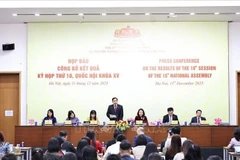
General Secretary and Chairman of the NA Office Le Quang Minh chairs the press conference announcing the results of the NA's 10th session (Photo: VNA)

10th session helps strengthen public trust in personnel work, NA’s supreme oversight

Personnel consolidation carried out at the NA's 10th session helps ensure continuous, unified, effective, and efficient leadership of the state apparatus; guarantee smooth and uninterrupted direction and governance; and prevent any leadership gaps in critical areas. All positions elected or approved by the legislature meet the key criteria required within the organisational structure.