HCM City reports six dengue deaths, raises outbreak alert

Health authorities in HCM City have issued an urgent alert after six people died from dengue fever, amid a spike in infections driven by the onset of the rainy season.

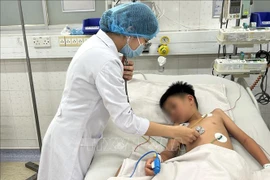
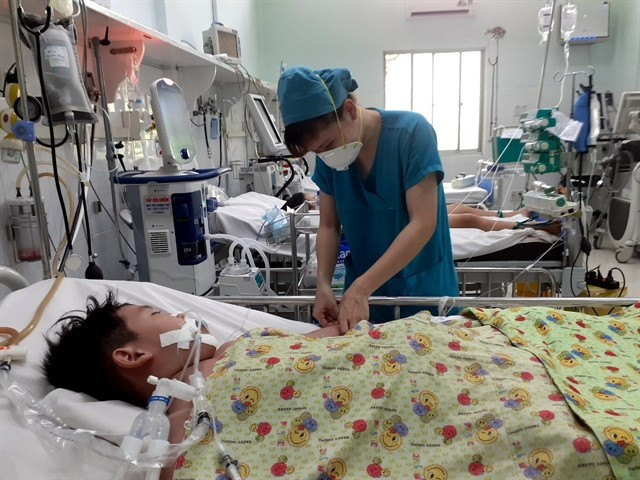
A child receives treatment for dengue fever at a hospital in HCM City. Six people have recently died as the city faces a sharp rise in cases. (Photo: VNA)

HCM City (VNA) - Health authorities in Ho Chi Minh City have issued an urgent alert after six people died from dengue fever, amid a spike in infections driven by the onset of the rainy season.

The HCM City Centre for Disease Control (HCDC) has confirmed that 838 new cases were recorded in the past week alone, pushing the total for the year to 14,370, a surge of more than 153% compared to the same period last year.

Two of the deaths occurred in the former province of Binh Duong and one in the former province of Ba Ria–Vung Tau, which were recently merged into HCM City.

The majority of infections, over 11,000, have been reported in the city’s central districts, with nearly 2,500 in Binh Duong and 862 in Ba Ria–Vung Tau.

Officials have warned the city is entering the peak dengue transmission period, with mosquito populations thriving in waterlogged environments created by ongoing rainfall.

From 2019 to 2022, large outbreaks consistently occurred from mid-June through August, a pattern health authorities fear could repeat without swift intervention.

“This is a critical time. Without aggressive control of mosquito breeding sites, we could face a serious surge in hospitalisations, especially among children,” the HCDC said in a statement.

In response, the city is intensifying outbreak control measures, including larvicide spraying, public education campaigns, and inspections of high-risk areas.

Residents are being urged to remove standing water, clean water containers, and report potential mosquito breeding sites via the “Online Healthcare” app.

Key preventive actions include sealing or emptying unused water containers, replacing water in vases and dishes frequently, and using guppies in ornamental ponds to eat mosquito larvae.

The is of insect repellents, bed nets, mosquito sprays, and electronic swatters is also recommended.

Authorities are also calling on the public to actively support citywide anti-mosquito drives and allow access for fumigation teams.

Anyone experiencing fever or other dengue symptoms is advised to seek immediate medical attention and avoid self-treatment at home.

Early diagnosis is vital to prevent complications, especially in children and the elderly.

Health officials continue to monitor the situation closely and are urging all residents to remain alert and cooperative in order to prevent further deaths./.

VNA

See more

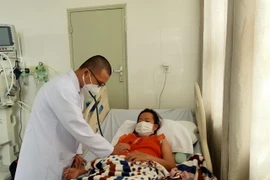
Medical staff at Cho Ray Hospital in Ho Chi Minh City cares for and treat the victim. (Photo published by VNA)

Last survivor of Phu Quoc boat capsize shows signs of recovery

The health condition of the last patient receiving treatment following the deadly boat capsize off the Phu Quoc special one in An Giang province has shown positive signs of improvement after three more days of intensive care, Cho Ray Hospital in Ho Chi Minh City said on July 16.

The number of foreign tourists coming to Ho Chi Minh City for travel combined with medical check-ups is increasing. (Photo: VNA)

Vietnam looks to unlock medical tourism potential with national strategy

The draft strategy aims to position Vietnam as a trusted healthcare destination in Southeast Asia by 2030 and eventually among Asia's leading medical tourism hubs. The plan marks a shift from viewing medical tourism as an untapped opportunity to making it a national development priority.

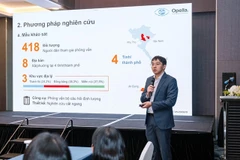
Delegates at the conference. (Photo: VNA)

Vietnam to produce first homegrown next-generation vaccines from 2028

Under the agreement, Sanofi will transfer technology to VNVC to manufacture selected high-demand vaccines for children and adults at VNVC Vaccine and Bioproduct Plant. The first next-generation vaccines produced in Vietnam are expected to roll off production lines in 2028.

Eric and Alysha joyfully welcome their baby through Mini IVF after more than 10 years of waiting. (Photo: Hong Ngoc Phuc Truong Minh General Hospital)

Vietnam - a destination for journeys to parenthood

An increasing number of international families are choosing Vietnam for infertility treatment, embarking on journeys to parenthood that transcend geographical distance and differences in nationality.

Prime Minister Le Minh Hung delivers remarks at the inauguration ceremony for Viet Duc University Hospital's second campus in Ninh Binh province. (Photo: VNA)

PM urges modern restructuring of healthcare network

The PM stressed that throughout the country’s development process, people have consistently been regarded as the centre, the driving force, the objective and the most important resource for national development. Sustainable and rapid development requires not only a healthy, knowledgeable and skilled population but also a modern, equitable, efficient, sustainable and accessible healthcare system.

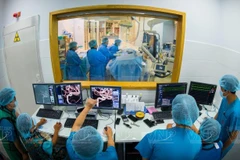
Thu Duc General Hospital, with a capacity of 1,000 beds, was inaugurated and put into operation in April 2025 (Photo: VNA)

Ho Chi Minh City moves to expand robotic surgery to gateway hospitals

According to the municipal Department of Health, developing gateway hospitals is a key pillar of the city's strategy to establish a regional specialised healthcare system. The network is designed to permanently relieve overcrowding at major downtown hospitals while strengthening strong inter-regional emergency care and treatment network.

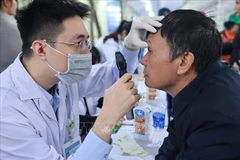
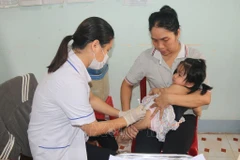
Doctors conduct health screenings for children in Tru Van Tho commune, Ho Chi Minh City. (Photo :VNA)

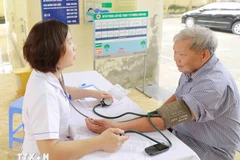
Ho Chi Minh City moves closer to universal health check-ups

Achieving universal health check-ups in 2026 will lay the foundation for a new healthcare model in which every resident has an electronic health record, receives regular screenings, benefits from lifelong health management and gains access to early intervention through primary healthcare services.