HCM City (VNS/VNA) - As traditional growth engines show signs of reaching their limits, Ho Chi Minh City is recalibrating its long-term development strategy in search of new drivers capable of sustaining momentum and reinforcing its role as the economic nucleus of the southern region.
Central to this shift is the Cai Mep Ha free trade zone, which is being positioned as a new growth pole anchored in port-based logistics, high-tech industry and modern services.
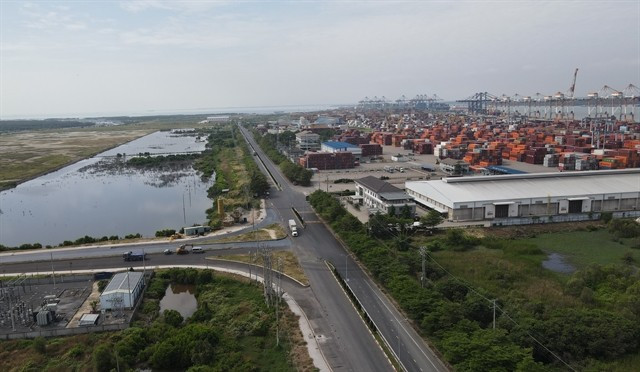
Planned to cover more than 3,764 hectares in Tan Phuoc ward, the Cai Mep Ha free trade zone is designed as a multifunctional “mega port-city”.
The model integrates seaport operations, inland waterways, rail transport, logistics platforms, high value-added manufacturing, and financial and commercial services.
The city planners view the project as a strategic move to capitalise on the city’s gateway position in international maritime trade while expanding its development space over the long term.
The zone is structured into three core functional areas comprising eight adjacent sub-zones.
The transport hub zone spans more than 1,735 hectares and includes existing container terminals, the Cai Mep Ha container port system, downstream port areas, inland waterway ports, and the Cai Mep Ha rail terminal on the Bien Hoa – Vung Tau railway line.
The logistics and industrial zone covers over 1,178 hectares, focusing on warehousing, logistics centres and supporting industries.
Meanwhile, the high-tech industrial, urban and services zone extends across more than 850 hectares, planned in tandem with green buffers and ecological reserve areas associated with forest carbon credits.
At the local level, preparations are already under way.
Authorities in Tan Phuoc ward have conducted comprehensive land reviews and strengthened management of land use, water surfaces and development space to establish a solid data foundation for project implementation.
At the same time, local administrations have engaged directly with businesses operating in the area, helping them understand development orientations, reassess investment plans and prepare to integrate into the future ecosystem of the free trade zone.
The Cai Mep Ha area currently hosts four seaports and four inland waterway ports in operation, providing a strong platform for expansion and capacity upgrading.
Alongside physical infrastructure, human resources have been identified as a decisive factor.
Proposals are being advanced to develop specialised training programmes aligned with logistics, port operations, financial services and high-tech manufacturing, ensuring an adequate supply of skilled labour for the next development phase.
From an expert perspective, the Cai Mep Ha free trade zone is expected to address long-standing bottlenecks related to administrative procedures, costs and approval timelines.
The adoption of a streamlined governance model, modern management standards and a genuine one-stop mechanism could significantly improve the business environment, strengthening HCM City’s competitiveness within the region.
Economists also underline the importance of synchronised infrastructure investment, particularly inter-regional connectivity linking the Cai Mep Ha area with expressways, rail networks and Long Thanh international airport.
Such integration is expected to reinforce logistics advantages while fostering large-scale production and service value chains with strong spillover effects across the southern key economic region.
Despite substantial challenges ahead, ranging from capital requirements to implementation pressures, the methodical preparation from city level down to local authorities reflects strong determination to secure new growth momentum.
If implemented effectively, the Cai Mep Ha free trade zone is expected to serve as a strategic lever, helping shape a new development trajectory for the city as a dynamic megacity deeply integrated into the global economy./.
VNA