HCM City targets annual growth of 7 percent in collective economy
Ho Chi Minh City has set a target of developing an additional 150 cooperatives and two cooperative alliances during the 2021-2025 period while posting annual average growth of 7 percent in the collective economy.Ho Chi Minh City has set a target of developing an additional 150 cooperatives and two cooperative alliances during the 2021-2025 period while posting annual average growth of 7 percent in the collective economy.
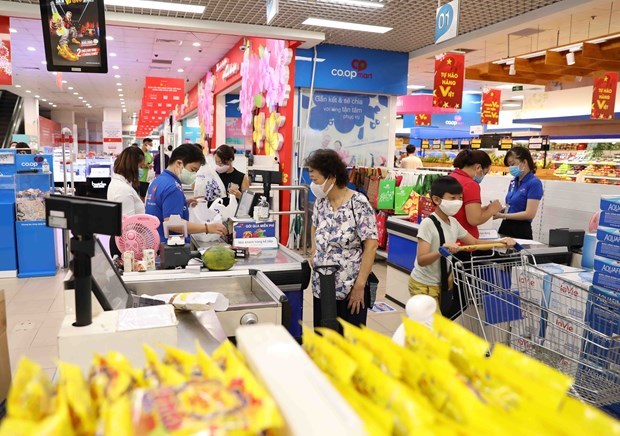 At a supermarket in HCM City (Photo: VNA)
HCM City (VNA) - Ho Chi Minh City has set a target of developing an additional 150 cooperatives and two cooperative alliances during the 2021-2025 period while posting annual average growth of 7 percent in the collective economy.
The sector will contribute 0.5 percent to the city's gross regional domestic product (GRDP) during the period and attract 15,000 more workers to cooperatives.
The targets are set out in a collective economy development plan for 2021-2025 approved recently by the municipal People’s Committee.
Under the plan, the city will develop new-style cooperative models in the fields of agriculture, trade, and services.
To that end, the municipal People’s Committee has stressed the importance of encouraging the development of the collective economy and cooperatives in all fields and industries in both quality and quantity as well as attracting the engagement of all of society, especially young people and women.
The city will carry out a wide range of measures, such as increasing public awareness of the collective economy and cooperatives; perfecting the legal framework, mechanisms and policies; and improving the efficiency of State management over cooperatives.
Attention will be paid to increasing the operation effectiveness of the collective economic sector and cooperatives in particular, and enhancing the role and responsibility and improving the capacity of the city’s Cooperative Alliance.
The city will also focus on raising the quality of human resources for the sector and cooperatives./.




You should also see
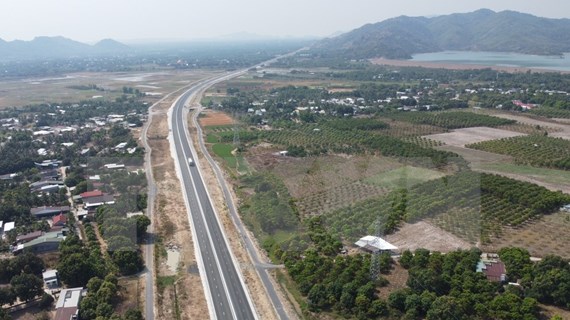
Cam Lam - Vinh Hao Expressway to help drive south-central region's economy
The 78.5km Cam Lam - Vinh Hao Expressway, one of the three sub-projects of the North - South Expressway project’s eastern wing, officially opened to traffic on April 26.

See more
 Business
InfographicExport value of six key industrial crops to reach 14-16 bln USD by 2030
Vietnam aims to post export turnover of 14-16 billion USD from six key industrial crops by 2030.
 Business
Long An, Japan's Okayama city explore cooperation opportunities
Leaders of Vietnam’s southern Long An province and Japan’s Okayama city engaged in a dialogue on April 26 to discuss cooperation between the two localities.
 Business
Investor confidence gains traction on improved business climate
Better investment climate, with simplified administrative producers and special incentives, has helped improve investor confidence, thus catalysing investments from a wider pook of both domestic and international investors for socio-economic development.
 Business
Vietnam’s rice exports may exceed 2024 target
With positive results recorded so far, Vietnam can exceed its target of 7.6 million tonnes in rice export volume set for 2024, Nguyen Ngoc Nam, Chairman of the Vietnam Food Association, said at a conference in the Mekong Delta city of Can Tho on April 26.
 Business
Ample room for Quang Ninh to attract FDI
The northeastern province of Quang Ninh has ample room to attract foreign direct investment (FDI) and realise the goal of attracting 3 billion USD in FDI this year and 10 billion USD in the 2020-2025 period.
