HCM City's health sector looks towards modern, equitable, and people-centred care

From battling epidemics to restructuring its system following the administrative boundary expansion, Ho Chi Minh City’s health sector has overcome difficulties and gradually reaffirmed its role as the nation’s largest medical hub.

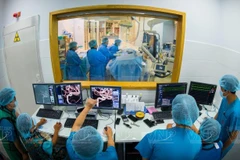
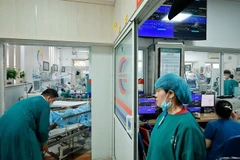
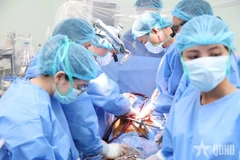
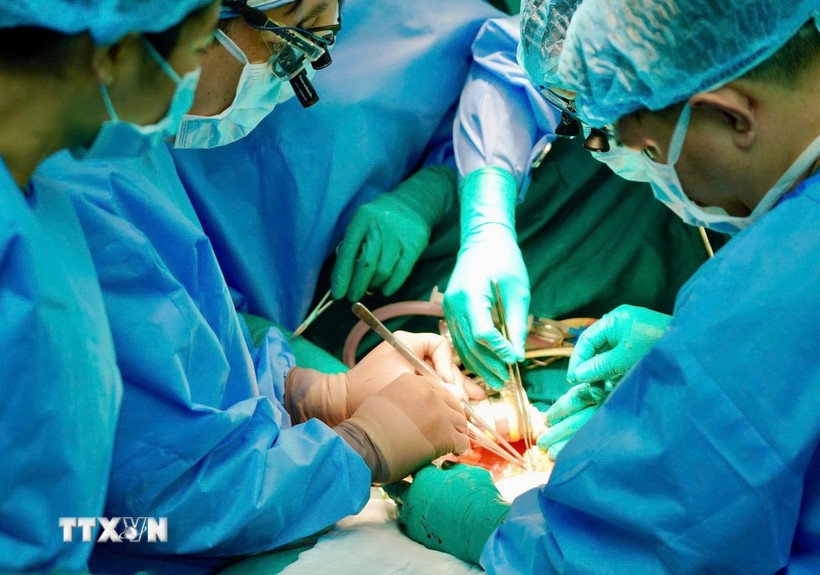
A surgery performed by doctors of Ho Chi Minh City University of Medicine and Pharmacy Hospital (Photo: VNA)

HCM City (VNA) - From battling epidemics to restructuring its system following the administrative boundary expansion, Ho Chi Minh City’s health sector has overcome difficulties and gradually reaffirmed its role as the nation’s largest medical hub.

Strengthening primary healthcare

The COVID-19 pandemic was seen as a harsh test, exposing weaknesses across the healthcare system — from the capacity of grassroots facilities and workforce shortages to limitations in coordination, management, and emergency response. In the post-pandemic period, HCM City’s health system has entered a phase of comprehensive reconstruction and reinforcement.

Drawing on valuable lessons from the pandemic, the municipal authorities have swiftly implemented programmes to strengthen disease prevention capacity, invested in infrastructure, and modernised hospital operations toward autonomy and universal healthcare.

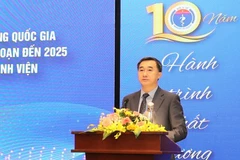
According to Assoc. Prof. Dr Tang Chi Thuong, Director of the municipal Department of Health, the sector has focused on three key goals over the last two years, including strengthening primary healthcare, enhancing preventive medicine, and modernising treatment.

At the same time, the city is implementing a project to develop its healthcare system into a healthcare hub in the Association of Southeast Asian Nations (ASEAN) in the next five years and beyond, aiming to build an advanced and modern medical system.

Following the administrative boundary expansion, the southern metropolis has promptly developed a comprehensive plan for its healthcare network to align with the enlarged urban space.

The municipal People’s Committee has been consulted to build a multi-tier, interconnected system that closely links primary healthcare with specialised hospitals, ensuring comprehensive and accessible care for all residents. Several leading specialised hospitals have received investments for expansion and modernisation.
2911-y-te-chuyen-doi-so.jpg
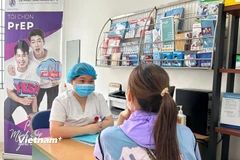
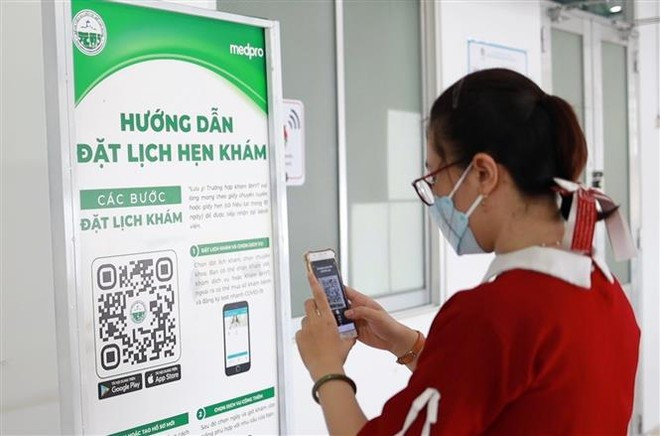
A woman scans QR codes to make medical appointments at Ho Chi Minh City Dermatology & Venereology Hospital (Photo: VNA)

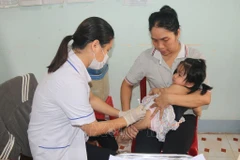
Primary healthcare has been significantly strengthened, serving as the “first line of defence” in disease prevention, community health management, and early screening for non-communicable diseases. Many health stations have been upgraded, staffed with family doctors and young physicians. Mobile health stations and home healthcare services continue to operate, providing faster and more convenient access to medical care. At the same time, programmes for elderly care, school health, mental health, and non-communicable diseases are being expanded, shifting the focus from “treating illness” to “managing public health.”

The city’s health sector has been restructuring its healthcare network to reduce overlap and waste, ensuring efficient management and equitable, quality access for all residents, whether in the urban centre or peripheral areas. Attention has been paid to building a strong workforce of healthcare professionals with the necessary expertise, integrity, and service spirit to meet the demands of a densely populated and special-status city.

As a pioneer in implementing a smart healthcare platform, HCM City has now equipped all medical facilities with electronic health records, telemedicine services, and smart hospital management systems, which help reduce administrative procedures, save time, and increase transparency. Residents can easily access medical information, schedule appointments, and receive test results online.

Smart healthcare operation centres are being developed, aiming for health governance based on big data and artificial intelligence (AI), forming a “digital health city.” This is a strategic step toward building an innovative and highly interactive city.

Building a modern and integrated healthcare network

Following the mergence with Binh Duong and Ba Ria–Vung Tau provinces, HCM City’s health sector is expected to significantly improve service quality and ensure healthcare for a megacity of over 13.6 million people. The city has launched programmes to strengthen health stations for primary care, patient triage, and routine health monitoring. At the same time, general and specialised hospitals are continually advancing high-level medical techniques, aiming to establish a regional-standard, specialised healthcare hub.

Dr Tran Van Song, Director of 115 People’s Hospital, stated that a series of new diagnostic and treatment techniques have been successfully implemented at the hospital, offering higher survival chances for patients with complex and critical illnesses. These advancements also expand medical options for residents, reducing the need to seek treatment abroad.

According to Thuong, in the coming period, HCM City aims to build a fair and efficient healthcare system based on a “people-centred” approach. Alongside improving medical service quality, the city will strengthen preventive care and public health, with a focus on vulnerable groups such as the elderly, migrant workers, children, and students. Key initiatives will also continue, including enhancing epidemic prevention capacity, consolidating primary healthcare, developing community health, professionalising out-of-hospital emergency services, and advancing specialised medical care, all toward the goal of making the city a healthcare hub in ASEAN.

Thuong emphasised the need to mobilise and efficiently use resources to protect, care for, and improve the health, stature, longevity, and quality of life of residents. There is also a need to develop comprehensive healthcare programmes and sustainable population growth, implement a population ageing adaptation strategy, and establish a full-spectrum healthcare service system for the elderly across the city.

The municipal health sector has always regarded the health of its people as its most valuable asset, and every policy and programme is aimed at better serving the community, Thuong stressed.

Strengthened international cooperation

HCM City has become a preferred partner for international health organisations in research, training, and technology transfer. For example, the Hospital for Tropical Diseases collaborates with Oxford University’s Clinical Research Unit (OUCRU), while other hospitals have expanded partnerships with institutions in Taiwan (China), the UK, Japan, France, the Republic of Korea, and the US. The areas of cooperation include organ transplantation, cancer treatment, cardiology, obstetrics, and paediatrics.

These partnerships not only help enhance professional expertise but also allow Vietnamese patients access to advanced medical treatments without travelling abroad./.

VNA

See more

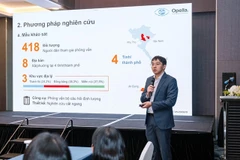
A representative of the Health Strategy and Policy Institute shares the results of a study titled “Assessment of Vietnam’s Readiness for Self-Care and Its Influence Factors”. (Photo courtesy of the organiser)

Vietnam ranks 4th in health self-care readiness

Self-care is an essential component of primary healthcare, with WHO defining it as the ability of individuals, families, and communities to promote and maintain health, prevent disease, and cope with illness with or without the support of healthcare professionals.

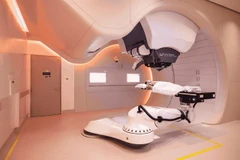
A proton machine in a hospital in Singapore. Proton beam therapy provides more options for cancer patients. (Photo courtesy of IHH Healthcare Singapore)

Proton therapy, an alternative method for cancer patients

In recent years, Vietnam's Ministry of Health has held numerous meetings with relevant units to assess the progress in developing proton therapy centres in the country. The project for establishing proton therapy centres is set to commence preparations in 2025 and aims for completion between 2026 and 2030.

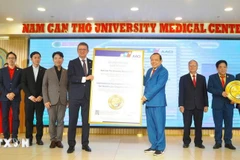
At the event (Photo: VNA)

First hospital in Mekong Delta earns US AACI accreditation

Nam Can Tho University Hospital on December 15 hosted a ceremony to announce its accreditation by the American Accreditation Commission International (AACI), a US-based body, becoming the first facility in the Mekong Delta and among a select few in Vietnam to earn the distinction.

A health worker administer IPV polio vaccine to a child in Dong Thap province. (Photo: VNA)

Vietnam proactively takes polio prevention measures amid outbreak in Laos

The meeting took place following an assessment by the World Health Organisation (WHO) warning that Vietnam is facing a very high risk of polio import and re-emergence. The risk arises after neighbouring Laos officially declared a polio outbreak on October 7, following the detection of circulating vaccine-derived poliovirus type 1 (cVDPV1).

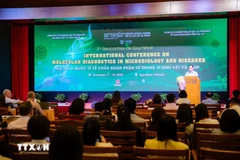
A view of the International Conference on Molecular Diagnostics in Microbiology and Diseases, organised by Rencontres du Vietnam and the International Centre for Interdisciplinary Science and Education (ICISE) in the central province of Gia Lai on December 11. (Photo: VNA)

Nearly 100 international scientists attend molecular diagnostics conference in Vietnam

The conference features almost 80 presentations across plenary sessions, parallel sessions and poster sessions, focusing on leading research trends such as point-of-care diagnostics; predictive biomarkers used to anticipate individual responses to therapy; and the development of new tools and platforms for rapid molecular-level detection and diagnosis.

Digital transformation in healthcare is being strongly promoted. (Photo: Organising Committee of the 2024 “Technology with Heart” Award, co-hosted by Vietnam News Agency and Viettel)

AI and precision medicine: Emerging prospects for Vietnam-Canada cooperation

Canada has strong experience in compiling and analysing genomic data, while Vietnam has a large population with diverse genetic structures. This complementarity can help Vietnam narrow its technological gap and enhance its capacity to treat rare diseases — an area many countries are prioritising for development.

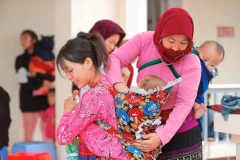
Maternal and child healthcare in Tuyen Quang province. (Photo: VNA)

Vietnam on path to become a healthy nation

Resolution 72 not only focuses on health care but is also closely interlinked with other sectors, helping to build a solid foundation for sustainable national development and create momentum for Vietnam to “take off” and further integrate into the world.

The emergency ward at Bach Mai Hospital, Hanoi. (Photo: VNA)

Health sector targets free hospital fee for all

The total value of medical expenses not covered by the health insurance fund is estimated at around 24.8 trillion VND (942 million USD) per year. Health insurance contributions remain low, at 4.5% of the salary or reference base used for calculation.

Sen. Lieut. Gen. Vongsone Inpanphim, Lao Deputy Minister of National Defence and Director of the General Department of Politics presents the Friendship Order of Laos to Vietnam’s Central Military Hospital 108. (Photo: VNA)

Vietnam, Laos expand cooperation in military medicine

Over the past two decades, many Vietnamese experts have undertaken long-term missions at the Central Hospital 103 to provide training and technical assistance, contributing to the successful treatment of complex cases. The Central Military Hospital 108 has also trained 206 Lao doctors, six nurses and two engineers — a clear demonstration of substantive, long-standing cooperation.

Deputy Minister Do Xuan Tuyen (left) and Alberto Anaya Gutiérrez, General Secretary of the Mexican Workers' Party (PT). (Photo: VNA)

Vietnam, Mexico boost medical cooperation

As both nations look to keep their long-standing partnership in good health, the health ministries of Vietnam and Mexico have been accelerating cooperation, especially in traditional medicines.

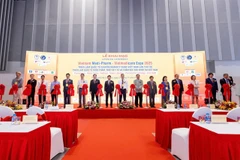
The opening of Vietnam Medi-Pharm 2025 and Vietmedicare Expo in Ho Chi Minh City on November 27, 2025. (Photo: VNA)

Major medical, pharmaceutical exhibitions kick off in HCM City

The 33rd Vietnam International Medical and Pharmaceutical Exhibition (Vietnam Medi-Pharm 2025) and the International Exhibition on Pharmaceuticals, Medical Devices and Healthcare (Vietmedicare Expo 2025) kicked off at the Saigon Exhibition and Convention Centre on November 27.

Doctors Do Thi Ngoc Linh (left) and Le Diep Linh at the RCS membership certificate award ceremony in London. (Photo: VNA)

Vietnamese surgeons honoured with prestigious Royal College Fellowship

The fact that the Vietnamese doctors have been awarded with FRCS certificate proves Vietnam’s surgical expertise has met international standards, contributing to improving the quality of treatment at home, expanding academic cooperation with world leading medical institutions and inspiring younger doctor to pursue higher standards.