Hanoi (VNS/VNA) - After more than a decade of negotiations, the Vietnam–EFTA Free Trade Agreement (VEFTA) is expected to open up significant opportunities for Vietnamese businesses to access some of the world’s highest-income markets.
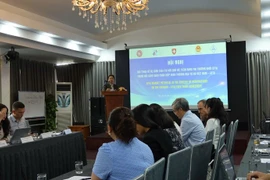
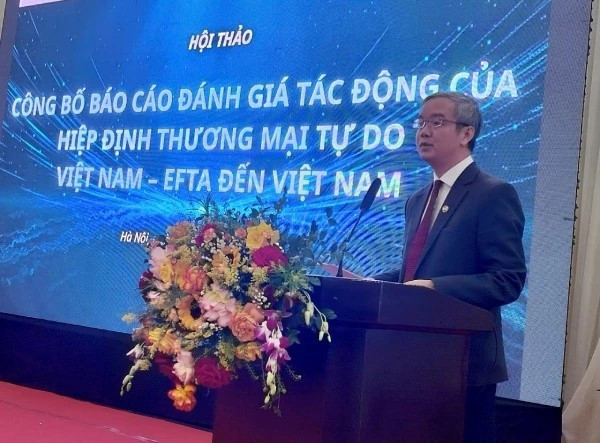
An assessment report on the impacts of the VEFTA on Vietnam was unveiled at a workshop in Hanoi on December 26.
Conducted and produced by the Foreign Trade University in collaboration with experts, the report is part of the sub-project “Promoting Vietnam–EFTA trade relations through a series of training and capacity-building consultancy activities to maximise opportunities from the Vietnam–EFTA free trade agreement.”
Representing the research team of the sub-project, Vu Thi Phuong Mai said that at the macro level, VEFTA helped expand export markets to EFTA, improve the trade structure toward higher quality and value-added products, and enhance the investment environment through commitments on transparency, investment protection, and intellectual property.
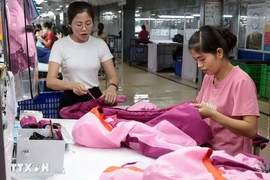
At the sectoral level, textiles and garments, footwear, agro-forestry-fishery products, food processing, and some services were expected to benefit clearly, while sectors such as transport equipment, steel, chemicals, finance–banking, and communications might face increased competitive pressure due to rising imports, she noted.
VEFTA was not merely a tariff-cutting agreement but a high-standard integration framework that imposed stringent requirements on labour, the environment, food safety, traceability, and sustainable development, Mai said.
For the State and ministries, the research team stressed that the focus must shift decisively from signing to implementation.
This includes continuing institutional reforms toward greater transparency, stability, and alignment with international standards. It also involves enhancing the capacity to implement commitments on investment, intellectual property, labour, and the environment. At the same time, efforts should be made to reduce compliance costs and improve the ability to absorb high-quality investment.
“For businesses, VEFTA requires a shift from price-based competition to standards-based competition. Enterprises need to proactively upgrade technology and governance, invest in cleaner production, traceability, and brand building associated with ESG criteria. Sectors facing competitive pressure need to restructure and improve efficiency to adapt to the new competitive environment,” Mai recommended.
For industry associations and intermediary organisations, VEFTA requires strengthening their role in providing substantive technical support to businesses, especially small and medium-sized enterprises, through information provision, training on rules of origin, SPS/TBT standards, and support in handling trade disputes.
For the education and research system, closer linkage with VEFTA implementation was needed through training human resources that meet international standards, while providing evidence-based analyses, impact assessments, and policy recommendations, she said.
“VEFTA is a major opportunity for Vietnam to penetrate deeper into high-end markets, but it is also a test of institutional reform capacity and value chain upgrading,” Mai stressed.
The effectiveness of VEFTA depended on close coordination among the State, businesses, associations, and education–research institutions to transform integration commitments into sustainable long-term growth, she added.
Speaking at the event, Dao Ngoc Tien, Vice Rector of the Foreign Trade University, said that VEFTA negotiations were launched in May 2012, with the most recent round (the 18th round) taking place in Da Nang last month.
Although negotiations have lasted more than 10 years, the agreement is expected to open up many new opportunities for trade and investment between Vietnam and EFTA countries–economies with high levels of development, stringent market standards, yet stability and transparency.
In this context, early preparation - both at the policy level by state management agencies and at the implementation level by businesses - was critically important, he said.
Highly commending the report, Ngo Chung Khanh, deputy director general of the Multilateral Trade Policy Department under the Ministry of Industry and Trade, said it was an important reference not only for state management agencies and negotiators, but also for businesses, especially those that are operating in or planning to enter the EFTA market.
The government’s current policy prioritised market diversification, he said. Rather than concentrating on a few traditional markets that entailed higher risks, Vietnam needed to diversify not only export markets but also import markets and supply partners, he noted.
Although the EFTA bloc has a relative small population, it enjoys very high income levels and significant untapped potential, he added.
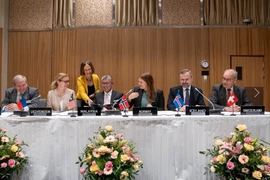
The EFTA bloc, comprising Switzerland, Norway, Iceland, and Liechtenstein, has a combined GDP of about 1.3 trillion EUR (1.5 trillion USD), high living standards, and strong demand for high-quality products./.
VNA