Malaysia signs economic partnership deal with EFTA

The pact covers goods, services, investments, intellectual property rights, customs facilitation, competition policy, sanitary and phytosanitary, trade and sustainable development, government procurement and economic cooperation.

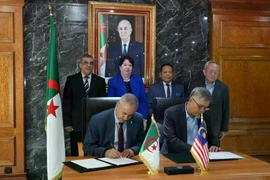
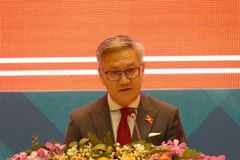
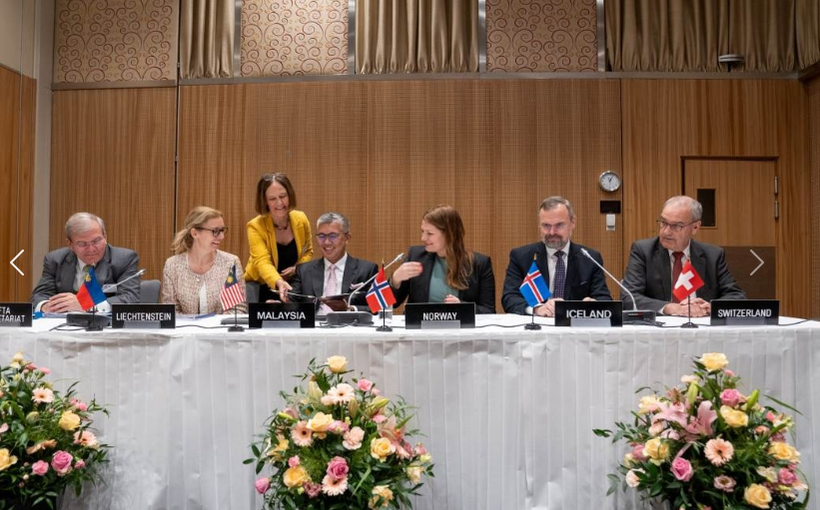
At the signing ceremony (Photo: the Malaysian Ministry of Investment, Trade and Industry - Bernama.com)

Kuala Lumpur (VNA) - Malaysia and the European Free Trade Association (EFTA) member states have signed an economic partnership agreement, opening a new chapter for Malaysia’s trade, investment and economic relations with Switzerland, Norway, Iceland and Liechtenstein.

Malaysian Minister of Investment, Trade and Industry Tengku Datuk Seri Zafrul Aziz said as a trading nation, it is important for Malaysia to maintain its neutral and non-aligned stance, particularly in the face of current geopolitical uncertainties that complicate the global trading landscape.

He said Malaysia’s unwavering neutrality and non alignment is also reflected in the signing of the Malaysia-EFTA Economic Partnership Agreement (MEEPA), which is its 18th free trade agreement (FTA) thus far and is part of the country’s enhanced attempt to diversify its markets amid global economic uncertainties.

The official said as Malaysia’s first FTA with several European countries, MEEPA is also expected to pave the way for expedited Malaysia-EU FTA negotiations.

The pact covers goods, services, investments, intellectual property rights, customs facilitation, competition policy, sanitary and phytosanitary, trade and sustainable development, government procurement and economic cooperation.

The agreement also has a robust built-in agenda for cooperation and capacity building programmes to further strengthen the development of sectoral capabilities in areas such as engineering, science, technology and innovation; green mobility and transportation; digitalisation and automation; pharmaceuticals and medical devices; as well as human capital development through training, internships and expert exchange programmes./.
VNA

See more

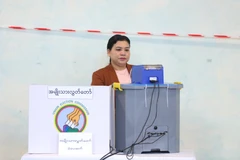
A voter casts her ballot in the general election at a polling station in Yangon, Myanmar. (Photo: Xinhua/VNA)

Myanmar begins second round of general election

This is the first election in Myanmar since the military government assumed power five years ago. A total of 57 political parties are participating in the election, including six parties running nationwide, with around 5,000 candidates vying for seats in the parliament.

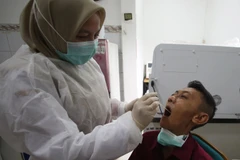
A healthcare worker performs a swab test on a patient during influenza symptom screening at a community health centre in Banten, on January 7, 2026. (Photo: antaranews.com)

Indonesia reports first death related to so-called super flu

Yovita Hartantri, head of the New and Re-emerging Infectious Diseases Team at Hasan Sadikin Regional Hospital in Bandung, said the hospital treated 10 patients with influenza A subclade K between September and November last year. The patients exhibited a range of symptoms, with at least three developing severe complications.

Thailand enters technical deflation: Expert

Thailand enters technical deflation: Expert

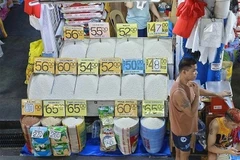
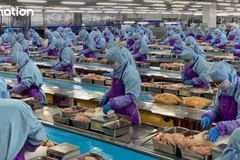
Associate Professor Thanavath Phonvichai, President of the University of the Thai Chamber of Commerce and Chairman of the Centre for Economic and Business Forecasting, attributed the current bout mainly to lower production costs, particularly cheaper fuel and persistently low agricultural prices.

Indonesia spots four Sumatran tigers at national park

Indonesia spots four Sumatran tigers at national park

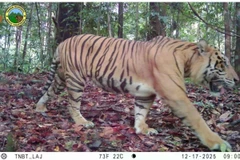
Camera traps installed in Bukit Tigapuluh National Park of Indonesia have recorded four individual Sumatran tigers (Panthera tigris sumatrae), providing strong evidence that the conservation area's ecosystem remains well preserved.

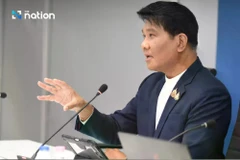
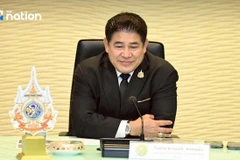
Deputy Prime Minister and Agriculture Minister of Thailand Thammanat Prompao (Photo: The Nation)

Agricultural envoys ordered to boost Thai crop exports

Deputy Prime Minister and Agriculture Minister of Thailand Thammanat Prompao said that the ministry is prioritising a “market-led, innovation-supported, higher income” strategy, built on three key pillars: strengthening confidence in core, established markets to protect Thailand’s market share; targeting high-potential products to open new opportunities, including dried seahorses, dried geckos, live crocodiles for consumption, and breeding crocodile parent stock for farming; and expanding networks by deepening cooperation with key trading partners, including China, and widening sales channels, such as digital platforms, so Thai products can reach consumers more directly.