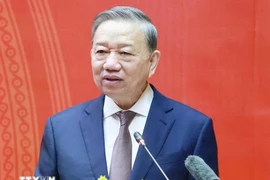
Hanoi (VNA) – Vietnamese representative agencies abroad must to closely monitor the situation and markets in countries they are in charge of, especially making efforts to connect Vietnam’s economy with countries and regions, and foster links between Vietnamese businesses and foreign counterparts, stated Prime Minister Pham Minh Chinh.
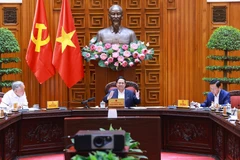
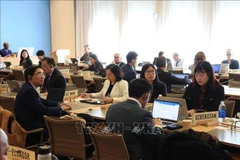
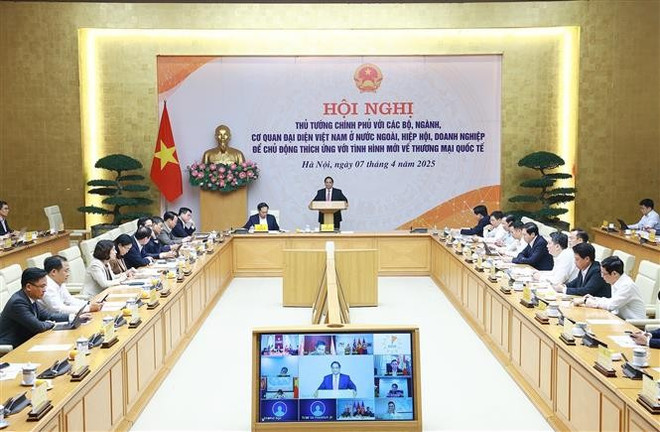
The Government leader made the request while concluding a hybrid conference with leaders of ministries, localities, business associations, and Vietnamese representative agencies abroad to discuss measures to proactively adapt to changes in international trade on April 7.
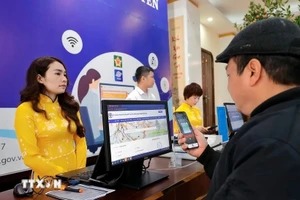
According to the PM, Vietnam is striving to strongly develop the private economic sector, considering it as the most important motivation for economic growth. Additionally, special attention has been paid to creating breakthroughs in science – technology development, innovation, and digital transformation.
To realise this strategic goals, the Government has been focusing on strategic breakthroughs, including improving institutions and legal frameworks, developing infrastructure, speeding up administrative reforms, and enhancing human resource training, he said.
PM Chinh emphasised the requirement to support enterprises in doing business and establishing cooperative ties with partners; and maintain regular communication with ministries, sectors, industry associations, and enterprises of other countries, saying that ministries, sectors, and localities must work with the Government to effectively implement tasks and solutions related to market expansion, planning, orientation, mechanisms, policies, laws, as well as capital support, land, intellectual property protection, and trade defence measures, thus helping businesses to grow.
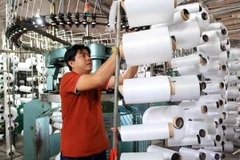
Enterprises must unite and coordinate closely with ministries, sectors, local authorities, and especially with Vietnamese representative agencies abroad to improve product quality, apply science and technology, and innovate packaging and design, the PM said. He urged them to accelerate the restructuring of products, markets, and supply chains in order to expand market access, avoid overdependence on certain markets, and promote production and business activities.
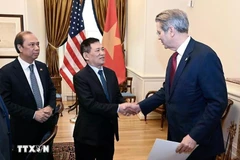
In response to the US’s new tariff policy, the PM underlined the need to remain calm and steadfast in pursuing the foreign policy of independence, self-reliance, multilateralisation and diversification of relations, and being a good friend and a reliable partner of all countries; and build an independent, self-reliant, and proactive economy that actively engages in international economic integration in a deep, substantive, and effective manner.
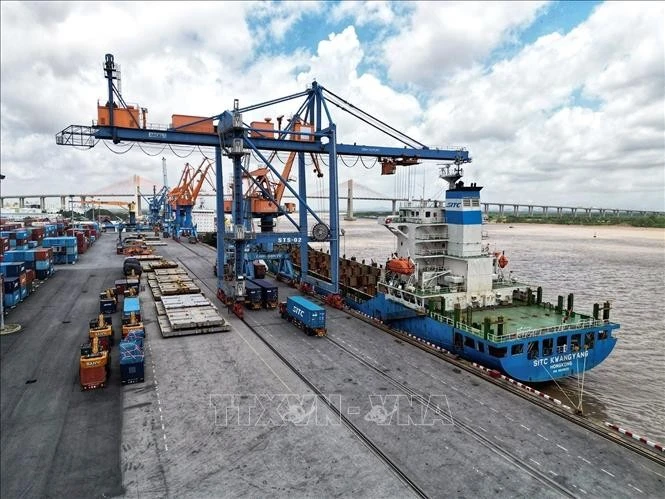
The PM highlighted the need for a balanced and sustainable trade partnership with the US via immediate and long-term solutions. He requested a comprehensive and strategic approach that incorporates both direct and indirect measures, encompassing tariff and non-tariff policies, leveraging political, diplomatic, economic, and trade mechanisms, taking into account Vietnam’s overall foreign economic strategy and ensuring that other markets remain unaffected. While the US stands as Vietnam’s most important export market, it is by no means the only one, with several other key markets also playing a crucial role, he affirmed.
PM Chinh called for greater efficiency in utilising the 17 existing free trade agreements (FTAs) and continued negotiations to establish more with new partners, including the US. In addition to exports, he said it is necessary to reinvigorate traditional growth drivers such as investment and consumption, while also fostering new ones including science, technology, innovation, green transition, digital transformation, knowledge-based economy, circular economy, and sharing economy.
The Government leader instructed relevant sides to maintain macroeconomic stability, ensuring proactive, timely, flexible, and effective fiscal and monetary policies to control inflation and balance key economic factors. He called for enhanced measures to prevent trade fraud, particularly curbing imports from a third-country for re-export to the US, and asked for policies to support struggling businesses through tax and fee reductions and credit packages.
Affirming the core strategic objectives of political stability, social security, and public welfare, rapid and sustainable development, and improved living standards, the PM expressed his hope that Vietnam’s representative agencies abroad, ministries, and businesses would work together to help achieve an 8% GDP growth target in 2025. This would set the stage for double-digit economic expansion in the coming years, ultimately fulfilling Vietnam’s long-term vision of becoming a high-income, developed nation by 2045, the leader concluded./.