Hanoi (VNA) – Vietnam’s manufacturing industry is now at a pivotal stage, with international trade emerging not only as a channel for expanding markets but also as a powerful driver for enterprises to transform and upgrade their capacity.
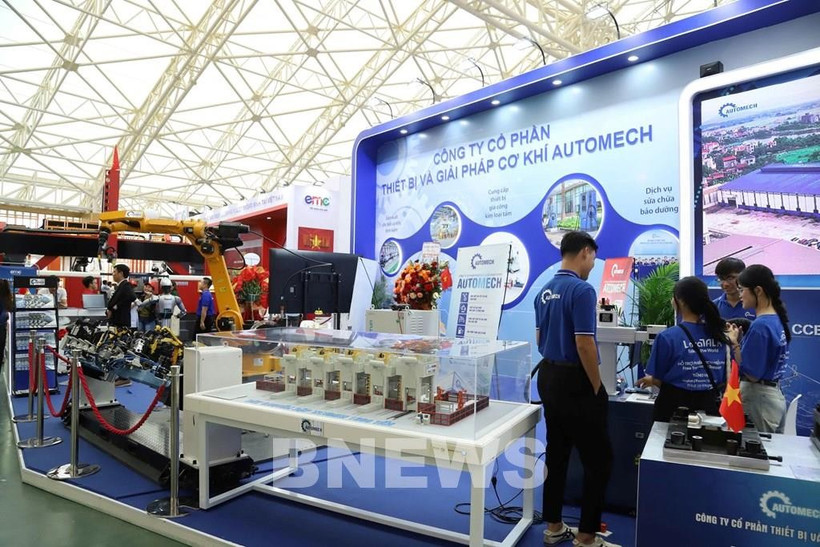
Following the “80-year Journey of Independence – Freedom – Happiness” exhibition, the business community is preparing for the Factory Network Business Conference (FBC ASEAN 2025), to be held at the Vietnam Exposition Centre (VEC) in Hanoi.
The event is expected to bring together some 23,000 manufacturing enterprises from across the world, including Germany, Italy, Japan and Thailand. It will showcase scientific achievements, innovations, and the latest machinery and equipment in mechanical engineering, automation, electronics and precision engineering. At the same time, it will attract major buyers such as Mitsubishi Electric, Panasonic, Samsung, Toto, Fujifilm and Tiger, who will present technologies and products while seeking long-term suppliers and partners.
Phan Dang Tuat, Chairman of the Vietnam Association of Supporting Industries, said the biggest challenge to the country’s manufacturing sector is market access as firms remains passive in areas such as logistics and policy in the face of global uncertainties and supply chain disruptions.
He suggested the Government prioritise support policies such as establishing testing and certification centres to help businesses gain quality certificates to engage in global markets, and creating start-up hubs with shared facilities for trial product and service development, noting that these could operate on a fee-paying basis rather than being offered free of charge.
He noted that such mechanisms are still absent in Vietnam, which puts businesses at a disadvantage.
Echoing these concerns, Dang Thanh Binh, Director of TCI Industry JSC – a private company specialising in precision machining and automation with nearly 20 years’ experience, said most Vietnamese businesses are small firms which often face barriers in accessing state support, particularly in loans, tax incentives, and compliance with technical standards.
Despite this, TCI has drawn up flexible strategies, seeking to expand beyond Japanese and FDI clients to new partners in Europe and the US while increasing the export of complete automation solutions. Participation in FBC ASEAN 2025, he said, is a step to connect with new customers.
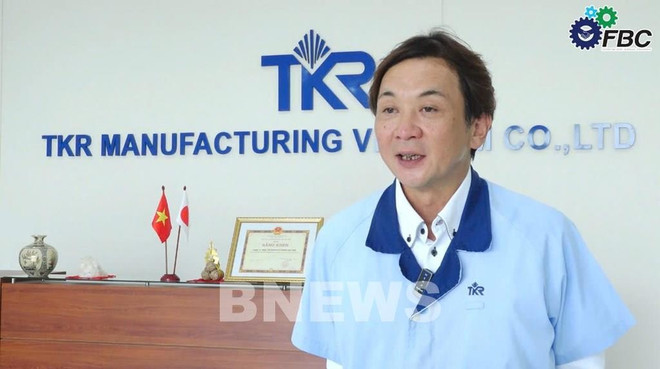
Ogawa Tsuyoshi, General Director of Japan’s TKR Manufacturing Vietnam, which has operated in the country since 2018 with over 500 employees, said the company looks forward to forging links with global assemblers and suppliers through the event.
He noted that the conference will offer companies a chance to seek potential partners and cooperation opportunities to develop products and services that would be difficult to be supplied by a single company, adding that Vietnam’s manufacturing sector still boasts significant growth potential within ASEAN.
Similarly, Hamada Shogo, General Director of Daiwa Vietnam, observed that while the country’s strong export performance has been well maintained, greater emphasis should be placed on product research and development to strengthen local firms’ innovation capacity.
He noted that Vietnamese manufacturers are already capable of meeting the stringent requirements of partners in Europe, the US and Japan, and with continued focus on quality, the country’s supporting industries are well positioned for further growth.
International trade is no longer merely an exchange of goods but a strategic lever enabling Vietnamese enterprises to enhance capacity, secure partnerships, and expand globally./.