Hanoi (VNA) – The Japan International Cooperation Agency (JICA) has reaffirmed its commitment to assisting Vietnam in advancing four major reform pillars, namely innovation and digital transformation, international integration, law making and enforcement, and private-sector development.
The information was shared at JICA Vietnam Office’s mid-fiscal year 2025 press conference held in Hanoi on October 8.
According to JICA, Japan’s International Cooperation Agency has been playing a crucial role as both a strategic partner and a reliable bridge between the two nations. Through cooperation projects with detailed plans and strong commitments, it has been contributing to Vietnam’s efforts towards sustainable development and a high-income status by 2045.
As of October 1, JICA has deployed 46 long-term experts and 42 volunteers across Vietnam. Beyond individual assignments, cooperation to promote socio-economic development has expanded to include Japanese enterprises, universities, local administrations, and non-governmental organisations, in partnership with Vietnamese counterparts.
JICA Vietnam Chief Representative Kobayashi Yosuke emphasised that the agency’s cooperation extends beyond human assistance, it is also working closely with institutions to bring about positive changes for Vietnam, especially in the face of climate change and population aging.
Among JICA’s notable projects is the completion of the first SABO dam in Son La province in April 2025. This is a key engineering structure aimed at mitigating the risk of landslides in northern mountainous areas, reflecting Japan’s effective technology transfer to Vietnam.
To address Vietnam’s rapid population aging, JICA has dispatched volunteers to the National Geriatric Hospital in Hanoi to train doctors and nurses in swallowing disorder assessment techniques. The agency has also supported Bach Mai Hospital by disseminating advanced elderly care practices, while coordinating with medical institutions, universities, and local administrations in both countries to develop geriatric nursing training programmes.
In terms of financial cooperation, JICA has implemented five grant aid projects and 15 official development assistance (ODA) loan projects to improve infrastructure and people’s living conditions. A milestone achievement is the Yen Xa Wastewater Treatment Plant, one of Southeast Asia’s largest facilities, which was inaugurated in August this year and expected to help reduce urban flooding in Hanoi. Meanwhile, Metro Line No. 1 in Ho Chi Minh City, operational since December 2024, has helped ease urban traffic congestion.
JICA is also finalising procedures for new ODA-funded projects on road, irrigation, and anti-erosion infrastructure in northern provinces to protect local communities from climate-related disasters, one of its leading priorities.
JICA is helping Vietnam with four major reform pillars – fostering science, technology, innovation and digital transformation; enhancing international integration; strengthening law making and enforcement; and private sector development. Cooperation initiatives are tailored to Vietnam’s practical needs while leveraging Japan’s technology and experience.
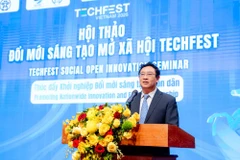
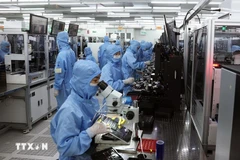
In the technology sector, JICA has supported the Vietnam-Japan University in launching a bachelor’s degree programme in semiconductor engineering, which opened in September 2025. It has also partnered with the Hanoi University of Science and Technology and the National Innovation Centre (NIC) to advance research and entrepreneurship in artificial intelligence (AI).
In the latter half of fiscal year 2025, JICA plans to focus on human resources development under its ODA framework, consistent with Vietnam’s four reform pillars.
Kobayashi affirmed JICA is committed to accompanying Vietnam on its path toward sustainable and inclusive development, moving closer to the goal of becoming a high-income nation by 2045.
Detailing collaboration in science-technology and innovation, he noted that JICA will continue support for semiconductor and AI training programmes at the Vietnam-Japan University and Hanoi University of Science and Technology.
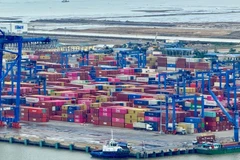
In terms of international integration, the agency will advance assistance in connectivity initiatives through urban railway and customs modernisation projects, contributing to Vietnam’s standing in the global arena.
In the field of law making and enforcement, JICA is considering introducing outcomes from its long-term legal reform projects, alongside leadership training programmes aligned with Vietnam’s new governance model.
For private-sector development, the agency will promote small and medium-sized enterprise (SME) growth through entrepreneurship training and financial access initiatives, with particular support for women-led businesses.
Highlighting the long-standing ties between the two countries, Kobayashi stressed that the cooperation is “built on the bond of the heart.” Currently, around 600,000 Vietnamese are working in Japan and more than 40,000 are pursuing their studies there./.