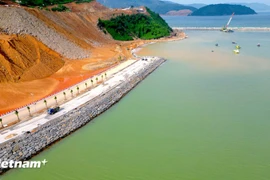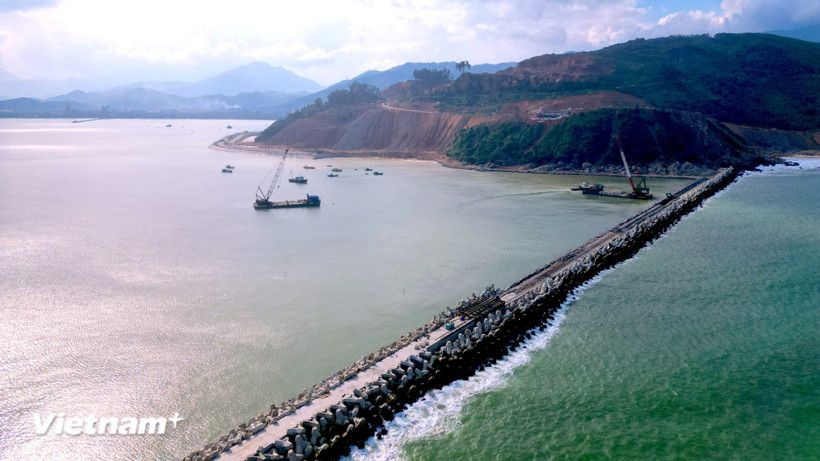
Hanoi (VNA) - Lien Chieu Port and its connecting coastal road are 95% complete, a major infrastructure move for Da Nang to develop itself into a strategic logistics backbone.
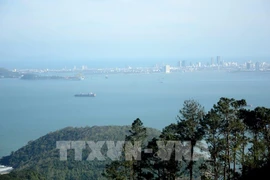
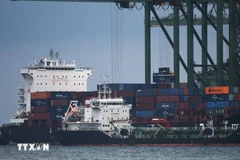
As the central Vietnamese city bolsters its marine economy and logistics services, the Lien Chieu Port, one of its flagship infrastructure projects, has entered a critical phase, marking the emergence of a large-scale seaport on the global maritime map.
A strategic deep-sea port takes shape
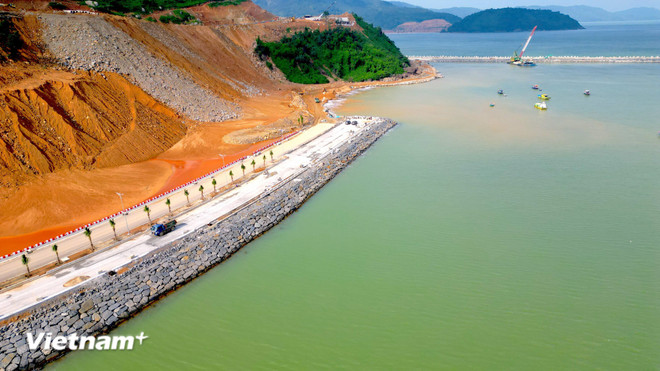
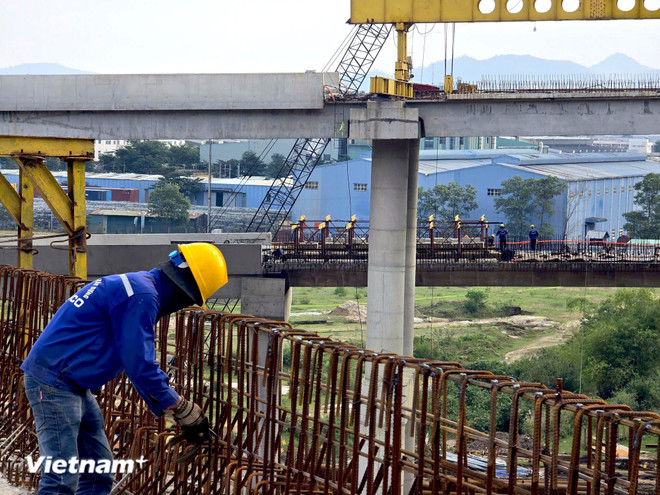
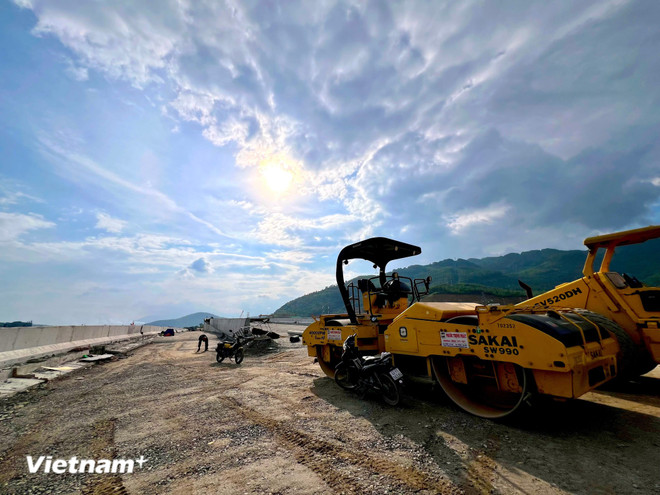
In 2025, two severe storms caused sediment accumulation on service roads and delayed embankment and traffic work. Despite the setbacks, the project management board and contractor consortium pooled maximum resources, running round-the-clock shifts to maintain momentum.
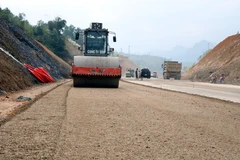
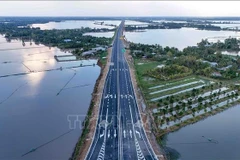
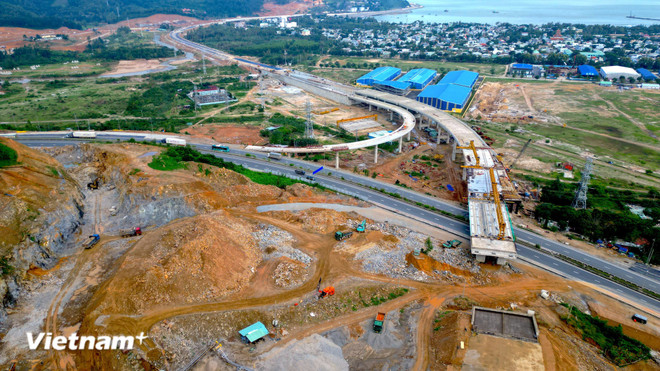
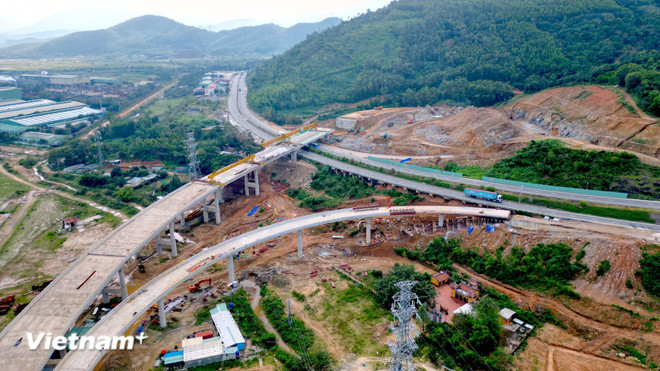
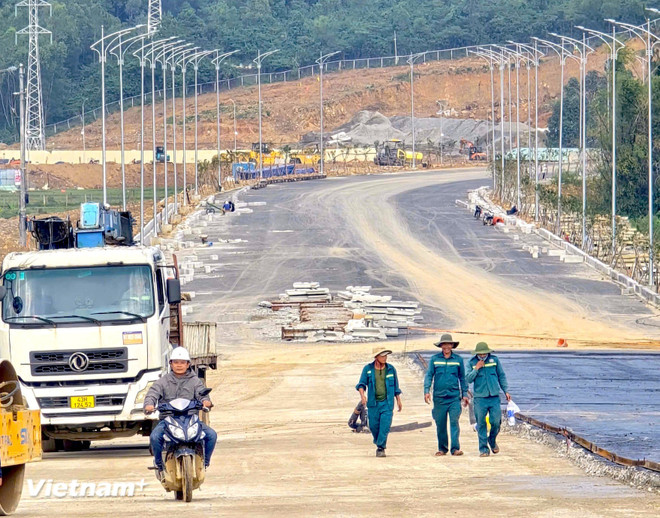
Parallel to the port, the 2.96km coastal access road, budgeted at more than 1.203 trillion VND (46.2 million USD), is also progressing rapidly. The project features multi-level overpasses, a new Lien Chieu Bridge, as well as underpasses, canal bridges, and full electrical, lighting, landscaping and drainage systems, with most components now at 93-95% completion.
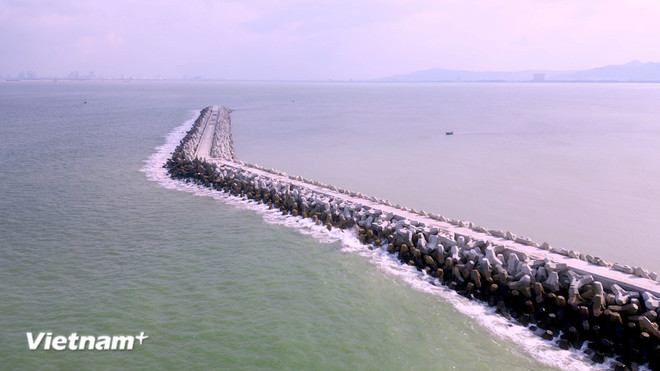
According to Director of the Lien Chieu Port project management board Tran Van Chung, breakwaters and seawalls are over 96% finished, the navigation channel and turning basin exceed 99%, and traffic and drainage infrastructure surpass 80%, pushing overall progress to 95%.
Powering a regional logistics ecosystem
Lien Chieu is slated to anchor central Vietnam’s logistics network. By 2030, planning calls for the port to handle 8.7 million to 13.7 million tonnes of cargo annually, with 5-8 new berths totaling 1,420-2,820m, one 100-m bulk cargo berth and the relocation of three specialised mooring buoys.
By 2050, the port is envisioned to grow to 22 berths, including eight for liquid and gas, eight for containers and six for general and bulk cargo to accommodate long-term volume increases. Beyond the port itself, Da Nang aims to create an integrated multimodal transport system linking road, rail, air and sea.
During a November 24 site visit, Secretary of the municipal Party Committee Le Ngoc Quang described Lien Chieu as vital infrastructure linking industrial parks, urban areas and free-trade zones. He called for faster development of connecting networks to ensure synchronisation, while prioritising resettlement to protect residents’ interests and secure community support as the city expands northwest
Da Nang now hosts 16 integrated logistics service providers, 14 warehousing and 15 maritime transport enterprises. The city has designated five major logistics centres covering a total of 229 ha, with the 69-ha Lien Chieu Port Zone serving as the central pillar
Toward an international logistics hub for 2026–2035
To complete the logistics chain, Da Nang is moving ahead with procedures for Phase B of Lien Chieu Port. The next stage is expected to draw substantial investment and foster a competitive cluster of services, industry and logistics.
Phase B will add eight container berths totaling 2,750m capable of handling vessels up to 18,000 TEUs, plus warehouses, cold-storage yards, customs facilities and a 5,000-ton barge terminal. Work is planned in three sub-phases from 2025 through early 2036, targeting Lien Chieu’s evolution into a Southeast Asia-class international transshipment hub.
With resolute rollout and consistent advances on key projects, Da Nang is cementing its role as central Vietnam’s logistics hub and on course to become an international trade hub over the next decade./.