Malaysia’s 2025 budget aims for balance of finance, growth

The Malaysian Budget 2025, unveiled by Prime Minister and Finance Minister Anwar Ibrahim on October 18, demonstrates the government’s dual goals of consolidating finance and fostering economic growth.

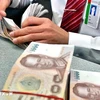
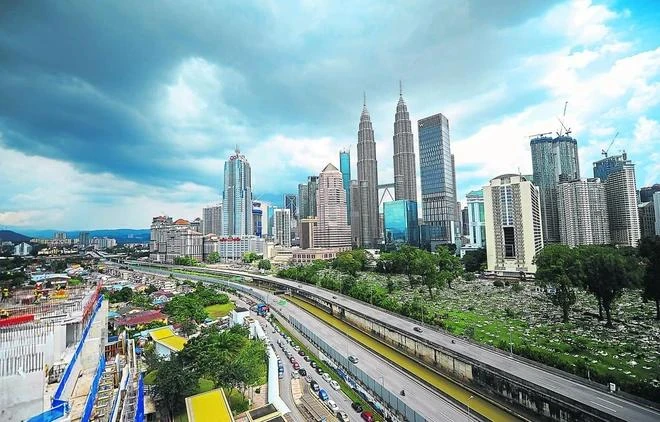
The Malaysian government is targeting to consolidate finance and foster economic growth. (Photo: themalaysianreserve)

Kuala Lumpur (VNA) – The Malaysian Budget 2025, unveiled by Prime Minister and Finance Minister Anwar Ibrahim on October 18, demonstrates the government’s dual goals of consolidating finance and fostering economic growth.

Shan Saeed, Chief Economist at Juwai IQI, an international real estate technology group, said the budget sets ambitious targets on reducing debt, bolstering economic growth, increasing income, and addressing key areas to ensure sustainable development.

He noted that the government projects an economic growth rate of 4.5-5.5% in 2025, driven by robust investment and consumption, adding spending on infrastructure will contribute significantly to GDP growth, providing a solid foundation for Malaysia's economic trajectory.

A key aspect of the budget, he said, is fiscal consolidation, with the government aiming to bring the fiscal deficit to 3.8% of the GDP next year.

He said he supports the government’s commitment to reducing debt as it is necessary to maintain investors’ confidence and ensure economic stability.

The government intends to cut subsidies for RON95 petrol in the middle of 2025 with an expected annual saving of 1.88 billion USD, which, the economist said, aligns with a broader goal of improving financial sustainability without adversely affecting low-income earners’ living standards.

Additionally, the expansion of the Sales and Service Tax to cover more services and non-essential goods will help the government increase revenue and reduce budget deficit, he added./.
VNA

See more

The scene of a crane collapse in Samut Sakhon province, Thailand, on January 15, 2026. (Photo: Xinhua/VNA)

Another crane collapses in Thailand

The latest incident took place in Samut Sakhon province near the capital Bangkok, where a crane involved in the construction of an elevated highway fell onto the road beneath.

Cambodian Prime Minister Hun Manet (Photo: Xinhua/VNA)

Cambodian PM declares crackdown on cyber scams

The Cambodian PM noted the strict measures against online scams in the past are a testament to the government's political commitment to combating this transnational crime, which is a common concern for Cambodia, the region, and the world.

Foreign tourists in Bangkok, Thailand. (Photo: Xinhua/VNA)

International arrivals to Thailand surge in early 2026

Thailand welcomed 1,121,549 international visitors in the first 11 days of 2026, generating an estimated 55.03 billion THB (approximately 1.59 billion USD) in tourism revenue, according to figures released by the Ministry of Tourism and Sports on January 13.

Tourists visit the Plain of Jars in Xiengkhouang, Laos.(Photo: VNA)

Laos named among world’s top travel destinations for 2026: TravelPulse

Known for being one of Southeast Asia’s best kept secrets, experts said 2026 will be the year for Laos to start attracting discerning travelers. Traversed by the Mekong River, Laos features mountainous terrain, French colonial architecture and an abundance of Buddhist monasteries.

A commemorative publication titled “50 Years of Germany – Vietnam Relations: Partners in the Past, Present and Future”, published in 2025, offers a timely and comprehensive reflection not only on the 50th anniversary but also on the two countries' strategic path ahead. (Illustrative photo: the Vietnamese – German University)

German economic cooperation ministry praises Vietnam’s development

Commenting on the German Government’s prominent reference to Vietnam’s achievements in a key policy document shaping the future direction of its development policy, Dr Kambiz Ghawami, President of Germany’s World University Service (WUS), described this as highly significant.

Indonesia’s meat industry faces widespread job loss risks (Photo:en.infosawit.com)

Indonesia’s meat industry faces risk of mass layoffs

The Indonesian Meat Entrepreneurs and Processors Association (APPDI) said the total beef import quota for private companies this year has been cut to 30,000 tonnes, down sharply from 180,000 tonnes in 2025. The figure accounts for only a small fraction of Indonesia’s overall import plan of 297,000 tonnes of beef and buffalo meat for 2026.