ASEAN should speed up clean energy transition: think tank

ASEAN countries still rely on fossil-based energy in electricity growth amidst underperformed energy capacity of renewable energy in the region, according to energy think tank Ember.

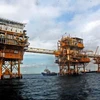
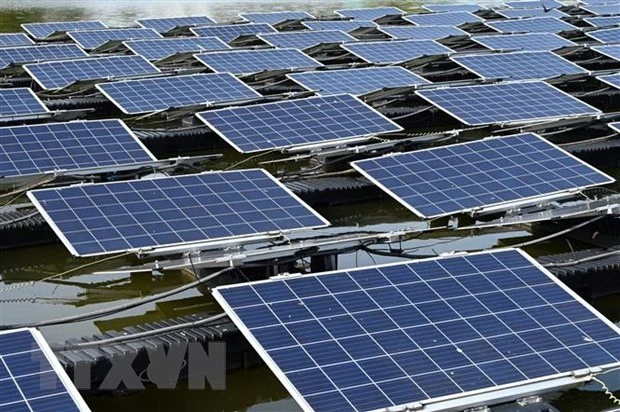
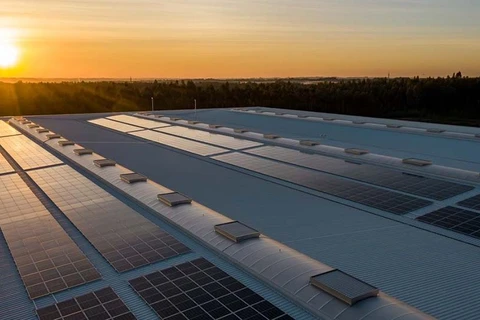
Illustrative photo (Photo: VNA)

Jakarta (VNA) – ASEAN countries still rely on fossil-based energy in electricity growth amidst underperformed energy capacity of renewable energy in the region, according to energy think tank Ember.

In its report “ ASEAN’s clean power pathways: 2024 insights”, Ember revealed that last year, 3.6% of ASEAN power growth was contributed by fossil fuel power plants.

In 2023, fossil fuels dominated ASEAN power plant with 74%, with coals contributing 44%.

Dinita Setyawati, Senior Analyst of Southeast Asia Power Policy at Ember, said that last year, renewable energy contributed only 26%, marking a decline from 28% in 2022.

High dependency on fossil energy made ASEAN carbon emission increased 6.6% to 718 million per CO2 last year, she said.

The report estimated that power demand in ASEAN will increase 41% in 2030, underlined the importance of the countries in the region to quickly switch to renewable energy.

The drops of solar energy cost between 55-81% and wind power for 33-35% are opportunities for ASEAN to diversify energy, Dinita said as cited by Indonesia media.

The report also revealed that better interconnected power network, the use of storage batteries, and the adoption of innovative technology that support green flexibility can support energy transition in ASEAN. This also will have impact on economic growth , energy resilience and sustainability./.
VNA

See more

At the launch of the programme. (Photo: nationthailand.com)

Thailand launches programme to reduce healthcare costs for citizens

Under the new Memorandum of Understanding (MoU), private hospitals in Thailand must provide complete and accurate prescriptions listing drug names and usage details. This transparency allows patients to choose whether to buy their medicines directly from the hospital or from registered pharmacies outside.

Illustrative photo (Photo: bangkokpost.com)

Thailand delivers tepid rice export forecasts for 2026

Thailand maintains its export target for next year at 7.5 million tonnes, including 3.5 million tonnes of white rice, 1.7 million tonnes of hom mali rice, 1.4 million tonnes of parboiled rice, 600,000 tonnes of Thai fragrant rice and 300,000 tonnes of sticky rice.

ASEAN Secretary-General Kao Kim Hourn (Photo: Bernama)

ASEAN Secretary-General: Higher education will shape the region’s future

The ASEAN chief revealed that the ASEAN Socio-Cultural Community (ASCC) Strategic Plan designates education as a driver for equity and sustainable development. Its agenda calls for enhancing access to quality education, promoting lifelong learning, and integrating green skills into curricula. In short, academic purpose serves societal and community purpose.

Thailand aims for 129 gold medals at 33rd SEA Games

Thailand aims for 129 gold medals at 33rd SEA Games

At the 32nd SEA Games held in Phnom Penh, Cambodia, from May 5–17, 2023, Thailand ranked second overall with 108 gold, 96 silver, and 108 bronze medals. Vietnam topped the standings with 136 gold, 105 silver, and 114 bronze medals.

Rescuers evacuate residents in a flooded area due to Typhoon Kalmaegi in Cebu province, the Philippines, on November 4, 2025. (Photo: Xinhua/VNA)

Typhoon Kalmaegi leaves 66 dead in Philippines

The Philippines, which experiences an average of 20 storms annually, frequently suffers heavy losses, especially in poverty-stricken areas. Scientists warn that climate change is making storms increasingly intense and destructive.

RoK's President Lee Jae-myung and Singapore Prime Minister Lawrence Wong exchange greetings following a joint press announcement at the Yongsan presidential office. (Photo: Yonhap)

Singapore, RoK establish strategic partnership

Under the strategic partnership, the two countries will step up cooperation to better tackle global challenges such as climate change and transnational crimes while deepening ties in the areas of security, defence, artificial intelligence, advanced technology, people-to-people exchanges, and transnational crimes like online scams.