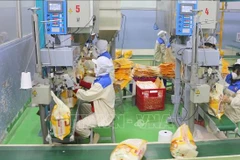
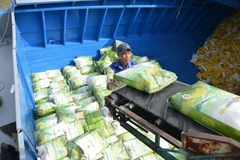
Aquatic products processed for exports at Ba Ria - Vung Tau Seafood Processing Import Export Co (Photo: VNA)
 Hanoi (VNA) - The Ministry ofIndustry and Trade (MoIT) is planning to increase the number of trainingcourses on trade remedies for the domestic production industry.
The idea is to improve the ability ofdomestic producers to cope with the application of trade defencemeasures on the global market.
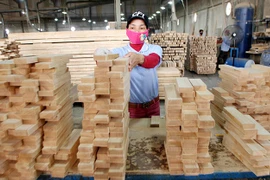
At the same time, the ministry will alsoprovide information about current trade remedies for domestic associations andproduction industries. This will include guidance on using or dealingwith trade remedies for key industries such as steel, wood, seafood, chemicals,textiles and support industries.
The ministry will also build an electronicportal to provide early warnings about trade remedies, while looking athow these industries deal with trade remedy lawsuits.
In addition, it will simplify the implementationof regulations on trade remedies to help Vietnam join the EU-Vietnamfree trade agreement (EVFTA).
The implementation of these solutions in thecoming years is expected to help domestic production industries andenterprises, especially small and medium sized ones, to have clear informationabout trade remedies so they can improve the efficiency of theirinternational economic integration.
Le Trieu Dung, Director of the Ministry ofTrade and Industry’s Trade Remedies Authority of Vietnam, said for FTAs withvery high tariff reduction levels such as the EVFTA, there would certainlybe high competitive pressure and challenges for Vietnamese enterprises.
Most trade remedies in the EVFTAare based on the World Trade Organisation (WTO) rules.
In addition, the EVFTAincluded principles that suited Vietnam's legal system. Thatwould help Vietnam's production industries and businesses toadopt legal trade remedy tools and ensure economic efficiency when thecountry joined the EVFTA, Dung said,
In addition, they needed to regularly monitorand study early warnings for trade remedies to take suitable actionsto deal with them, he said.
According to the Ministry of Industry andTrade, some sectors with large export volumes such as agriculturalproducts, fisheries, textiles, footwear, iron and steel may be at higherrisk of facing trade remedies.
Trade remedies such as anti-dumping,anti-subsidy and safeguarding measures are important legal toolsthat protect local industries and enterprises, especially when tariffbarriers are removed under international commitments./.
The idea is to improve the ability ofdomestic producers to cope with the application of trade defencemeasures on the global market.
At the same time, the ministry will alsoprovide information about current trade remedies for domestic associations andproduction industries. This will include guidance on using or dealingwith trade remedies for key industries such as steel, wood, seafood, chemicals,textiles and support industries.
The ministry will also build an electronicportal to provide early warnings about trade remedies, while looking athow these industries deal with trade remedy lawsuits.
In addition, it will simplify the implementationof regulations on trade remedies to help Vietnam join the EU-Vietnamfree trade agreement (EVFTA).
The implementation of these solutions in thecoming years is expected to help domestic production industries andenterprises, especially small and medium sized ones, to have clear informationabout trade remedies so they can improve the efficiency of theirinternational economic integration.
Le Trieu Dung, Director of the Ministry ofTrade and Industry’s Trade Remedies Authority of Vietnam, said for FTAs withvery high tariff reduction levels such as the EVFTA, there would certainlybe high competitive pressure and challenges for Vietnamese enterprises.
Most trade remedies in the EVFTAare based on the World Trade Organisation (WTO) rules.
In addition, the EVFTAincluded principles that suited Vietnam's legal system. Thatwould help Vietnam's production industries and businesses toadopt legal trade remedy tools and ensure economic efficiency when thecountry joined the EVFTA, Dung said,
In addition, they needed to regularly monitorand study early warnings for trade remedies to take suitable actionsto deal with them, he said.
According to the Ministry of Industry andTrade, some sectors with large export volumes such as agriculturalproducts, fisheries, textiles, footwear, iron and steel may be at higherrisk of facing trade remedies.
Trade remedies such as anti-dumping,anti-subsidy and safeguarding measures are important legal toolsthat protect local industries and enterprises, especially when tariffbarriers are removed under international commitments./.
VNA