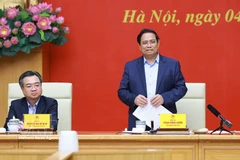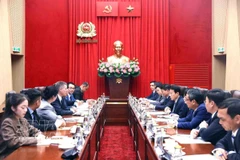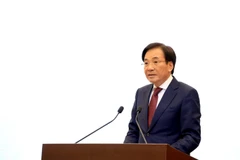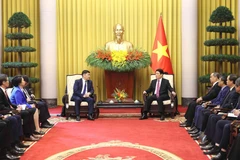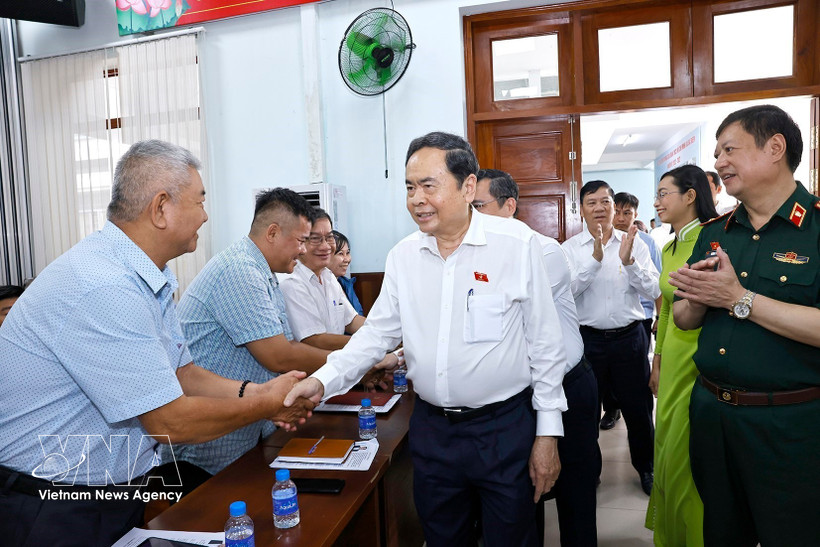
Ho Chi Minh City (VNA) – The National Assembly (NA) will continue refining financial, investment and planning frameworks to help Ho Chi Minh City fully leverage its special mechanisms, NA Chairman Tran Thanh Man said, pledging greater autonomy for the city in land management and digital infrastructure while improving the legal framework to mobilise social resources.
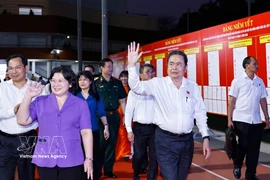
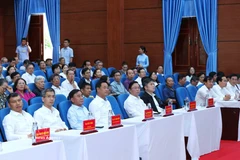
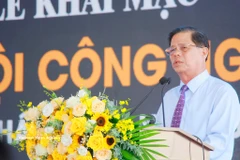
At a March 4 meeting with voters from Ba Diem, Xuan Thoi Son, Hoc Mon, Dong Thanh, Phu Hoa Dong and Binh My communes, the NA Chairman stressed that planning must be closely aligned with execution, warning against prolonged “paper plans”, stalled projects and half-completed works.
Responding to voter concerns over education, healthcare, culture and elderly care, he reaffirmed that these areas remain high on the agenda of the Party, State, NA and Government, particularly for rural, remote and disadvantaged communities. Key decisions include the construction of inter-level boarding schools in 248 land border communes, a tuition waiver from preschool to upper secondary level starting in the 2025–2026 academic year, and the allocation of 5% of regular expenditure savings to eliminate temporary and dilapidated housing.
The NA has also revised health insurance regulations to improve grassroots medical services and approved investment in national target programmes focused on cultural and social development, job creation and income growth.
Welcoming the outcomes of the city’s first Party Congress for the 2025–2030 term, Man highlighted ambitious targets, including raising the proportion of national-standard schools across all levels and providing free annual health check-ups for residents from 2026. By 2030, the city aims to eradicate poverty under its own benchmark, narrow the urban–rural income gap and expand support for vulnerable groups. He voiced confidence that with practical and targeted solutions, Ho Chi Minh City will maintain its leading position nationwide in education, healthcare and human resources development.
Looking ahead, the NA will prioritise removing institutional bottlenecks to unlock new growth drivers, while tightening discipline in lawmaking, eliminating overlapping and outdated provisions, and ensuring rigorous enforcement.
The top legislator also welcomed voters’ close monitoring of legislative activities, underlining that deputies must stay connected with constituents and remain accountable. Though the NA is the highest state authority, its power derives from and serves the people, he said.
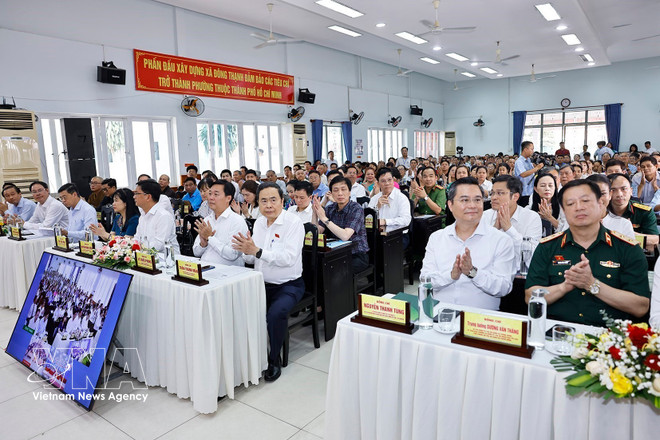
Voters expressed their support for candidates’ action plans and called for concrete follow-through on campaign commitments. They urged reforms in legislative thinking, more effective law enforcement and stronger discipline in policy implementation, alongside fuller utilisation of the city’s special mechanisms.
Accelerating investment in transport infrastructure, digital transformation, science, technology and innovation was widely viewed as critical to sustaining rapid and balanced growth. Voters further called on deputies to step up oversight of major projects and address persistent concerns in education, healthcare and socio-cultural development in a more fundamental and long-term manner./.