NA endorses 10% preferential tax rate for all press agencies

To affirm the Party and State’s commitment to supporting the press, the NA Standing Committee has adopted the government’s proposal to apply a uniform preferential corporate tax rate of 10% to all types of press. This move aligns with the current tax incentives for print newspapers.

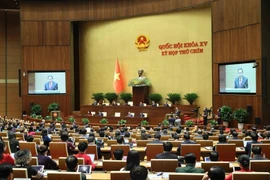
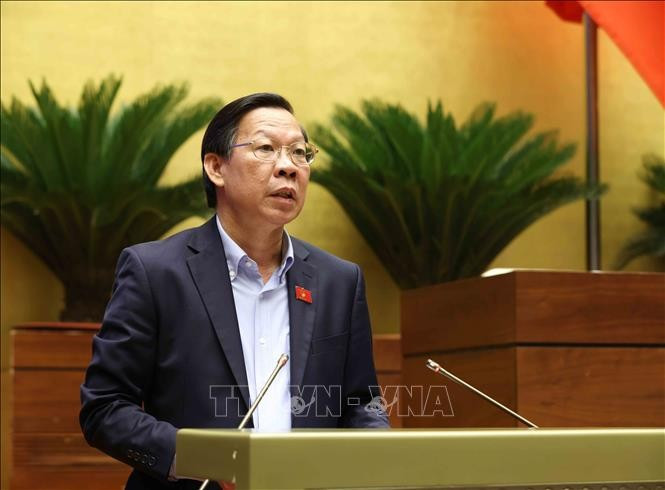
Phan Van Mai, Chairman of the National Assembly’s Committee for Economic and Financial Affairs, delivers a report presenting explanations, feedback, and revisions to the amended draft Law on Corporate Income Tax. (Photo: VNA)

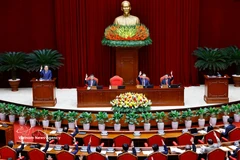
Hanoi (VNA) - As part of its 9th session, the National Assembly on May 12 reviewed and debated the amended draft Law on Corporate Income Tax, focusing on proposals to streamline tax policies across various sectors, including the press and digital technology.

To affirm the Party and State’s commitment to supporting the press, the NA Standing Committee has adopted the government’s proposal to apply a uniform preferential corporate tax rate of 10% to all types of press. This move aligns with the current tax incentives for print newspapers.

In the realm of digital technology, adjustments were made to Article 12, Clause 2 of the draft law to ensure coherence with the provisions outlined in the draft Digital Technology Industry Law. These changes aim to ensure balanced and appropriate tax incentives across technology-related industries.

Regarding small and medium-sized enterprises (SMEs), the proposed tax rates of 15% and 17% remain consistent with the current policies targeting businesses operating in economically disadvantaged areas or in sectors encouraged for investment. These rates are deemed appropriate for micro and small enterprises and are intended to prevent overly broad application of tax breaks, which could reduce the effectiveness of incentive programmes.

According to Phan Van Mai, Chairman of the NA’s Committee for Economic and Financial Affairs, SMEs that also meet location- or sector-specific incentive criteria will be eligible for even more favourable tax rates as stipulated in the draft law.

Regarding the tax rate for the press, delegate Thach Phuoc Binh of Tra Vinh province stressed that the press sector is currently facing a significant decline in revenue, particularly in advertising, due to fierce competition from digital platforms. Therefore, including the press in the category eligible for preferential tax treatment will help alleviate financial pressure and enable media agencies to continue fulfilling their political and social responsibilities.

The taxation of public service units also sparked discussions. Delegate Hoang Van Cuong of Hanoi argued that taxing autonomous public hospitals and schools, currently taxed at 2% on revenue, is inconsistent with the government’s policy of waiving tuition and medical fees. He suggested these units should be exempt from corporate income tax, except for income from joint ventures.

Delegate Nguyen Lan Hieu of Binh Dinh province stated that tax authorities currently interpret any revenue labeled as "service" as taxable. As a result, most income from autonomous public hospitals is subject to corporate income tax, despite its nature as public service revenue.

In response to these concerns, NA Vice Chairman Nguyen Duc Hai requested the Ministry of Finance, which is leading the drafting process, to revise and clarify the relevant tax provisions for public service units in the next draft./.
VNA

See more

Assaf Talgam, a historian and a journalist of Zo HaDerekh, the official newspaper of the Communist Party of Israel. (Photo: VNA)

CPV's leadership - central factor shaping Vietnam’s enduring stability, impressive achievements: Israeli historian

Talgam said that from a comparative and historical perspective, the CPV’s leadership has been the central factor underpinning the country’s enduring political stability and impressive development trajectory. In a world marked by rapid and unpredictable changes, few political organisations have been able to maintain continuity of leadership while simultaneously adapting their governance approach as effectively as the CPV.

Prime Minister Pham Minh Chinh presents Certificates of merit from the Government’s Party Committee to individuals with outstanding achievements. (Photo: VNA)

Prime Minister outlines five specific strategies for Government’s Party Committee

PM Chinh noted that the Government’s Party Committee exercised comprehensive leadership over the Government's operations, proactively and effectively responded to emerging issues, with a particular focus on socio-economic development. As a result, 2025 witnessed high economic growth, sustained macroeconomic stability and ensured major balances.

Politburo member, Standing member of the Party Central Committee’s Secretariat Tran Cam Tu attends the rehearsal. (Photo: VNA)

Security forces stage rehearsal for 14th National Party Congress

The People’s Public Security forces have been praised for their core role in closely working with the army and relevant ministries and agencies, with success in thwarting hostile plots at an early stage, drastically combating fake news and disinformation surrounding the 14th National Party Congress.

Senior Lieutenant General Le Quoc Hung (L), member of the Communist Party of Vietnam (CPV) Central Committee and Deputy Minister of Public Security, and General Vilay Lakhamfong, Politburo member and permanent member of the Secretariat of the Lao People’s Revolutionary Party (LPRP) Central Committee. (Photo: VNA)

Deputy Minister of Public Security congratulates Lao officials following succesful 12th National Party Congress

Deputy Minister of Public Security Senior Lieutenant General Le Quoc Hungconveyed the warmest congratulations of the Central Public Security Party Committee, the Ministry of Public Security leadership, and the Vietnamese People’s Public Security Forces to Lakhamfong and other Lao public security leaders on the congress’s success and their election to key leadership positions for the new term.

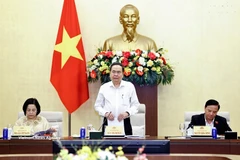
A session of the National Assembly Standing Committee. (Photo: VNA)

NA Standing Committee's key work agenda for 2026 approved

A major focus will be preparations for the election of deputies to the 16th NA and to People’s Councils at all levels for the 2026–2031 term. The NASC will coordinate with the National Election Council, the Government, the Vietnam Fatherland Front Central Committee, and relevant agencies and organisations to continue implementing the election plan, organise oversight of the electoral process, and carry out its duties and powers as prescribed.

Party General Secretary To Lam receives US Ambassador Marc Evans Knapper in Hanoi on January 9, 2026. (Photo: VNA)

Party leader receives outgoing US Ambassador

Vietnam always values its relationship with the US and looks forward to continuing close cooperation with the US government to deepen bilateral relations based on mutual respect for each other’s independence, sovereignty, territorial integrity, and political institutions, contributing positively to peace, stability, cooperation, and development regionally and globally.