National event announcing operations of two-tier local administrations slated for June 30

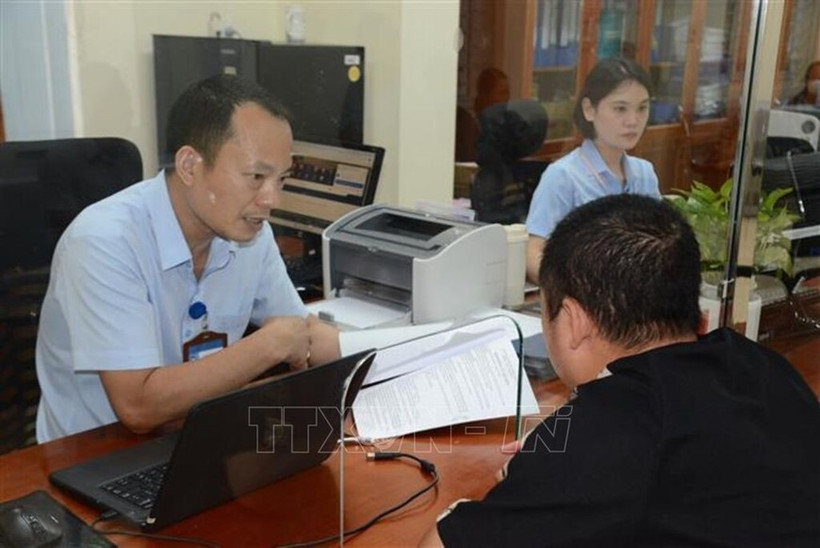
At the conference, participants reported that the Government has so far issued 28 decrees on the delegation of responsibilities and powers between the central Government and two-tier local administrations. Several localities have already piloted the new governance model.

Several localities have already piloted the new two-tier governance model. (Illustrative photo: VNA)

Hanoi (VNA) – Prime Minister Pham Minh Chinh has requested the organisation of a national event on June 30 to officially announce the implementation of new two-tier local administration model, which will begin full operations across the country on the next day.

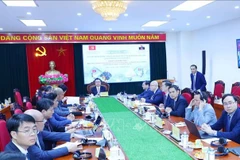
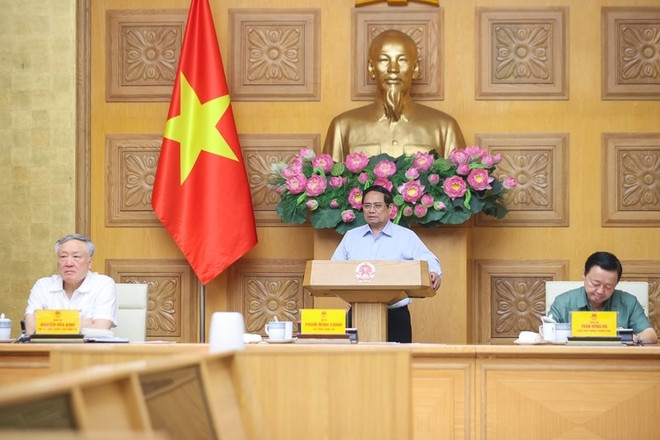
PM Chinh made the request while chairing a conference on June 20 to disseminate instructions from the Politburo, the Party Central Committee’s Secretariat, and Party General Secretary To Lam regarding key tasks for implementing the model.

At the conference, participants reported that the Government has so far issued 28 decrees on the delegation of responsibilities and powers between the central Government and two-tier local administrations. Several localities have already piloted the new governance model.

The Government has also held nationwide training sessions and introduced various mechanisms and platforms to address issues raised by grassroots authorities and citizens. Hotlines have been established by ministries and sectors to handle public inquiries on administrative services. Artificial intelligence and virtual assistants have been deployed to provide information and facilitate access to 1,800 public services, helping to promptly resolve issues at the grassroots level.

However, delegates acknowledged that several ministries and ministerial-level agencies have yet to issue guiding circulars. Some localities have not completed the necessary arrangements for office space, working conditions, or staffing. There have also been occasional failures in the IT infrastructure and software supporting online public services.
pm-pham-minh-chinh-bcp.jpg
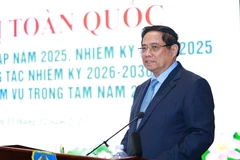
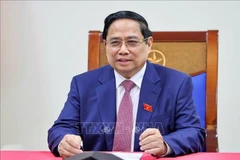
Prime Minister Pham Minh Chinh speaks at the conference. (Photo: baochinhphu.vn)

Recognising both the achievements and existing challenges, PM Chinh called for the urgent issuance of relevant legal documents to clearly define the decentralisation of power, thereby ensuring the smooth operations of the two-tier model without overlaps or legal gaps.

He requested all ministries and sectors to immediately set up permanent task forces to receive, respond to, and resolve issues arising during the implementation. Additionally, a meeting with all 63 centrally-run cities and provinces must be held to review matters related to office arrangements, working conditions, personnel allocations, and budget disbursement for those leaving their posts.

The PM stressed that by June 30, 100% of administrative procedures under the jurisdiction of ministries, sectors, and local authorities must be fully synchronised and unified across national- and provincial-level administrative procedure resolution systems. Furthermore, all localities must complete integration with the national public service portal, while all relevant agencies and all localities must upgrade and configure their IT systems to meet the requirements of administrative unit reorganisation and the operation of the two-tier administration model.

In addition, it is important to ensure full provision of 25 end-to-end online public services, already integrated into the national public service portal, to better serve both citizens and businesses, the government leader noted./.
VNA

See more

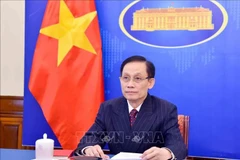
Vietnamese Minister of Foreign Affairs Le Hoai Trung (Photo: VNA)

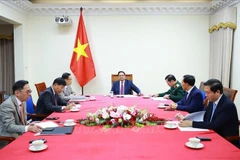
Vietnamese, Lao foreign ministers hold online talks

The two ministers agreed to maintain close coordination in the time ahead and to expand cooperation under the new framework and orientation, underscoring the significance of the two countries’ “great friendship, special solidarity, comprehensive cooperation, strategic cohesion”.

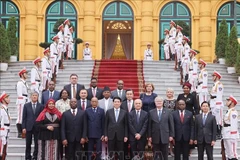
State President Luong Cuong (fourth from left, first row) and newly-appointed foreign ambassadors in Hanoi on December 12, 2025. (Photo: VNA)

State President receives newly-appointed foreign ambassadors

Receiving Egyptian Ambassador Hany Mostafa Mohamed Mostafa Hassan, President Cuong affirmed that Vietnam highly evaluates Egypt’s role, position, and contributions to regional peace and stability. He also congratulated the African country on its achievements in implementing the 2030 Vision.

An overview of the seminar on the Party’s leadership in ensuring macroeconomic stability, renewing the growth model, restructuring the economy and promoting international integration (Photo: VNA)

Vietnam, Cuba exchange theoretical views on Party’s leadership in macroeconomic stability

The two sides explored in depth the Party’s role in leadership, orientation, oversight and strategic coordination in economic management; approaches to implementing economic restructuring programmes alongside the renewal of the growth model; measures to respond to global economic volatility, inflationary pressures and shifts in global trade; and the building of effective strategic advisory bodies to ensure the Party’s comprehensive leadership in a changing context.

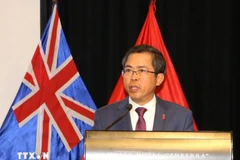
Vietnam’s Ambassador to Australia Pham Hung Tam (Photo: VNA)

Australia–Vietnam Policy Institute serves as bridge for bilateral relations

Established in 2022, AVPI serves as a forum for exchanging ideas among businesses, government agencies, non-profits, universities, and scholars in Australia on Vietnam. The institute acts as a platform for policy dialogue, focusing on research and insights on strategic relations and bilateral economic ties.

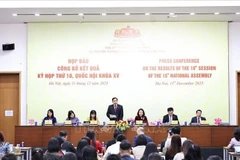
General Secretary and Chairman of the NA Office Le Quang Minh chairs the press conference announcing the results of the NA's 10th session (Photo: VNA)

10th session helps strengthen public trust in personnel work, NA’s supreme oversight

Personnel consolidation carried out at the NA's 10th session helps ensure continuous, unified, effective, and efficient leadership of the state apparatus; guarantee smooth and uninterrupted direction and governance; and prevent any leadership gaps in critical areas. All positions elected or approved by the legislature meet the key criteria required within the organisational structure.