Prime Minister orders swift implementation of two-tier local administration model

Under the official dispatch signed on June 20, ministers, heads of ministerial-level agencies, and chairpersons of provincial and municipal People’s Committees are requested to concentrate efforts on implementing core measures to ensure the smooth operations of the new administrative framework.

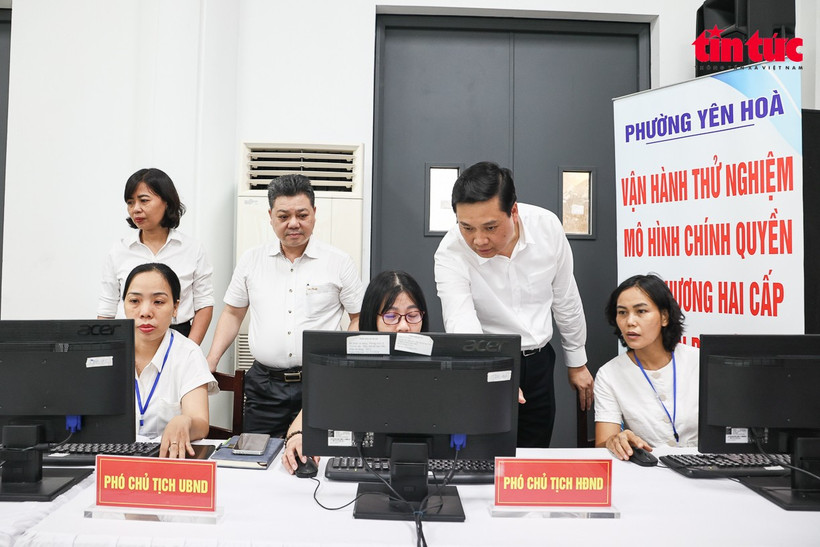
Leaders of Yen Hoa ward in Hanoi inspect the IT system on the first day of piloting the two-tier local administration model. (Photo: VNA)

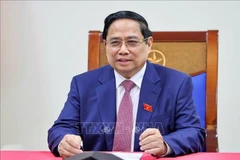
Hanoi (VNA) – Prime Minister Pham Minh Chinh has just signed an official dispatch, directing ministries, sectors and localities to focus on key tasks for the deployment of new two-tier local administration model, which is set to take effect from July 1, 2025.

Under the official dispatch signed on June 20, ministers, heads of ministerial-level agencies, and chairpersons of provincial and municipal People’s Committees are requested to concentrate efforts on implementing core measures to ensure the smooth operations of the new administrative framework.

Guidance on administrative procedures

Ministries and localities must monitor the rollout of decentralisation policies under Official Dispatch 87/CD-TTg and promptly resolve issues to maintain smooth operations.

They are also required to update and publish administrative procedures on the national database, as outlined in Official Dispatch 90/CD-TTg, with clear guidance for citizens, organisations and businesses.

Localities must closely oversee the formation of specialised provincial agencies, ensuring they align with central guidelines and meet all required criteria.

Redundancy-related entitlements payment no later than June 30

The PM also urges a thorough review and streamlining of procedures to ensure prompt payment of entitlements for public employees and civil servants made redundant due to the restructuring. Those who have already received redundancy decisions must be paid no later than June 30, 2025.

Ministries and sectors must maintain active task forces and hotlines to receive and handle queries and recommendations from local authorities and agencies. Exemplary units and individuals will be commended, while underperformers will face criticism or disciplinary action.
dong-thap-3.jpg
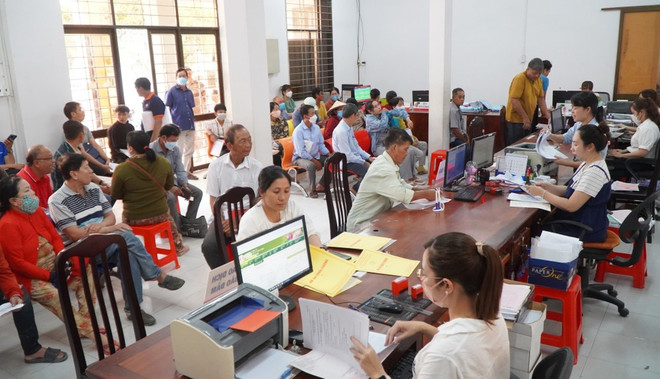
Residents carry out administrative procedures at the newly established My Tho Commune Public Administrative Service Centre in Dong Thap province. (Photo: VNA)

Instruction manual for commune-level People's Committees

Ministries must urgently issue circulars on decentralisation by June 25, 2025 and update or repeal outdated regulations to align with the new legal framework.

The Ministry of Home Affairs is tasked with advising on the approval of leaders in 23 new provinces and centrally-run cities and completing a handbook for commune-level People’s Committees by June 30.

Pilot operations of two-tier administration model

The Ministry of Justice, the Government Inspectorate, and local authorities must complete the reorganisation of inspection and civil judgment enforcement agencies, as directed by the Politburo and the Party Central Committee’s Secretariat.

Localities will begin piloting the two-tier local administration model by convening official meetings, operating management systems, and launching public service centres to handle administrative procedures and inter-agency coordination./.
VNA

See more

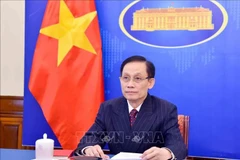
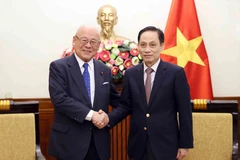
Vietnamese Minister of Foreign Affairs Le Hoai Trung (Photo: VNA)

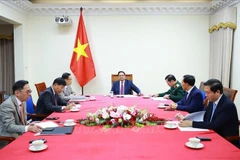
Vietnamese, Lao foreign ministers hold online talks

The two ministers agreed to maintain close coordination in the time ahead and to expand cooperation under the new framework and orientation, underscoring the significance of the two countries’ “great friendship, special solidarity, comprehensive cooperation, strategic cohesion”.

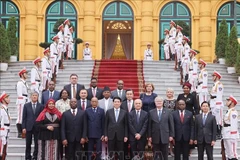
State President Luong Cuong (fourth from left, first row) and newly-appointed foreign ambassadors in Hanoi on December 12, 2025. (Photo: VNA)

State President receives newly-appointed foreign ambassadors

Receiving Egyptian Ambassador Hany Mostafa Mohamed Mostafa Hassan, President Cuong affirmed that Vietnam highly evaluates Egypt’s role, position, and contributions to regional peace and stability. He also congratulated the African country on its achievements in implementing the 2030 Vision.

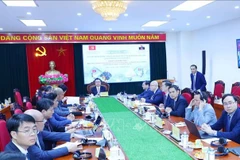
An overview of the seminar on the Party’s leadership in ensuring macroeconomic stability, renewing the growth model, restructuring the economy and promoting international integration (Photo: VNA)

Vietnam, Cuba exchange theoretical views on Party’s leadership in macroeconomic stability

The two sides explored in depth the Party’s role in leadership, orientation, oversight and strategic coordination in economic management; approaches to implementing economic restructuring programmes alongside the renewal of the growth model; measures to respond to global economic volatility, inflationary pressures and shifts in global trade; and the building of effective strategic advisory bodies to ensure the Party’s comprehensive leadership in a changing context.

Vietnam’s Ambassador to Australia Pham Hung Tam (Photo: VNA)

Australia–Vietnam Policy Institute serves as bridge for bilateral relations

Established in 2022, AVPI serves as a forum for exchanging ideas among businesses, government agencies, non-profits, universities, and scholars in Australia on Vietnam. The institute acts as a platform for policy dialogue, focusing on research and insights on strategic relations and bilateral economic ties.

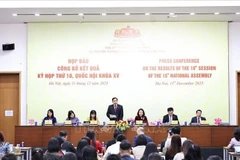
General Secretary and Chairman of the NA Office Le Quang Minh chairs the press conference announcing the results of the NA's 10th session (Photo: VNA)

10th session helps strengthen public trust in personnel work, NA’s supreme oversight

Personnel consolidation carried out at the NA's 10th session helps ensure continuous, unified, effective, and efficient leadership of the state apparatus; guarantee smooth and uninterrupted direction and governance; and prevent any leadership gaps in critical areas. All positions elected or approved by the legislature meet the key criteria required within the organisational structure.