New foundation champions bamboo for sustainability, heritage preservation

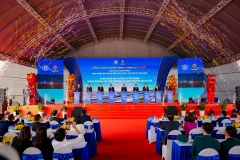
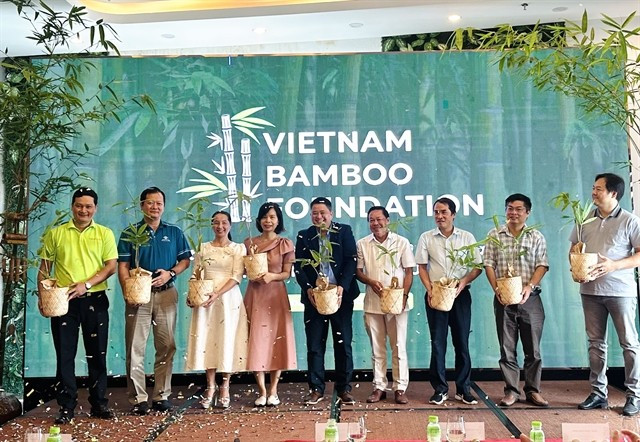
The Vietnam Bamboo Foundation was officially launched on August 2 in Ho Chi Minh City, alongside its initiative “Luy Tre Lang” (Bamboo Village), aimed at advancing a sustainable bamboo industry, preserving cultural identity, and tackling climate change through green and circular economic models.

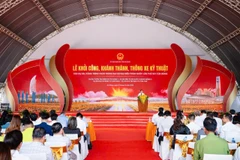
The Vietnam Bamboo Foundation is officially launched on August 2 in HCM City, alongside its initiative “Luy Tre Lang” (Bamboo Village). (Photo: VNA)

HCM City (VNS/VNA) - The Vietnam Bamboo Foundation was officially launched on August 2 in Ho Chi Minh City, alongside its initiative “Luy Tre Lang” (Bamboo Village), aimed at advancing a sustainable bamboo industry, preserving cultural identity, and tackling climate change through green and circular economic models.

The foundation, established by the social enterprise Bamboo Foundation, envisions bamboo as a powerful symbol of sustainability, innovation, and community resilience contributing to a greener, healthier, and culturally vibrant Vietnam.

With the message “Green bamboo for a green future”, it seeks to mobilise resources both domestically and internationally to unlock the full potential of the country’s bamboo sector, from production and creative industries to consumption.

Its mission is built around three core pillars: preserving and promoting the cultural, ecological, and social values of Vietnamese bamboo by supporting craft villages and revitalising traditional rural landscapes; raising public awareness about bamboo’s environmental and climate-resilient benefits through communications, environmental education, and green lifestyle advocacy; and fostering research and innovation to expand bamboo’s applications across architecture, fashion, construction, agriculture, and other industries.

Known for its rapid growth and carbon absorption capabilities far exceeding that of traditional hardwoods, bamboo is increasingly seen as a sustainable alternative to materials like plastic, concrete, and steel.

It also plays a crucial role in preventing soil erosion, rehabilitating degraded land, and generating high-value products.

Despite its ubiquity across the country and its deep cultural and economic significance, the bamboo sector remains underdeveloped and fragmented.

The newly introduced “Luy Tre Lang” initiative is the foundation’s first major step toward change.

It aims to develop bamboo-centric ecological communities nationwide, with key components including building eco-villages that integrate bamboo into architecture and everyday life; establishing community cultural hubs to preserve local heritage and promote traditional education; developing bamboo-based experiential tourism linked to environmental education; creating sustainable livelihoods through bamboo crafts, eco-agriculture, and green services; and encouraging low-carbon living and responsible consumption habits at the community level.

Nguyen Tuan Khoi, chairman of the foundation, said bamboo is more than a cultural symbol. It is a practical, scalable solution for sustainable development, identity preservation, and climate resilience.

“Through this initiative, we aim to create green belts of resilience and build communities that thrive while cutting carbon emissions.”

The launch also kicks off a series of events in the lead-up to World Bamboo Day (September 18) in Vietnam, including the Vietnam Bamboo Forum, which will bring together researchers, entrepreneurs, government representatives, and communities to develop integrated strategies for the bamboo sector’s sustainable growth./.

VNA
See more

A technician at the Digital Transformation Centre under the Department of Science and Technology of Khanh Hoa province performs cybersecurity tasks. (Photo: VNA)

Vietnam strengthens protection of human, civil rights in cyberspace

With more than 85 million Internet users, over 127 million active mobile subscriptions and approximately 79 million social media accounts, Vietnam’s digital space is not only a major driver of the digital economy but also a strategic domain for national defence, security safeguarding and the protection of human and civil rights.

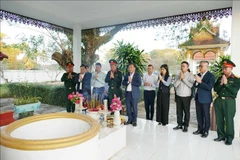
Pham Thi Thanh Tra, member of the Party Central Committee's Secretariat, Deputy Prime Minister and head of the National Steering Committee 515, along with other delegates, pays tribute to the fallen heroes. (Photo: VNA)

Memorial, reburial service held for 80 martyrs repatriated from Laos

Over the past four decades, the special task forces of the Vietnamese and Lao governments, together with Vietnam’s Ministry of National Defence, Military Region 4 Command and Nghe An province, have closely coordinated with Lao localities to search for and repatriate 12,897 sets of remains of Vietnamese volunteer soldiers and experts who sacrificed in Laos.

Representatives of the Primorye Region Association of Friendship with Vietnam lay flowers in tribute to President Ho Chi Minh. (Photo: VNA)

Flower tribute ceremony honours President Ho Chi Minh in Russia

Consul General Nguyen Viet Kien stressed President Ho Chi Minh’s reputation and career transcended Vietnam’s borders to inspire liberation movements worldwide, and that his ideas on the right to self-determination, peace, and friendship among nations remain deeply relevant today.

Copyright infringement has become widespread, highly organised and increasingly sophisticated. (Illustrative photo: VNA)

No tolerance for digital copyright infringement

According to experts, copyright protection in the digital era cannot rely solely on manual enforcement but requires integrated technologies such as content recognition systems, digital fingerprinting, rapid takedown tools, source tracing, advertising controls and financial monitoring.

Hanoi approves 100-year master plan, with Red River as a hub. (Photo: VNA)

Hanoi shapes future city with AI, TOD, 1,153km metro network

According to the new master plan, Hanoi's study area spans all 126 wards and communes within Hanoi’s administrative boundary, covering roughly 3,359.84 sq.km. Its population is projected to reach around 14–15 million by 2035, 15–16 million by 2045, and 17–19 million by 2065, with a long-term cap of no more than 20 million residents.

Vietnamese Ambassador to Russia Dang Minh Khoi, Chairman of the St. Petersburg Committee on External Relations Evgeny Grigoriev, Vice Chairman of the committee Vyacheslav Kalganov, and Deputy Chairman of the Legislative Assembly of the city Nikolay Bondarenko led a delegation in laying red carnations before the statue of President Ho Chi Minh (Photo: VNA)

President Ho Chi Minh’s 136th birthday observed in RoK, Russia

On the occasion of the 136th birthday of the late Vietnamese leader (May 19, 1890–2026), Professor Park Yeon Kwan, Head of the Department of Vietnamese Language at Hankuk University of Foreign Studies, described him as a great sage whose strategic decisions carried the vision of the times.

The Red River Scenic Boulevard Axis is designated as one of nine key development corridors of Hanoi. (Photo: VNA)

Hanoi details multi-billion-USD Red River scenic boulevard axis project

Under the capital’s master plan with a 100-year vision, the Red River Scenic Boulevard Axis is designated as one of nine key development corridors of Hanoi. It is envisioned as a central green spatial corridor, while also functioning as an economic, commercial, service, cultural, creative, and urban development axis along the Red River.

Defendants at the appellate trial in Hanoi on May 20 (Photo: VNA)

Appeal trial opens in food safety bribery case

The total amount of bribes received by the defendants in the case exceeded 94 billion VND, with former Director of the Vietnam Food Safety Authority (FSA) Nguyen Thanh Phong alone pocketing 43.9 billion VND.