Ninh Binh seeks UNESCO recognition of Han-Nom Inscriptions on Non Nuoc Mountain

Out of the 43 extant stone steles on the mountain, 37 are Han-Nom inscriptions dating from the Tran Dynasty (1225-1400) to the early 20th century. These inscriptions are unique original engravings, featuring imperial poems and prose composed by kings, poetic verses by scholars and poets, along with distinctive calligraphic and scriptural features.

Nguyen Manh Cuong, Director of the provincial Department of Culture and Sports, speaks at the conference (Photo: VNA)

Ninh Binh (VNA) - The Department of Culture and Sports of Ninh Binh province, in collaboration with the University of Social Sciences and Humanities and the Institute of Sino-Nom Studies, on June 4 organised an international scientific conference themed "Han-Nom Inscriptions on Non Nuoc Mountain – Potential Documentary Heritage."

This event aimed to gather opinions from foreign experts, scholars, and managers in the cultural field on the process of developing and finalising the nomination dossier for the Han (Chinese script) -Nom (Vietnamese ideographic script) Inscriptions on Non Nuoc Mountain, in Van Giang ward of Hoa Lu city to be inscribed in the UNESCO Memory of the World Programme for the Asia-Pacific Region.

Nguyen Manh Cuong, Director of the provincial Department of Culture and Sports, stated that Non Nuoc Mountain, recognised by the Prime Minister as a special national historical and scenic site, is not only renowned for its historical, cultural, and scenic values but also as a treasure trove of unique documentary heritage.

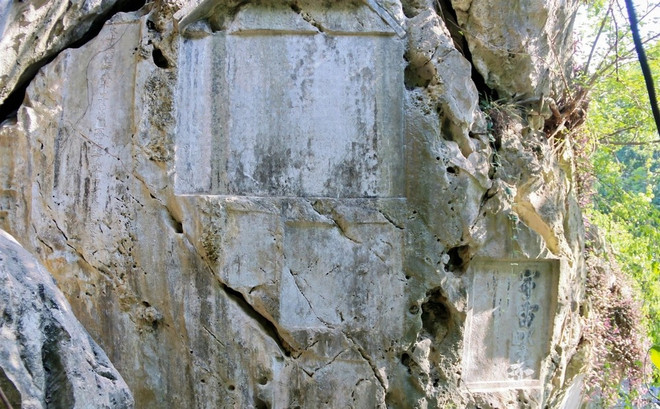
Han-Nom inscriptions carved on the cliffs here hold significant value in terms of history, culture, religion, belief, and literature–arts. They not only reflect the presence and development of Han-Nom literature in the former imperial capital but also serve as vivid evidence of the cultural, ideological, and religious exchanges that took place throughout various Vietnamese feudal dynasties over the centuries.
han-nom.jpg
Han-Nom inscriptions engraved on Non Nuoc Mountain cliff (Photo: dantri.vn)

Out of the 43 extant stone steles on the mountain, 37 are Han-Nom inscriptions dating from the Tran Dynasty (1225-1400) to the early 20th century. These inscriptions are unique original engravings, featuring imperial poems and prose composed by kings, poetic verses by scholars and poets, along with distinctive calligraphic and scriptural features.

At the conference, delegates focused their discussions on several key issues, including the inventory, identification, and assessment of the historical, cultural, heritage, and scientific values of the Han-Nom inscription system; matters related to the preservation, restoration, and promotion of these values in the broader context of heritage-based economic development; and sharing of domestic and international experiences and models in the management and sustainable utilisation of documentary heritage in line with local socio-economic development goals./.

VNA

See more

Delegates to the 107th meeting of the AIMF Executive Bureau 2026 (Photo: VNA)

Hue spreads heritage city values within Francophone community

Its participation marked an important step for the central city of Hue to expand its international partnerships, deepen integration with municipalities worldwide, and cement its role and standing as a dynamic and responsible heritage city within the Francophone network.

With its rich history, aesthetic grace, and spiritual meaning, the lotus stands as a central symbol in defining Hue’s cultural identity. (Photo: tapchidongnama.vn)

Lotus Festival lights up Hue’s summer

Scheduled for June 19-21 at Bong Lai Islet on Tinh Tam Lotus Lake in Phu Xuan ward, one of Hue’s most renowned scenic landmarks and a symbol of royal garden art, the festival draws inspiration from the lotus’s enduring beauty in court culture. The event aims to honour local heritage while offering visitors a distinctive summer tourism experience.

The “Vietnam Pavilion” at Aldea Global 2026 (Photo: VNA)

World Cup 2026: Vietnam leaves distinct mark at global cultural showcase

The “Vietnam Pavilion” at Aldea Global 2026 offers Mexican visitors and international guests an opportunity to explore the country’s rich cultural heritage, history and people through exhibitions, tourism promotion activities, traditional arts presentations and displays of representative cultural products.

Michelin Guide Vietnam recognises 11 one-Michelin star restaurants (Photo: Michelin Guide Vietnam)

Local ingredients, cultural roots propel Vietnam’s Michelin journey

One of the clearest examples is Hieu Luc, a modest fish soup eatery on Hai Ba Trung Street in Hanoi, which has been included in the Michelin Selected category for the second consecutive year. Known for its clear, delicately sweet broth made from freshwater perch and mustard greens, the restaurant serves a traditional specialty from Hung Yen province.

Delegates attending the ASEAN City Leaders Conference 2026 visit the Imperial Citadel of Thang Long on June 9. (Photo: VNA)

ASEAN city leaders explore Hanoi’s heritage sites

At the Imperial Citadel of Thang Long, delegates visited the Doan Mon Gate and learnt about the formation and development of the ancient capital through different historical periods at display spaces. They also explored the Kinh Thien Palace’s Dragon Steps (large stone steps with dragon carvings), regarded as the political and ceremonial centre of the imperial citadel during successive Vietnamese dynasties.

Ly Hoang Nam is Asia's No. 1 pickleball player. (Photo: webthethao.vn)

Ly Hoang Nam tops Asian pickleball rankings

Vietnam boasts five players in the DUPR Asian top 10, with Nam leading the rankings on 6,267 points ahead of competitors from the Philippines, India, Hong Kong (China) and Chinese Taipei.

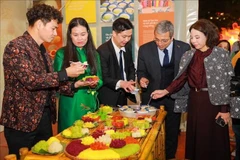
Visitors to the booth of the Vietnamese Embassy at the Embassies Food and Culture Festival held in Prague, the Czech Republic, on June 6 (Photo: VNA)

Vietnamese culture, cuisine leave lasting impression in Czech Republic

Featuring more than 100 booths representing diverse cultures from around the world, the festival transformed the heart of Prague into a vibrant multicultural space where visitors could sample traditional dishes, enjoy folk performances, listen to traditional music and experience unique cultural showcases from different continents.

Vietnamese artists play traditional musical instruments at the festival held in Karlovy Vary city, the Czech Republic, on June 5. (Photo: VNA)

Vietnam culture, cuisine showcased in Czech Republic

The festival featured more than 20 booths offering traditional Vietnamese dishes, including "pho" and spring rolls, alongside activities promoting Ao Dai (Vietnamese traditonal long dress). One of the highlights was the presentation of complimentary Ao Dai to Czech residents and international visitors.