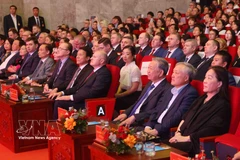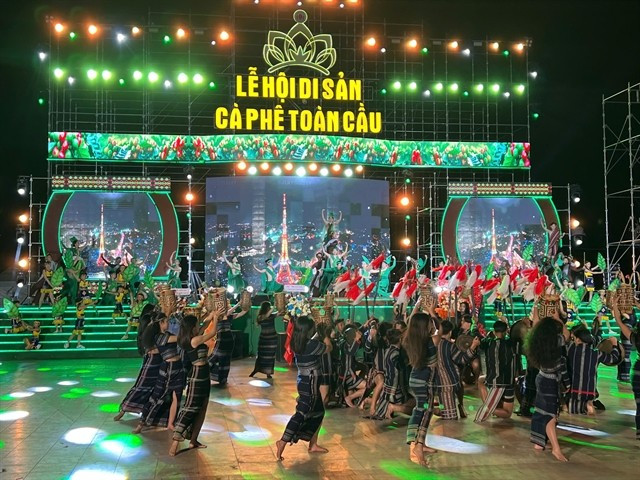
Lam Dong (VNS/VNA) – The Global Coffee Heritage Festival 2025 has officially started at Lam Vien Square in Da Lat, Lam Dong province, featuring a variety of activities that celebrate Vietnam’s coffee heritage and promote coffee culture worldwide.
Honouring heritage
Speaking at the opening ceremony, director of the province's Department of Culture, Sports and Tourism Nguyen Van Loc said that coffee has long transcended the boundaries of a mere agricultural or culinary product to become a cultural symbol, a living heritage linked to the history, life and identity of many countries around the world.
Not only is Lam Dong the largest producer of high-quality coffee in Vietnam, but it is also a place where creative trends, deep processing, coffee appreciation culture and coffee tourism converge. The festival thus holds special significance, showcasing the harmonious meeting of nature, people, heritage and the aspiration to reach out to the world.
Through various experiential spaces, exhibitions, cultural exchanges and international conferences, the festival will create an open forum where Vietnamese coffee is positioned within the broader flow of global coffee heritage, allowing industry insiders and coffee aficionados to connect and appreciate the beverage to spread alongside distinctive coffee cultures from many countries.
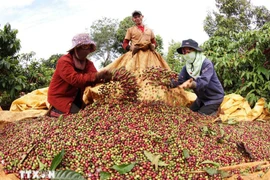
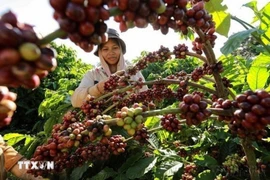
Le Hoang Diep Thao, founder and CEO of festival co-organiser TNI King Coffee, noted that coffee has been present in Vietnam for over 150 years. From the initial coffee cultivating regions in the Central Highlands, today more than 600,000 hectares of coffee are sustaining millions of households. Vietnamese coffee beans are now found in over 100 countries, contributing billions of dollars to the economy.
“However, the value of Vietnamese coffee doesn't depend only on its production or numbers. Its greater value resides in its identity, the spirit of hard work and the pride distilled in each coffee bean,” she said.
“The Global Coffee Heritage Festival is not just a festival; it is a long-term journey aimed at preserving, elevating and spreading the sustainable values of Vietnamese coffee – especially the Robusta heritage – within the broader flow of global coffee.”
Vietnam’s coffee capital
The first Global Coffee Heritage Festival is recognised as the starting point for a long-term strategy aimed at shaping Lam Dong into the capital of Vietnamese coffee, a place that embodies the core values of the coffee industry, from raw material sourcing and deep processing to innovation and international connections.
With its advantageous natural conditions, soil quality and highland climate, along with a rich history of coffee development, Lam Dong is gradually transforming from a key production area into an integrated hub of the coffee value chain. This transition contributes to enhancing added value, promoting sustainable development and spreading the identity of Vietnamese coffee to the world.
Through the festival, Lam Dong is positioned as an international dialogue space for the coffee industry, where policymakers, businesses, experts, artisans and the community come together to share knowledge, connect investment and create initiatives for the long-term future of Vietnamese coffee. It is a place where the story of Vietnamese robusta is told in the language of culture, creativity and global integration.
Promoting value
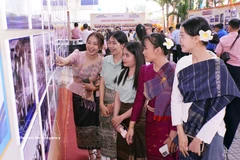
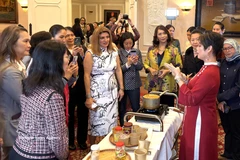
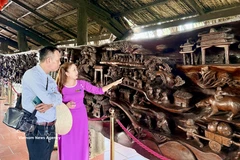
Taking place from December 21 to January 2, 2026, the Global Coffee Heritage Festival 2025 includes a diverse range of activities – a large-scale artistic opening and closing ceremony, an international coffee culture experience space, a heritage train journey, artwork made from Vietnamese robusta beans, a global barista competition, thematic workshops, and international conferences on the future of the coffee industry.
According to the organisers, each activity is not only an experience, but also an opportunity for collaboration and spreading the value of Vietnamese coffee to the world.
The festival is expected to become an annual event of international significance, laying the groundwork for future cooperation, investment and sustainable development initiatives.
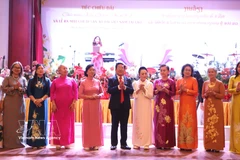
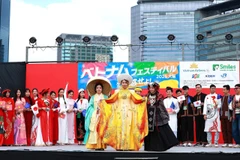
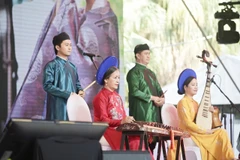
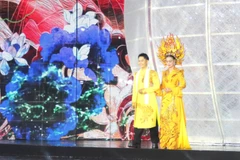
During the opening night, the audience enjoyed the special artistic programme entitled “Soaring into Global Coffee Heritage”, which was meticulously staged, featuring timeless melodies and dances from the Central Highlands and folk music pieces from Ethiopia, Brazil, Italy and more./.
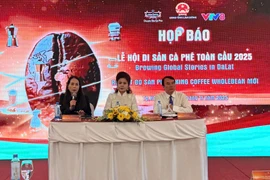
Global Coffee Heritage Festival to feature nearly-two-century journey of Vietnamese coffee
The Global Coffee Heritage Festival 2025 is a strategic milestone affirming Vietnam’s status as a global powerhouse in Robusta coffee exports and its capacity to become a hub for celebrating global coffee heritage, she said.