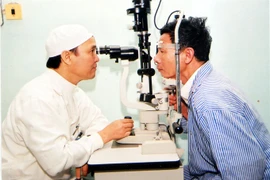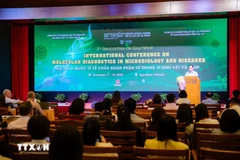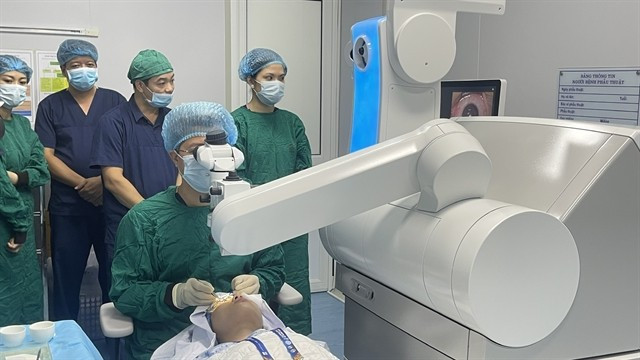
Hanoi (VNS/VNA) - Leading ophthalmology experts shared their experiences in preventing blindness and treating eye diseases at the 2025 Ophthalmology Conference in Hanoi on August 8-9.
The event was jointly organised for the first time by the Central Eye Hospital and the Ho Chi Minh City Eye Hospital, the two largest ophthalmology facilities in Vietnam.
The 2025 Ophthalmology Conference brought together leading ophthalmologists, attracting nearly 1,500 participants from local and international facilities.
Opening the event, National Eye Hospital director Pham Ngoc Dong said that the conference was a prestigious scientific forum to share the latest ophthalmological advances, technological applications in ophthalmology, treatment experiences, hospital management, and find optimal solutions in eye care and protection, contributing to the implementation of Vietnam's Vision goals by 2030.
“The Central Eye Hospital and Ho Chi Minh City Eye Hospital are the two largest ophthalmology facilities at the two ends of the country. Carrying forward the tradition of previous generations, today, doctors from the two hospitals continue to accompany and unite in the cause of eye care for the people,” said Dong.
According to experts, cataracts currently account for 74% of the main causes of blindness in Vietnam. In addition, other causes are posterior segment diseases (retinal detachment, diabetic retinopathy, macular degeneration, retinal hypertension); corneal scars; glaucoma; control of refractive errors, and complications of cataract surgery.
The conference also organised new knowledge updates through courses and specialised training in four areas, including children's eyes, glaucoma, diagnostic imaging, testing and corneal-related issues (corneal mapping) for students who are doctors, technicians, and nurses specialising in ophthalmology.
At the conference, a tripartite agreement on improving the knowledge and experience of ophthalmologists in examining, diagnosing and treating refractive errors, especially refractive surgery, was signed between the Central Eye Hospital, the Ho Chi Minh City Eye Hospital and Zeiss Vietnam Company. This is an important agreement to improve the quality of vision for people with refractive errors, especially myopia.
Speakers presented more than 119 topics, scientific research reports and technology applications in ophthalmic diagnosis and treatment, focusing on main scientific topics, such as Blindness prevention, hospital management and ophthalmic nursing, Children's eyes, Cornea, Vitreous and retinal surgery, Cosmetic surgery, Glaucoma, Trauma, Internal/surgical refraction.
On the sidelines of the conference, there was also an exhibition introducing domestic and international ophthalmic achievements, with the participation of domestic and foreign pharmaceutical and ophthalmic equipment companies and corporations.
Vietnam sets a goal to reduce the rate of blindness to fewer than four people per 1,000 by 2023. The country strives to increase the rate of cataract surgery to over 3.5 procedures per 1,000 people, with over 95% of cataract surgeries performed on blind people; to reach over 75% of people with diabetes; and to ensure that over 95% of school refractions are examined, detected, and adjusted early./.
Orbis International provides eye care training for health workers in Can Tho
Orbis International, a global non-profit organisation dedicated to preventing and treating avoidable blindness, has launched a clinical training programme on board the Flying Eye Hospital, a fully accredited ophthalmic teaching hospital on board a plane, for 52 eye-care professionals at hospitals in the Mekong Delta city of Can Tho.