Party chief orders removal of institutional bottlenecks in implementing Resolution 57

Party General Secretary To Lam emphasised that implementing Resolution 57 on breakthroughs in science, technology, innovation, and national digital transformation is a top priority and a key driver for strategic breakthroughs, thus transforming the country’s development model and establishing a new growth model in line with the spirit of the 13th Party Central Committee’s 13th meeting.

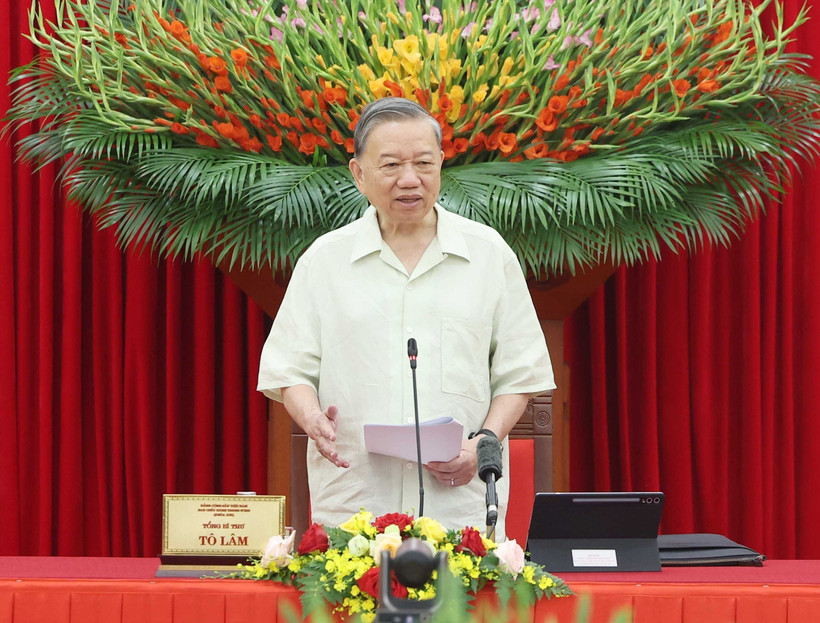
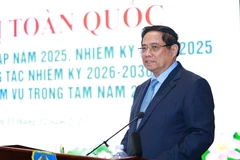
Party General Secretary To Lam speaks at the meeting. (Photo: VNA)

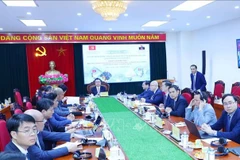
Hanoi (VNA) – Removing institutional bottlenecks must be treated as the top-priority breakthrough task in promoting science and technology, innovation, and national digital transformation in the spirit of the Politburo’s Resolution 57, Party General Secretary To Lam stated at a meeting on October 15.

The meeting, hosted by the Central Steering Committee for the Development of Science, Technology, Innovation and Digital Transformation, aims to review the implementation of Resolution 57 on breakthroughs in science, technology, innovation, and national digital transformation in the last nine months.

Party General Secretary To Lam, who is also Head of the Steering Committee, emphasised that implementing Resolution 57 is a top priority and a key driver for strategic breakthroughs, thus transforming the country’s development model and establishing a new growth model in line with the spirit of the 13th Party Central Committee’s 13th meeting.

He praised the efforts of all levels and sectors, highlighting the Central Steering Committee’s decisive role in guiding and monitoring implementation with concrete results. He also thanked domestic and international experts and overseas Vietnamese for their support of Resolution 57.

The leader stressed the need to strictly follow the directives of the 13th Party Central Committee’s 13th meeting, adhere to timelines without delay or avoidance, promptly address overdue tasks, and ensure sufficient resources for the scheme, aiming for concrete and measurable results rather than formalistic reports.

It is necessary to build an ecosystem and strongly mobilise social resources, placing businesses at the centre to fully tap private resources for science and technology development, and innovation, he said.
to-lam-2.jpg
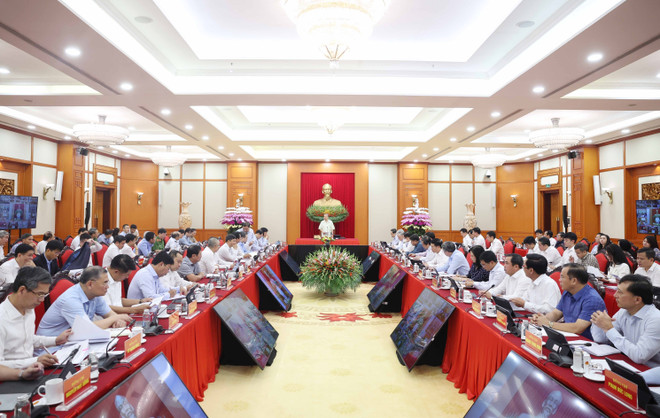
Party General Secretary To Lam chairs the meeting on October 15 (Photo: VNA)

Citizens’ and businesses’ satisfaction and trust should be the benchmark, he said, calling for comprehensive digitalisation of processes and the implementation of “all-in-one public service” based on interconnected data.

He ordered the “breakthrough implementation governance model” for complex and cross-sectoral tasks in the coming period. He stressed that all agencies, especially leaders, must set examples and be accountable to the Party, the State, and the people for performing tasks, ensuring timely completion, practical relevance, and effective results.

Party agencies from the central to local levels must implement their digital transformation plan for Party organisations effectively and follow the set roadmap, he went on.

The Party chief emphasised the importance of closely monitoring the development and quality of national databases, the efficient use and disbursement of state budget funds, and the real outcomes of science and technology commercialisation. He also called for independent and substantive social supervision and feedback on the quality of scientific research, innovation, online public services, and the implementation of national databases that directly impact citizens.

Each member of the Steering Committee and heads of sectors must maintain a pioneering and exemplary spirit—truly “talk less, act more, decisively and effectively.” They must implement initiatives within their agencies and units and submit recommendations to the Steering Committee on actions that bring benefits beyond their own sectors.

A decisive, transparent, and consistent approach is needed to implement these major directions, the Party leader said./.




VNA

See more

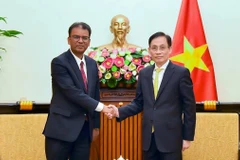
Minister of Foreign Affairs Le Hoai Trung receives Non-Resident Ambassador of Nepal to Vietnam Dhan Bahadur Oli in Hanoi on December 13, 2025. Photo courtesy of the Ministry of Foreign Affairs.

Vietnam, Nepal seek to promote deeper, substantive cooperation

Nepalese leaders attach great importance to relations with Vietnam and wish to learn from its experience and development models in socio-economic development and international integration, said Non-Resident Ambassador of Nepal to Vietnam Dhan Bahadur Oli.

Vietnamese Minister of Foreign Affairs Le Hoai Trung (Photo: VNA)

Vietnamese, Lao foreign ministers hold online talks

The two ministers agreed to maintain close coordination in the time ahead and to expand cooperation under the new framework and orientation, underscoring the significance of the two countries’ “great friendship, special solidarity, comprehensive cooperation, strategic cohesion”.

State President Luong Cuong (fourth from left, first row) and newly-appointed foreign ambassadors in Hanoi on December 12, 2025. (Photo: VNA)

State President receives newly-appointed foreign ambassadors

Receiving Egyptian Ambassador Hany Mostafa Mohamed Mostafa Hassan, President Cuong affirmed that Vietnam highly evaluates Egypt’s role, position, and contributions to regional peace and stability. He also congratulated the African country on its achievements in implementing the 2030 Vision.

An overview of the seminar on the Party’s leadership in ensuring macroeconomic stability, renewing the growth model, restructuring the economy and promoting international integration (Photo: VNA)

Vietnam, Cuba exchange theoretical views on Party’s leadership in macroeconomic stability

The two sides explored in depth the Party’s role in leadership, orientation, oversight and strategic coordination in economic management; approaches to implementing economic restructuring programmes alongside the renewal of the growth model; measures to respond to global economic volatility, inflationary pressures and shifts in global trade; and the building of effective strategic advisory bodies to ensure the Party’s comprehensive leadership in a changing context.

Vietnam’s Ambassador to Australia Pham Hung Tam (Photo: VNA)

Australia–Vietnam Policy Institute serves as bridge for bilateral relations

Established in 2022, AVPI serves as a forum for exchanging ideas among businesses, government agencies, non-profits, universities, and scholars in Australia on Vietnam. The institute acts as a platform for policy dialogue, focusing on research and insights on strategic relations and bilateral economic ties.

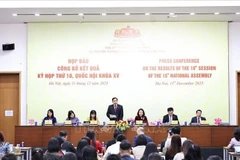
General Secretary and Chairman of the NA Office Le Quang Minh chairs the press conference announcing the results of the NA's 10th session (Photo: VNA)

10th session helps strengthen public trust in personnel work, NA’s supreme oversight

Personnel consolidation carried out at the NA's 10th session helps ensure continuous, unified, effective, and efficient leadership of the state apparatus; guarantee smooth and uninterrupted direction and governance; and prevent any leadership gaps in critical areas. All positions elected or approved by the legislature meet the key criteria required within the organisational structure.