VCCI Chairman Pham Tan Cong (Photo: VietnamPlus)
Hanoi (VNA) – The Vietnam Chamber of Commerce and Industry (VCCI) on April 11 released Vietnam’s Provincial Competitiveness Index (PCI) 2022 report.
This year's report shows some improvements in governance quality at the provincial level, but also reflects that administrative procedures in "sensitive" areas still face many difficulties.
Notably, the percentage of businesses that reported paying informal fees to tax officials increased to a worrying level, from 33.8% in 2021 to 54.5% in 2022.
The 2022 PCI report reveals the tremendous efforts of both businesses and provincial administrations to navigate through the first post-pandemic year.
According to the report, both domestic and foreign firms reported improvements in administrative procedures, reductions in the time costs of bureaucratic compliance, and getting rid from the burden of informal charge.
However, reforms in many policy areas are slow and business optimism remains low. Many firms report difficulties in access to finance, employment, and limited infrastructure growth. They also see a gap between policies and the implementation at the grassroots level.
Speaking at an event to release the PCI report, VCCI Chairman Pham Tan Cong said that since late last year, businesses in Vietnam have been facing multiple obstacles from the challenging economic context.
Provincial and municipal administrations are expected to further strengthen business support policies that contribute to a more enabling and stable domestic business environment to make up for the instabilities of the global market for firms, he said.
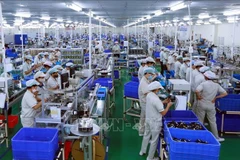
 2022 PCI report built on responses of 11,872 firms, including 10,590 domestic private businesses and 1,282 foreign-invested enterprises in Vietnam. (Photo: VietnamPlus)
The 2022 PCI report was developed from responses of 11,872 firms, including 10,590 domestic private businesses and 1,282 foreign-invested enterprises in Vietnam. Since the launch of the first PCI survey in 2005, nearly 176,500 businesses have participated in the annual surveys, reflecting different facets of the Vietnamese business environment.
This year, the northern coastal province of Quang Ninh once again topped the chart, marking the sixth consecutive year it has led the country in the ranking. It was followed by Bac Giang, Hai Phong, Ba Ria-Vung Tau and Dong Thap.
Since 2005, the VCCI and the USAID have cooperated to produce the annual PCI report to measure the quality of economic management, the level of convenience and friendliness of the business environment, and administrative reform efforts by provincial administrations, thus promoting the development of the private sector.
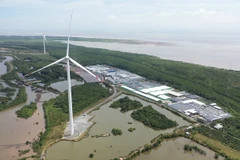
In this year’s report, the VCCI also launched the Provincial Green Index (PGI), an initiative developed by the VCCI with support from the USAID and private sector partners.
 VCCI on April 11 releases Vietnam’s Provincial Competitiveness Index (PCI) 2022 report (Photo: VietnamPlus)
The index evaluates and ranks provinces’ environmental policy from the perfective of businesses to promote better business behaviours and practices, including the application of new green technologies.
Tra Vinh, Lang Son, and Bac Ninh are the top three PGI performers in this inaugural edition.
USAID/Vietnam Mission Director Aler Grubbs said that for nearly two decades, VCCI’s successful PCI has prompted stimulating discussion and effective action around critical business climate issues.
“The new Provincial Green Index builds on this prior success, and it signals a greater recognition among the private sector that environmental considerations are equally important for business success and long-term economic growth,” he said.
PGI is expected to encourage provinces and cities in Vietnam to pay greater attention to environmentally responsive economic development, provide up-to-date information for investment/environment policy-making process, and promote an environmentally friendly business ecosystem that contributes to the country’s green growth orientation./.