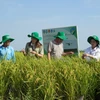
(Source: VNA)
VNA
(Source: VNA)


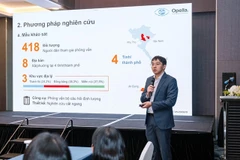
Self-care is an essential component of primary healthcare, with WHO defining it as the ability of individuals, families, and communities to promote and maintain health, prevent disease, and cope with illness with or without the support of healthcare professionals.
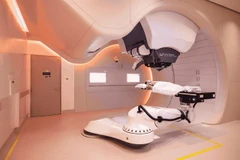
In recent years, Vietnam's Ministry of Health has held numerous meetings with relevant units to assess the progress in developing proton therapy centres in the country. The project for establishing proton therapy centres is set to commence preparations in 2025 and aims for completion between 2026 and 2030.
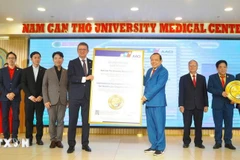
Nam Can Tho University Hospital on December 15 hosted a ceremony to announce its accreditation by the American Accreditation Commission International (AACI), a US-based body, becoming the first facility in the Mekong Delta and among a select few in Vietnam to earn the distinction.
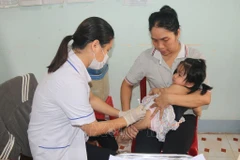
The meeting took place following an assessment by the World Health Organisation (WHO) warning that Vietnam is facing a very high risk of polio import and re-emergence. The risk arises after neighbouring Laos officially declared a polio outbreak on October 7, following the detection of circulating vaccine-derived poliovirus type 1 (cVDPV1).

WHO Representative in Vietnam Dr Angela Pratt said, “WHO is delighted with the decision to include e-cigarettes and HTPs in the list of banned enterprises under the Investment Law, without exceptions. This is crucial for upholding the National Assembly’s ban on these products – Resolution 173.”
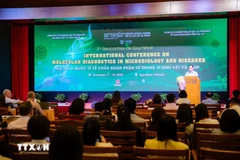
The conference features almost 80 presentations across plenary sessions, parallel sessions and poster sessions, focusing on leading research trends such as point-of-care diagnostics; predictive biomarkers used to anticipate individual responses to therapy; and the development of new tools and platforms for rapid molecular-level detection and diagnosis.

The association was established with three core missions: medical assistance, social support, and promotion of medical French - sending volunteer doctors to Vietnam, donating equipment, and helping medical students master French to secure clinical internships in France.
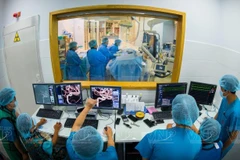
Canada has strong experience in compiling and analysing genomic data, while Vietnam has a large population with diverse genetic structures. This complementarity can help Vietnam narrow its technological gap and enhance its capacity to treat rare diseases — an area many countries are prioritising for development.
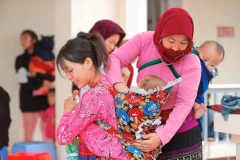
Resolution 72 not only focuses on health care but is also closely interlinked with other sectors, helping to build a solid foundation for sustainable national development and create momentum for Vietnam to “take off” and further integrate into the world.
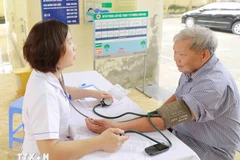
Existing social protection facilities currently meet only about 30% of demand.
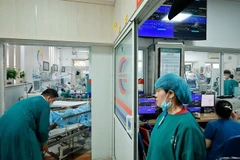
The total value of medical expenses not covered by the health insurance fund is estimated at around 24.8 trillion VND (942 million USD) per year. Health insurance contributions remain low, at 4.5% of the salary or reference base used for calculation.
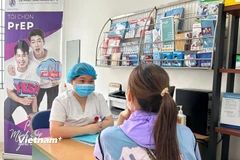
In 2023, the World Health Organization (WHO) hailed Vietnam as a leading country in the Asia-Pacific region in HIV pre-exposure prophylaxis (PrEP) treatment.

Over the past two decades, many Vietnamese experts have undertaken long-term missions at the Central Hospital 103 to provide training and technical assistance, contributing to the successful treatment of complex cases. The Central Military Hospital 108 has also trained 206 Lao doctors, six nurses and two engineers — a clear demonstration of substantive, long-standing cooperation.

As both nations look to keep their long-standing partnership in good health, the health ministries of Vietnam and Mexico have been accelerating cooperation, especially in traditional medicines.
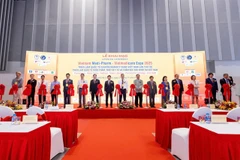
The 33rd Vietnam International Medical and Pharmaceutical Exhibition (Vietnam Medi-Pharm 2025) and the International Exhibition on Pharmaceuticals, Medical Devices and Healthcare (Vietmedicare Expo 2025) kicked off at the Saigon Exhibition and Convention Centre on November 27.
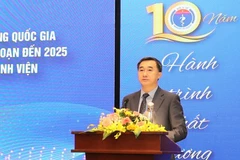
The goal for the next decade is to bring Vietnam's quality standards closer to international benchmarks, promote independent certification, introduce quality-linked payment mechanisms, and expand digital transformation.
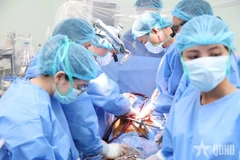
Surgeons at the 108 Military Central Hospital successfully carried out a multi-organ transplant using organs from a brain-dead donor on November 22, marking two consecutive weeks in November during which the hospital has helped save 29 patients.

“Our duty is to protect future generations through strong, decisive and evidence-based policies.”

The fact that the Vietnamese doctors have been awarded with FRCS certificate proves Vietnam’s surgical expertise has met international standards, contributing to improving the quality of treatment at home, expanding academic cooperation with world leading medical institutions and inspiring younger doctor to pursue higher standards.
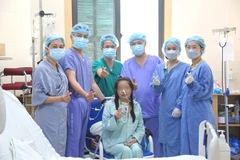
In mid-August, Viet Duc University Hospital announced that its doctors successfully performed Vietnam’s first-ever combined heart–lung transplant, marking a major step forward for the country’s medical field.