Philippines, Thailand strengthen air force capability with deals worth hundreds of US dollars

The Philippines and Thailand have announced their plans to buy attack fighters from the Republic of Korea (RoK) and Sweden, respectively.

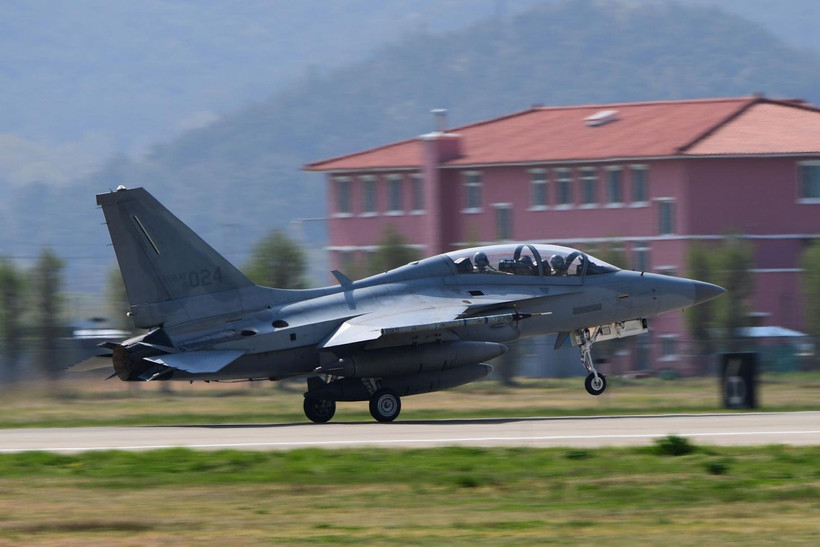
This photo shows an FA-50 fighter landing at an air base in the southwestern city of Gwangju, April 17. (Photo: Courtesy of the Korean Air Force)

Hanoi (VNA) - The Philippines and Thailand have announced their plans to buy attack fighters from the Republic of Korea (RoK) and Sweden, respectively.

The Korean defence firm Korea Aerospace Industries Ltd. (KAI) has signed a deal with the Philippine defense ministry to export 12 FA-50 light attack fighters by 2030, according to the RoK's Yonhap news agency.

The 700 million USD deal signed on June 3 marks the second round of FA-50 exports to the Philippines, following an initial deal signed in 2014 to supply 12 jets, according to the Defence Acquisition Programme Administration (DAPA).

The FA-50 has been exported to six countries, including Indonesia, Iraq, Malaysia, Poland and Thailand, so far. Prior to the Philippines deal, the RoK Korea last inked a deal to supply 18 jets to Malaysia in 2023.

Also the same day, Thailand announced plans to buy four Gripen fighter jets in a 500 million USD deal.

The announcement is the first phase of a 10-year plan to buy 12 fighter aircraft as Thailand updates its air power.

According to the Royal Thai Air Force (RTAF), the Gripen E/F models, made by the Nordic industrial giant Saab, will replace the Royal Thai Air Force’s older F-16 A/B jets bought in the 1980s.

Thai Air Force Chief Punpakdee Pattanakul said this is an important project to strengthen force to protect national sovereignty.

The procurement order will be submitted to the Thai cabinet for approval in mid-July, and is expected to be finalised by the end of August./.
VNA

See more

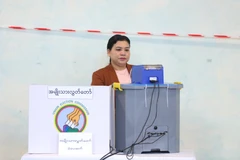
A voter casts her ballot in the general election at a polling station in Yangon, Myanmar. (Photo: Xinhua/VNA)

Myanmar begins second round of general election

This is the first election in Myanmar since the military government assumed power five years ago. A total of 57 political parties are participating in the election, including six parties running nationwide, with around 5,000 candidates vying for seats in the parliament.

A healthcare worker performs a swab test on a patient during influenza symptom screening at a community health centre in Banten, on January 7, 2026. (Photo: antaranews.com)

Indonesia reports first death related to so-called super flu

Yovita Hartantri, head of the New and Re-emerging Infectious Diseases Team at Hasan Sadikin Regional Hospital in Bandung, said the hospital treated 10 patients with influenza A subclade K between September and November last year. The patients exhibited a range of symptoms, with at least three developing severe complications.

Thailand enters technical deflation: Expert

Thailand enters technical deflation: Expert

Associate Professor Thanavath Phonvichai, President of the University of the Thai Chamber of Commerce and Chairman of the Centre for Economic and Business Forecasting, attributed the current bout mainly to lower production costs, particularly cheaper fuel and persistently low agricultural prices.

Indonesia spots four Sumatran tigers at national park

Indonesia spots four Sumatran tigers at national park

Camera traps installed in Bukit Tigapuluh National Park of Indonesia have recorded four individual Sumatran tigers (Panthera tigris sumatrae), providing strong evidence that the conservation area's ecosystem remains well preserved.

Deputy Prime Minister and Agriculture Minister of Thailand Thammanat Prompao (Photo: The Nation)

Agricultural envoys ordered to boost Thai crop exports

Deputy Prime Minister and Agriculture Minister of Thailand Thammanat Prompao said that the ministry is prioritising a “market-led, innovation-supported, higher income” strategy, built on three key pillars: strengthening confidence in core, established markets to protect Thailand’s market share; targeting high-potential products to open new opportunities, including dried seahorses, dried geckos, live crocodiles for consumption, and breeding crocodile parent stock for farming; and expanding networks by deepening cooperation with key trading partners, including China, and widening sales channels, such as digital platforms, so Thai products can reach consumers more directly.