PM charts Vietnam’s path at WEF’s policy dialogue

Prime Minister Pham Minh Chinh and President and CEO of the World Economic Forum Borge Brende discussed Vietnam’s new development vision and its experience in building an independent, self-reliant and globally-integrated economy, and navigating global instability through proactive diplomacy.

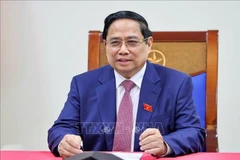
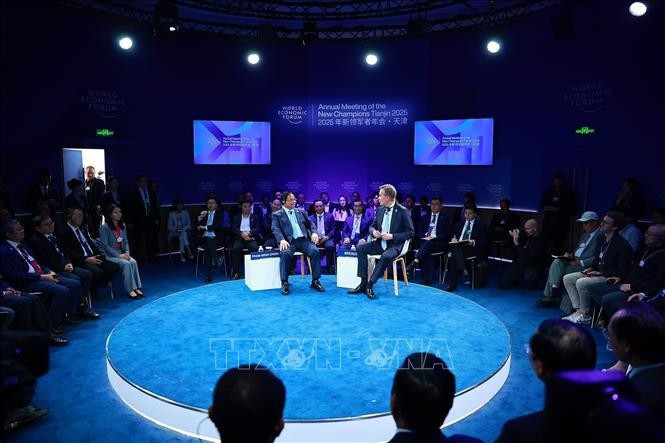
The policy dialogue themed “Vietnam’s New Era: From Vision to Action” on June 25, a highlight of the WEF's 16th Annual Meeting of the New Champions in Tianjin, China. (Photo: VNA)

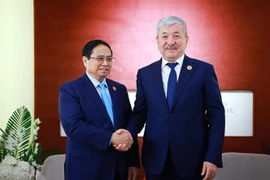
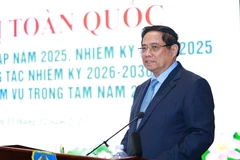
Tianjin (VNA) - Prime Minister Pham Minh Chinh engaged in a policy dialogue themed “Vietnam’s New Era: From Vision to Action” with President and CEO of the World Economic Forum (WEF) Borge Brende on June 25, a highlight of the WEF's16th Annual Meeting of the New Champions in Tianjin, China.

PM Chinh and President Brende discussed Vietnam’s new development vision and its experience in building an independent, self-reliant and globally-integrated economy, and navigating global instability through proactive diplomacy. Brende, clearly impressed, called Vietnam a standout success story for its resilience and relentless growth in a sea of global volatility.

When pressed on what’s fueling Vietnam’s momentum, Chinh outlined the country’s vision to become a high-income developed country by 2045, a goal underpinned by an ambitious target of 8% GDP growth in 2025, with double-digit growth projected thereafter.

Vietnam has every basis of achieve this goal, he said, pointing to a development path grounded in Marxism-Leninism and President Ho Chi Minh’s ideology, and a rich cultural heritage, all backed by a political system led by the Communist Party of Vietnam and a state “of the people, by the people, for the people”.

Such has propelled Vietnam to the third largest economy in Southeast Asia, nearing upper-middle-income status. With 17 Free Trade Agreements (FTAs) spanning 60 economies and a spot among the world’s top 20 trading economies, Vietnam’s high level of economic openness and crisis-hardened savvy position it well for continued growth, he said.
2vna-pham-minh-chinh-borge-brende-wef-tianjin-policy-dialogue-on-vietnam.jpg
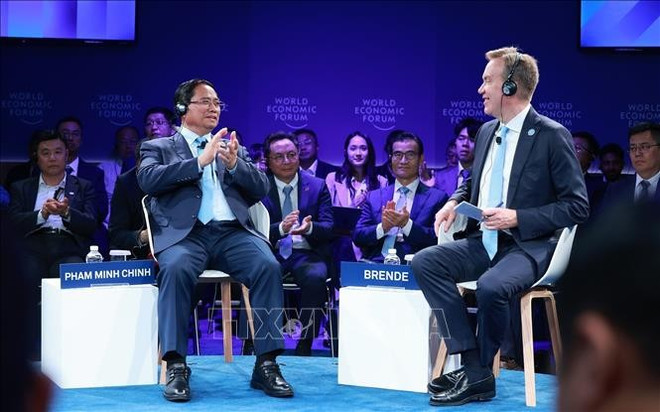
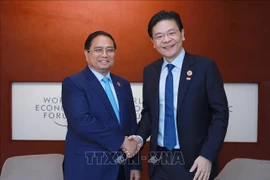
Prime Minister Pham Minh Chinh (L) and President and CEO of the World Economic Forum (WEF) Borge Brende at the event (Photo: VNA)

The dialogue also spotlighted Vietnam’s foreign policy, which Brende praised for balancing ties with major powers like China and the US, its two largest trade partners, accounting for half of its total trade. Chinh reaffirmed Vietnam’s foreign policy of independence, self-reliance, multilateralism, and diversification that positions the country as a trusted partner and a responsible member of the global community. Economically, he said, Vietnam is diversifying markets, products, and supply chains to remain agile amid global shifts.

On the building of a socialist-oriented market economy, the Government leader reiterated Vietnam’s determination to build an independent, self-reliant economy. “Internal resources remain the fundamental, strategic, long-term driver of growth, while external resources play a breakthrough role,” he noted.

Addressing global challenges, he urged unity and adaptability, framing crises as opportunities for nations with the right mindset and strategies.

The session wrapped up with a lively Q&A, where the Government leader fielded questions from international scholars and delegates, expounding on Vietnam’s recent reforms. He detailed overhauls in mechanisms, infrastructure, and human capital, alongside streamlined administrative procedures, decentralised governance, and a restructured political system with a two-tier local governance model./.
VNA

See more

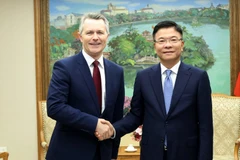
Vietnamese Minister of Foreign Affairs Le Hoai Trung (Photo: VNA)

Vietnamese, Lao foreign ministers hold online talks

The two ministers agreed to maintain close coordination in the time ahead and to expand cooperation under the new framework and orientation, underscoring the significance of the two countries’ “great friendship, special solidarity, comprehensive cooperation, strategic cohesion”.

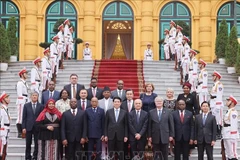
State President Luong Cuong (fourth from left, first row) and newly-appointed foreign ambassadors in Hanoi on December 12, 2025. (Photo: VNA)

State President receives newly-appointed foreign ambassadors

Receiving Egyptian Ambassador Hany Mostafa Mohamed Mostafa Hassan, President Cuong affirmed that Vietnam highly evaluates Egypt’s role, position, and contributions to regional peace and stability. He also congratulated the African country on its achievements in implementing the 2030 Vision.

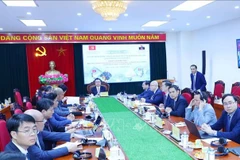
An overview of the seminar on the Party’s leadership in ensuring macroeconomic stability, renewing the growth model, restructuring the economy and promoting international integration (Photo: VNA)

Vietnam, Cuba exchange theoretical views on Party’s leadership in macroeconomic stability

The two sides explored in depth the Party’s role in leadership, orientation, oversight and strategic coordination in economic management; approaches to implementing economic restructuring programmes alongside the renewal of the growth model; measures to respond to global economic volatility, inflationary pressures and shifts in global trade; and the building of effective strategic advisory bodies to ensure the Party’s comprehensive leadership in a changing context.

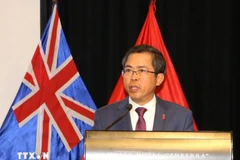
Vietnam’s Ambassador to Australia Pham Hung Tam (Photo: VNA)

Australia–Vietnam Policy Institute serves as bridge for bilateral relations

Established in 2022, AVPI serves as a forum for exchanging ideas among businesses, government agencies, non-profits, universities, and scholars in Australia on Vietnam. The institute acts as a platform for policy dialogue, focusing on research and insights on strategic relations and bilateral economic ties.

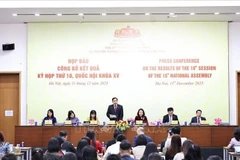
General Secretary and Chairman of the NA Office Le Quang Minh chairs the press conference announcing the results of the NA's 10th session (Photo: VNA)

10th session helps strengthen public trust in personnel work, NA’s supreme oversight

Personnel consolidation carried out at the NA's 10th session helps ensure continuous, unified, effective, and efficient leadership of the state apparatus; guarantee smooth and uninterrupted direction and governance; and prevent any leadership gaps in critical areas. All positions elected or approved by the legislature meet the key criteria required within the organisational structure.