PM demands solidarity, cooperation for private sector development

The PM asked leaders of ministries, ministry-level agencies, and provincial-level People’s Committees to prioritise sufficient capital and human resources for the resolution implementation, using public investments to lead private ones and leveraging state resources to catalyse those of people and businesses.

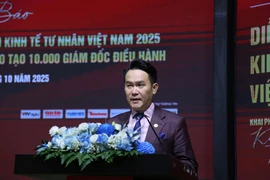
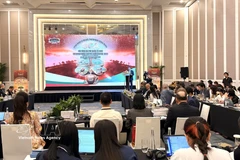
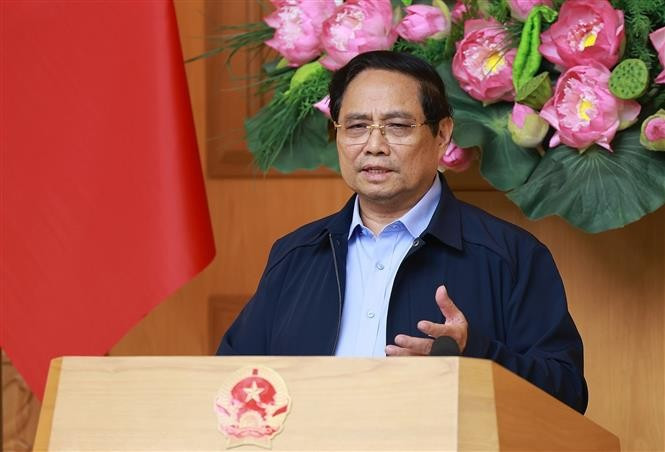
Prime Minister Pham Minh Chinh speaks at the second meeting of the national steering committee for implementing the Politburo’s Resolution No. 68/NQ/TW on the private sector development on November 1. (Photo: VNA)

Hanoi (VNA) – Prime Minister Pham Minh Chinh chaired the second meeting of the national steering committee for implementing the Politburo’s Resolution No. 68/NQ/TW on the private sector development on November 1.

As soon as Resolution No. 68 was issued, the National Assembly, the Government, ministries, sectors, and localities have released legal documents, particularly the Government’s Resolution No. 138/NQ-CP, dated May 16, and Resolution No. 139/NQ-CP, dated May 17, to promptly institutionalise and carry out it.

Participants in the conference, including officials and leaders of industry associations and businesses, shared the view that nearly six months since the Politburo issued Resolution No. 68, considerable improvements have been recorded in the entire society’s mindset and awareness of the private sector development, from central to local levels, among industry associations, in the public, and across the business community.

So far, all the 34 provinces and cities, along with 21 ministries, ministry-level agencies, and Government bodies, have worked out plans for developing the private sector.

Participants highlighted the enhanced administrative procedure streamlining, improved investment and business climate, and stronger institutional perfection to support private firms.
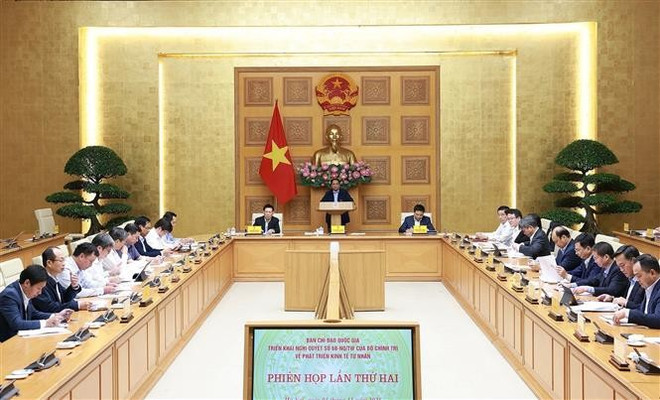
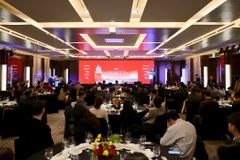
Prime Minister Pham Minh Chinh chairs the second meeting of the national steering committee for implementing the Politburo’s Resolution No. 68/NQ/TW on the private sector development on November 1. (Photo: VNA)

Prime Minister Pham Minh Chinh chairs the second meeting of the national steering committee for implementing the Politburo’s Resolution No. 68/NQ/TW on the private sector development on November 1. (Photo: VNA)

As a result, since May 2025, more than 18,000 companies are established each month, surging nearly 43% from the average of the first four months. During the 10-month period, nearly 262,000 new businesses were established or resumed operations nationwide, up almost 30% from a year earlier, adding more than 5.1 quadrillion VND (193.8 million USD) to the economy – surging nearly 99% year on year.

As of October 24, there were more than 1 million active businesses in the economy, statistics show.

Meanwhile, the state budget collection from the private sector during January–September topped 338 trillion VND, shooting up over 121%. That includes more than 25.2 trillion VND from business households and individuals.

PM Chinh, who is also head of the steering committee, underscored the request that ministries, sectors, and provincial-level authorities invest all-out efforts to further disseminate Resolution No. 68, build concrete action plans in line with Resolution No. 68 and others of the National Assembly and the Government, and concurrently implement and review the progress of each task to achieve the desired results.

He asked leaders of ministries, ministry-level agencies, and provincial-level People’s Committees to prioritise sufficient capital and human resources for the resolution implementation, using public investments to lead private ones and leveraging state resources to catalyse those of people and businesses.

He also assigned detailed tasks to each ministry and agency, including the Ministry of Finance, the Ministry of Agriculture and Environment, the State Bank of Vietnam, the Ministry of Industry and Trade, and the Ministry of Culture, Sports and Tourism, along with to localities, the Vietnam Chamber of Commerce and Industry (VCCI), and the Vietnam Association of Small and Medium Enterprises.

Businesses should to report difficulties and obstacles facing them to the Government in a timely manner while state agencies must listen to businesses’ opinions, PM Chinh added, calling for consensus, solidarity, and effective cooperation for shared benefits/.


VNA

See more

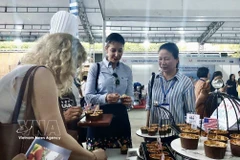
Visitors savor freshly prepared dishes on-site at the “Discover US Agriculture” programme, held on July 19, 2025 in Ho Chi Minh City. (Illustrative photo: VNA)

Vietnam, US work to step up agricultural cooperation

Vietnam has strengths in tropical farm produce, seafood and wooden products, while the US is a major supplier of key inputs such as soybeans, corn, wheat and dairy products. This trade structure creates a balanced supply chain with little direct competition, delivering tangible benefits to businesses and consumers in both countries.

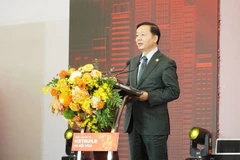
Deputy Prime Minister Tran Hong Ha speaks at the opening ceremony of the Vietbuild Hanoi International Exhibition 2026 on March 26. (Photo: VNA)

Vietbuild Hanoi 2026 International Exhibition opens

The five-day event, themed “Construction – Building Materials – Real Estate – Green Transport”, brings together more than 2,500 booths from domestic and international enterprises, reflecting the development momentum of Vietnam’s construction sector and the broader economy.

An overview of the International Coffee Conference 2026 (Photo: VNA)

Global Coffee Alliance launched to drive sustainable, inclusive growth

The Global Coffee Alliance is envisioned as a public–private partnership that bridges diplomatic efforts with business operations. Looking ahead to 2040, it aims to develop a global coffee ecosystem that is inclusive, technology-driven, and aligned with net-zero emissions goals.

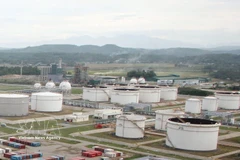
At Dung Quat oil refinery (Photo: VNA)

Vietnam races to restart idle ethanol plants to meet surging demand

Do Van Tuan, Chairman of the Vietnam Biofuels Association, said that monthly ethanol demand for the E10 blend is projected at 92,000–100,000 cu.m. The country’s six ethanol plants have a combined design capacity of roughly 41,000 cu. m per month, but only three are now running, churning out about 25,000 cu.m, or just 25–27% of demand. Even if every plant hits full tilt, local supply would cover only around 41% of national needs.

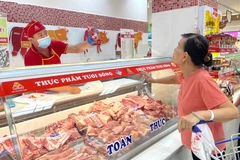
At a supermarket in Ho Chi Minh City (Photo: VNA)

Ho Chi Minh City to pilot pork trading on Mercantile Exchange of Vietnam

Nguyen Nguyen Phuong, Deputy Director of the municipal Department of Industry and Trade, said listing pork on the MXV will finally give consumers and firms more stable prices, while slapping on stricter food safety rules and making it easier to track where the meat actually comes from. Farmers, meanwhile, stand to gain from more predictable margins and dodge fewer of the supply-demand imbalances that routinely distort prices.

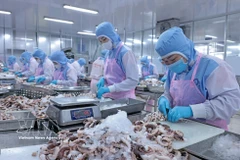
Processing octopus for export to the Japanese market at Huy Nam Company in An Giang (Photo: VNA)

Squid, octopus exports pick up early in 2026

In terms of product structure, squid has emerged as the main growth driver. Export turnover of squid exceeded 64 million USD, rising nearly 30%, while octopus exports brought in more than 47 million USD, up over 16%. The development indicates that demand for squid products is recovering faster in the short term.

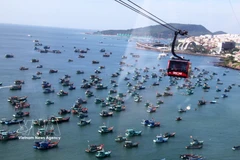
The world’s longest over-sea cable car to Hon Thom Island in the Phu Quoc special zone, An Giang province. (Photo: VNA)

An Giang steps up tourism development ahead of APEC 2027

Tourism in the province has recorded strong growth, affirming its position as one of the region’s leading destinations. Phu Quoc Island continues to attract the majority of international travellers, receiving more than 817,660 visitors, accounting for over 98.5% of total foreign arrivals to the province.

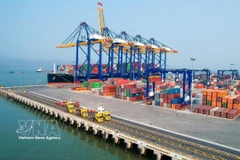
Import-export activities at Lach Huyen international port in Hai Phong (Photo: VNA)

Reducing risks, removing logistics bottlenecks amid Middle East volatility

According to Truong Xuan Trung, Trade Counsellor of Vietnam in the UAE, the Middle East serves not only as a consumption market but also as a key global transhipment hub, meaning instability in the region creates ripple effects across intercontinental transport networks. Shipping route adjustments and airspace restrictions have lengthened transit times, increased costs and disrupted delivery schedules, with some Vietnamese shipments forced to reroute or seek alternative markets.

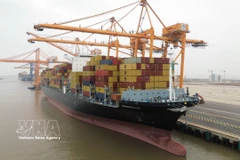
Cargo is handled at container terminals No. 3 and No. 4 of Hai Phong International Gateway Port. (Photo: VNA)

Businesses seek “survival momentum” amid global geopolitical turbulence

This is an urgent move as the challenges of 2026 differ markedly from previous ones, shaped by overlapping external shocks ranging from geopolitical tensions disrupting supply chains to surging logistics and raw material costs, exchange-rate pressures, and increasingly complex tariff barriers in global markets.

At the 2025 trade connectivity week for mechanical, electrical and digital industries. (Photo: VNA)

Ho Chi Minh City gives boost to supporting industry firms

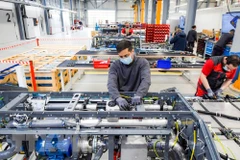
Supporting industry firms in Ho Chi Minh City are scrambling to embed themselves more deeply into both global and domestic supply chains, backed by a suite of local incentives that are speeding up their tech upgrades and market access.

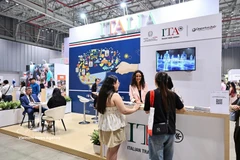
Italy's national pavilion at the ongoing Food & Hospitality Vietnam 2026 exhibition at Ho Chi Minh City's Saigon Exhibition and Convention Centre (SECC) draws visitors for hands-on experiences. (Photo: IVNA)

Italian food firms eye opportunities in Vietnam

Italy’s exports of food and beverages to Vietnam reached 105.1 million EUR in 2025, up 4% year-on-year, positioning the country among the leading EU suppliers to the Vietnamese market.

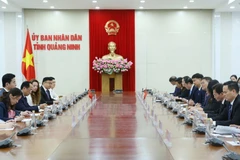
An overview of the working session (Photo: baoquangninh.vn)

Quang Ninh promotes all-round cooperation with Guangxi Zhuang Autonomous Region

Quang Ninh encourages Guangxi enterprises to invest in high-tech marine aquaculture and expand aquatic product exports in China. At the same time, the province aims to develop livestock farming in line with international standards and attract investment in deep-processing plants for agricultural products such as cinnamon, star anise and tea, linked with traceability systems at border gates.

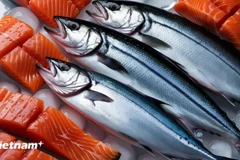
Illustrative image (Source: VNA)

Vietnam becomes fastest growing market for Norwegian salmon in Southeast Asia

The Norwegian Seafood Council (NSC) reported at the “Norwegian seafood industry in Vietnam market 2026” event held in Ho Chi Minh City on March 25 that fresh Norwegian salmon exports to Vietnam jumped 16% in volume in the first two months of 2026 compared with a year earlier, while frozen salmon shipments surged about 37%.