PM urges private sector to drive economic growth at ViPEL 2025

PM Pham Minh Chinh called on private enterprises to pioneer in achieving Vietnam’s two centennial development goals by aligning corporate strategies with national goals, joining patriotic movements through innovative, tech-driven products; and promoting equality, fairness, social progress and welfare to ensure no one is left behind.

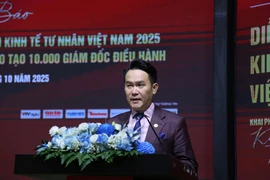
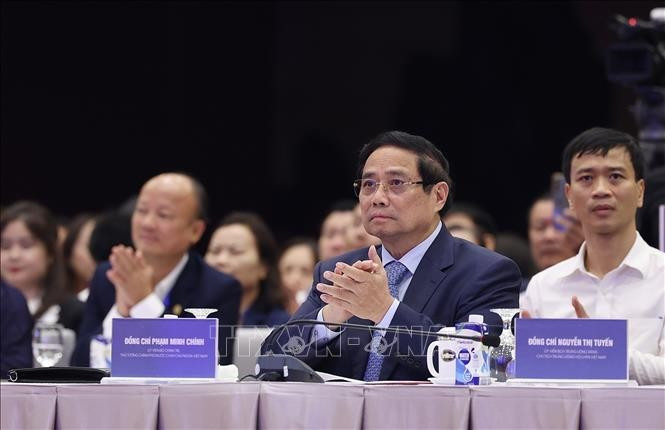
PM Pham Minh Chinh attends the plenary session of the Vietnam Private Economic Landscape Programme 2025 (ViPEL 2025) in Hanoi on October 10. (Photo: VNA)

Hanoi (VNA) - Prime Minister Pham Minh Chinh underscored the private sector’s role as a key driver of the socialist-oriented market economy during the plenary session of the Vietnam Private Economic Landscape Programme 2025 (ViPEL 2025) in Hanoi on October 10.

Addressing the event, held ahead of Vietnam Entrepreneurs’ Day on October 13 and marking the 80th anniversary of President Ho Chi Minh’s letter to the business community, PM Chinh highlighted the transformative impact of over 40 years of Doi Moi (renewal). Agriculture, he noted, lifted Vietnam from poverty to become a leading global rice exporter, while industry and foreign direct investment pushed the country past the lower middle-income threshold. He expressed optimism that sci-tech, innovation, and digital transformation would propel Vietnam toward high-income status.

He called on private enterprises to pioneer in achieving Vietnam’s two centennial development goals by aligning corporate strategies with national goals, joining patriotic movements through innovative, tech-driven products; and promoting equality, fairness, social progress and welfare to ensure no one is left behind.

They were also urged to grow holistically by harnessing internal strengths and surpassing limitations to become a leading force for growth, job creation, productivity, competitiveness, industrialisation, modernisation, and economic restructuring. Additionally, he advocated for extensive, substantive and effective global integration, enabling firms to compete on equal footing with global enterprises, advance in global value chains and adopt a long-term, ambitious development approach.
ht.jpg
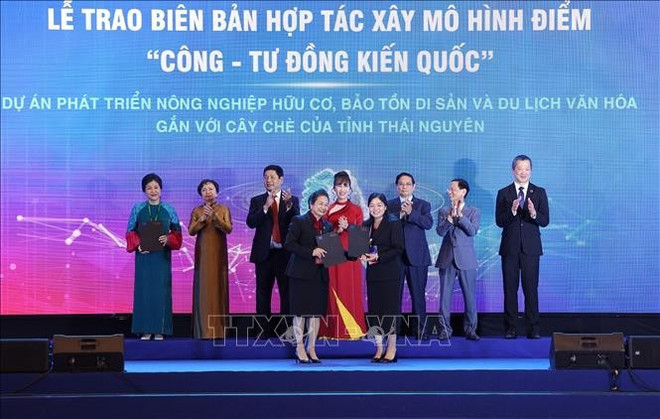
PM Pham Minh Chinh witnesses a signing ceremony to adopt the pilot public-private nation-building model. (Photo: VNA)

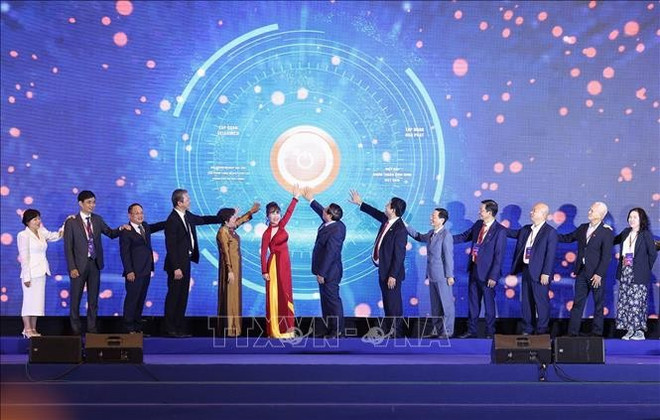
The session saw the launch of key initiatives, including the Vietnam Low Altitude Economy Alliance (LAE), the Vietnam Supporting Industries Manufacturers Alliance, and a 2025–2030 programme to enhance localisation and supporting industry capacity. A scheme was signed to adopt a pilot public-private nation-building model for 2025–2026, alongside a plan to honour outstanding entrepreneurs and enterprises.

Several cooperation agreements were exchanged, including a strategic partnership between Ho Chi Minh City and the Vietnam LAE Alliance, a deal between Ho Chi Minh City and Sovico Group for Metro Line 4, and another among Hanoi, Sovico, and UNESCO to develop a “Creative Capital” model rooted in heritage and traditional values. Others included the “Made in Da Nang” project and a Thai Nguyen project focusing on organic agriculture, heritage conservation, and cultural tourism linked to tea cultivation.

The event drew government officials, foreign diplomats, and over 500 representatives from international organisations, domestic and foreign business associations and enterprises.

ViPEL, one of the four tasks assigned by the Government to the Private Sector Development Research Board (Board IV) in coordination with the Ministry of Finance, aligns with the Politburo’s Resolution 68 to establish the private sector as a key economic driver.
ho-7558.jpg
PM Pham Minh Chinh and delegates debut the Vietnam Supporting Industries Manufacturers' Alliance. (Photo: VNA)

The programme featured sectoral sessions, including a Vietnam Women Entrepreneurs’ Forum to underscore women’s contributions to private sector growth. Panel discussions addressed sector-specific challenges, identified growth opportunities, and proposed cooperation projects under the “Public-Private Nation-Building” framework.

The plenary session reviewed discussion outcomes and unveiled key initiatives, including the “Public-Private Nation-Building” model and the ViPEL mechanism. These focus on public-private synergies, linking Vietnam’s value chains, promoting emerging technologies and innovation, advancing competitive industries, developing major infrastructure, and expanding resources and services through the ViPEL framework./.

VNA

See more

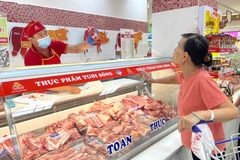
At a supermarket in Ho Chi Minh City (Photo: VNA)

Ho Chi Minh City to pilot pork trading on Mercantile Exchange of Vietnam

Nguyen Nguyen Phuong, Deputy Director of the municipal Department of Industry and Trade, said listing pork on the MXV will finally give consumers and firms more stable prices, while slapping on stricter food safety rules and making it easier to track where the meat actually comes from. Farmers, meanwhile, stand to gain from more predictable margins and dodge fewer of the supply-demand imbalances that routinely distort prices.

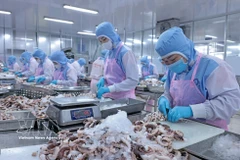
Processing octopus for export to the Japanese market at Huy Nam Company in An Giang (Photo: VNA)

Squid, octopus exports pick up early in 2026

In terms of product structure, squid has emerged as the main growth driver. Export turnover of squid exceeded 64 million USD, rising nearly 30%, while octopus exports brought in more than 47 million USD, up over 16%. The development indicates that demand for squid products is recovering faster in the short term.

The world’s longest over-sea cable car to Hon Thom Island in the Phu Quoc special zone, An Giang province. (Photo: VNA)

An Giang steps up tourism development ahead of APEC 2027

Tourism in the province has recorded strong growth, affirming its position as one of the region’s leading destinations. Phu Quoc Island continues to attract the majority of international travellers, receiving more than 817,660 visitors, accounting for over 98.5% of total foreign arrivals to the province.

Import-export activities at Lach Huyen international port in Hai Phong (Photo: VNA)

Reducing risks, removing logistics bottlenecks amid Middle East volatility

According to Truong Xuan Trung, Trade Counsellor of Vietnam in the UAE, the Middle East serves not only as a consumption market but also as a key global transhipment hub, meaning instability in the region creates ripple effects across intercontinental transport networks. Shipping route adjustments and airspace restrictions have lengthened transit times, increased costs and disrupted delivery schedules, with some Vietnamese shipments forced to reroute or seek alternative markets.

Cargo is handled at container terminals No. 3 and No. 4 of Hai Phong International Gateway Port. (Photo: VNA)

Businesses seek “survival momentum” amid global geopolitical turbulence

This is an urgent move as the challenges of 2026 differ markedly from previous ones, shaped by overlapping external shocks ranging from geopolitical tensions disrupting supply chains to surging logistics and raw material costs, exchange-rate pressures, and increasingly complex tariff barriers in global markets.

At the 2025 trade connectivity week for mechanical, electrical and digital industries. (Photo: VNA)

Ho Chi Minh City gives boost to supporting industry firms

Supporting industry firms in Ho Chi Minh City are scrambling to embed themselves more deeply into both global and domestic supply chains, backed by a suite of local incentives that are speeding up their tech upgrades and market access.

Italy's national pavilion at the ongoing Food & Hospitality Vietnam 2026 exhibition at Ho Chi Minh City's Saigon Exhibition and Convention Centre (SECC) draws visitors for hands-on experiences. (Photo: IVNA)

Italian food firms eye opportunities in Vietnam

Italy’s exports of food and beverages to Vietnam reached 105.1 million EUR in 2025, up 4% year-on-year, positioning the country among the leading EU suppliers to the Vietnamese market.

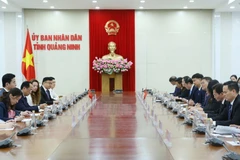
An overview of the working session (Photo: baoquangninh.vn)

Quang Ninh promotes all-round cooperation with Guangxi Zhuang Autonomous Region

Quang Ninh encourages Guangxi enterprises to invest in high-tech marine aquaculture and expand aquatic product exports in China. At the same time, the province aims to develop livestock farming in line with international standards and attract investment in deep-processing plants for agricultural products such as cinnamon, star anise and tea, linked with traceability systems at border gates.

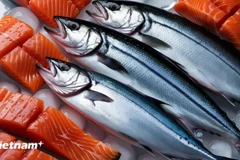
Illustrative image (Source: VNA)

Vietnam becomes fastest growing market for Norwegian salmon in Southeast Asia

The Norwegian Seafood Council (NSC) reported at the “Norwegian seafood industry in Vietnam market 2026” event held in Ho Chi Minh City on March 25 that fresh Norwegian salmon exports to Vietnam jumped 16% in volume in the first two months of 2026 compared with a year earlier, while frozen salmon shipments surged about 37%.

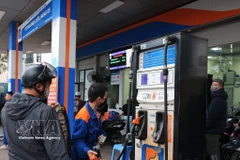
At a petrol station (Photo: VNA)

Energy giants work hard to roll out E10 RON95 sale ahead of schedule

Petrolimex and PVOIL, are in a strong position to accelerate the transition toward cleaner fuels. These companies have been actively preparing infrastructure, upgrading blending systems, and coordinating supply chains to ensure the availability of E10 RON95 across their nationwide retail systems.

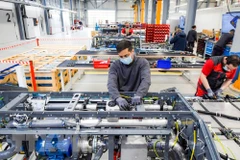
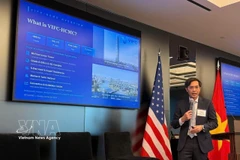
Deputy Prime Minister Nguyen Chi Dung visits Bosch Industrial in Stuttgart, Germany. (Photo: VNA)

Vietnam, Germany boost innovation, startup ecosystem connectivity

Deputy PM Nguyen Chi Dung highly valued CfE’s reputation and pioneering role in building Germany’s innovation-driven startup ecosystem, and called for stronger cooperation with NIC to support Vietnamese universities, research institutes and organisations in training and scientific research.