Hanoi (VNA) – The private sector is expected to be a key driver, contributing to a sustained high growth rate, particularly at two-digit growth rates, and helping Vietnam achieve high-income status by 2045.
The Politburo’s Resolution No. 68-NQ/TW on private sector development clearly states that the private sector is a crucial pillar to unleash the full potential of the economy.
In the context of declining traditional economic drivers, removing barriers and creating a favourable environment for this sector is regarded as a key for the country to advance in the new era.
Finding few foundations for economic growth
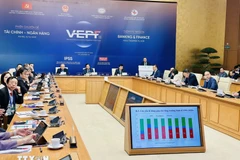
According to Dr Pham Anh Tuan, Deputy Director of the Institute of Vietnam and World Economy under the Vietnam Academy of Social Sciences (VASS), over more than three decades of development, Vietnam has mainly relied on familiar factors such as investment capital, a golden population advantage and a young workforce, along with trade and foreign direct investment. These have been important foundations that helped the country overcome difficult periods, achieve high growth rates for many years, and integrate deeply into the global economy.
However, these foundations no longer generate the strong momentum they once did. Tuan assessed that capital, labour, and foreign investment are no longer sufficient to sustain the momentum. Although social investment remains at a high level, its efficiency is low.
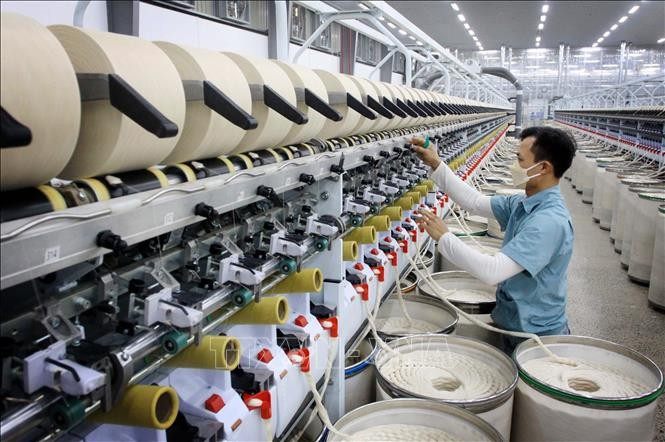
The large labour force continues to play an important role, but its quality has yet to meet the development requirements of the new phase. Although labour productivity has improved, it remains significantly lower than that of other countries in the region. The rapid ageing of the population has shortened the “golden population” advantage, which no longer serves as a long-term foundation to rely on.
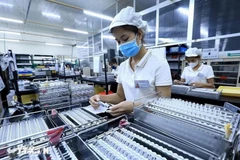
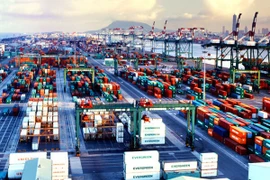
Additionally, while export activities and foreign investment attraction have increased strongly, the domestic value added in exported goods remains low. Domestic companies primarily engage in low-value segments of the production chain, heavily relying on imported materials and technology, which makes them susceptible to global market fluctuations.
Therefore, to achieve a breakthrough, the country needs to find new foundations. This includes improving institution quality, building a transparent business environment, ensuring property rights, and encouraging fair competition. Alongside these efforts, investment in science and technology, promoting research and innovation, and creating favourable conditions for businesses to start up are essential.
Developing the private sector must be a central focus. When given equal access to land, credit, technology, and markets, this sector can create numerous new jobs and tap into resources within society. This, in turn, will enhance productivity and help establish Vietnamese brands that can compete in the international market.
According to Tuan, this path will help Vietnam's economy establish new foundations for growth, creating opportunities to achieve double-digit growth targets and aiming to become a high-income country by 2045.
Challenges need to be overcome in new era
From another perspective, Dr Pham Sy An from the VASS said that Vietnam is facing a series of major challenges that need to be addressed by the private sector and the entire economy to realise its development aspirations.
Vietnam faces significant challenges concerning its workforce. Although the labour force is large, its quality remains limited. The proportion of workers who have undergone formal training and obtained degrees or certificates is still low, failing to meet the demands of digital transformation and the green economy.
Labour productivity, despite improvements, remains much lower than that of other countries in the region. Notably, expenditure on research and development (R&D) accounts for only about 0.5% of GDP, which is lower than the ASEAN average, hindering the breakthrough capacity for innovation within enterprises.
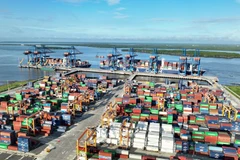
According to An, in addition to human resources, socio-economic infrastructure remains a bottleneck. Despite large investments, transportation and logistics systems, energy, and digital infrastructure fail to meet development requirements.
Other problems are institutions and the business environment. Despite significant reforms, the legal and policy framework is still inconsistent and overlapping, making it difficult for businesses to access land, credit, and market information. Private enterprises continue to encounter more obstacles than those in the foreign-invested sector. Notably, unofficial fees and legal risks remain burdensome, which undermines trust and discourages proactive long-term investment.
The requirements for sustainable development and environmental protection create major pressure. Rapid industrialisation and urbanisation are increasing air and water pollution, waste and the degradation of natural resources. Vietnam is also among the nations most affected by climate change, with the risks of sea level rise, natural disasters, and increasingly extreme weather. These factors require businesses to pay attention not only to growth but also to green, circular and environmentally friendly production models.
To overcome these challenges, An stressed the need for a concerted action programme focusing on institutional reform, improvement in human resources quality, investments in modern infrastructure, encouragement of innovation, and strengthening of the economy’s resilience. Creating a favourable environment for the private sector to thrive is also the key.
It is essential to promote the linkage between private firms and state-owned and foreign-invested ones to form industrial clusters and participate more deeply in the global value chain.
Developing the private sector is also coupled with green orientation, digitalisation and innovation to achieve rapid growth and ensure sustainable development, and increase national standing during the international integration process, he added./.