Public–private partnership to drive fintech, digital assets in Vietnam

That was proof that Vietnamese enterprises are fully capable of solving critical national challenges, even in complex areas like finance and technology, Thao stressed, adding that Resolution 68 of the Politburo, which recognises the private sector as a key engine of growth, has created a new chapter of opportunities and expectations.

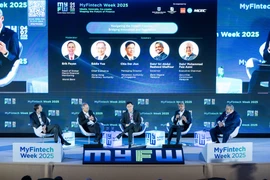
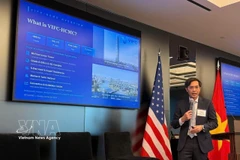
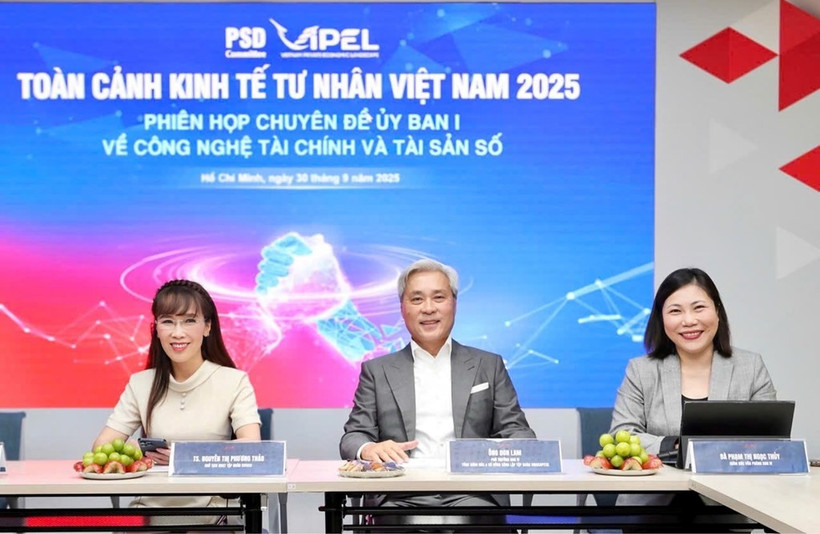
Delegates at the special session in Ho Chi Minh City on September 30, which focuses on advancing fintech and digital assets under the public–private co-creation framework. (Photo: VNA)

HCM City (VNA) – Vietnam is stepping up efforts to promote financial technology (fintech) and digital assets through a new public–private co-creation model, aiming to unleash innovation and strengthen the role of the private sector as a key driver of growth.

The Private Economic Development Research Board (Board IV) under the Prime Minister’s Advisory Council for Administrative Procedure Reform convened a special session in Ho Chi Minh City on September 30, focusing on advancing fintech and digital assets under the public–private co-creation framework.

The initiative seeks to connect entrepreneurs and enterprises while fostering emerging technologies. More importantly, it is designed to go beyond policy recommendations by implementing concrete programmes and projects that align with the Party and Government's major resolutions.

According to Don Lam, Deputy Head of Board IV and CEO of VinaCapital, fintech is not a niche concern but a vital factor to boost development of the private sector. By applying new technologies, businesses can significantly cut costs, improve efficiency, and integrate more deeply into international markets.

After more than 20 years in Vietnam’s financial investment sector, particularly in attracting foreign capital, Lam said he believes it is time to harness domestic strengths.

The core of this lies in comprehensive digitalisation, especially in finance, where technology plays a pivotal role in driving innovation and sustainable growth, he added.

Reaffirming the private sector’s capabilities, Nguyen Thi Phuong Thao, Chairwoman of Sovico Group, recalled “100-day rescue” of the Ho Chi Minh Stock Exchange (HOSE) in 2020, when trading was disrupted due to system overload. Working with FPT, Sovico helped restore operations using only private financial and technical resources.

That was proof that Vietnamese enterprises are fully capable of solving critical national challenges, even in complex areas like finance and technology, Thao stressed, adding that Resolution 68 of the Politburo, which recognises the private sector as a key engine of growth, has created a new chapter of opportunities and expectations.

To build an innovation ecosystem based on co-creation, experts highlighted the need for a joint investment mechanism.

Truong Ly Hoang Phi, Vice Chairwoman of the Ho Chi Minh City Young Entrepreneurs Association, proposed the establishment of a public–private matching fund to invest in emerging technologies such as artificial intelligence, semiconductors and DeepTech.

For example, if private companies commit 30% to 50% of investment, the State could match the remaining portion—whether at a 50–50, 55–45, or 70–30 ratio.

The exact split is flexible, but the critical point is the government's participation, which would create stronger incentives for private investment in high-risk, high-potential sectors, she said.

Phi added that start-ups supported or co-led by major domestic or international corporations should be granted preferential access to capital from such funds. This would not only reduce risks for innovators but also encourage larger corporations to expand into new fields while nurturing start-up ecosystems.

Vietnam is increasingly attractive to global technology corporations that are scouting start-ups in DeepTech, semiconductors and AI. Several Vietnamese start-ups have passed rigorous evaluations to become official partners of multinational groups.

However, experts noted that questions remain over what long-term support these start-ups will receive from the State once they become strategic partners. Without appropriate incentives, sustaining their engagement in the innovation ecosystem could prove difficult.

From this perspective, participants recommended that start-ups co-developed with large corporations should be eligible for preferential policies, particularly in accessing public–private matching funds. This approach would serve as indirect yet practical state support—bolstering start-ups, encouraging corporate investment, and building a co-innovation model where both sides grow together and generate new economic opportunities for the country, they said./.

VNA
See more

Vu Thi Thuy, Deputy Consul General and Head of the Vietnam Trade Office in Hong Kong Special Administrative Region (China). (Photo: VNA)

Hong Kong experience offers insights for Vietnam–Hong Kong trade cooperation

At this year’s Spring Fair, the Vietnam Trade Office in Hong Kong facilitated the participation of several Hong Kong enterprises in Vietnam to conduct market surveys, seek import sources and showcase their products. Notably, a company under the Hong Kong Productivity Council presented technological solutions for smart homes and smart manufacturing at the event.

People shop for Tet at a supermarket. (Photo: VNA)

Vietnamese goods dominate Tet market in Mekong Delta

In key retail hubs such as Can Tho, Long Xuyen and My Tho, high-quality Vietnamese goods account for 85–90% of Tet market share. Surveys at major supermarket chains and traditional markets show that consumers this year are prioritising locally-processed foods, confectionery and beverages.

Prime Minister Pham Minh Chinh strikes the gong to inaugurate the Vietnam International Financial Centre in Ho Chi Minh City. (Photo: VNA)

Int’l Financial Centre – A catalyst for Vietnam’s economic breakthrough: Deputy PM

Standing Deputy Prime Minister Nguyen Hoa Binh, who chairs the IFC’s Governing Council, said that the establishment of the centre in Ho Chi Minh City and Da Nang represented the initial realisation of a major task set out in the Resolution of the 13th National Party Congress. While characterising the launch as an early milestone rather than a final achievement, he underscored that it reflected meticulous, methodical and determined preparations at multiple levels of government.

Kobayashi Yosuke, Chief Representative of JICA Vietnam. (Photo: JICA Vietnam)

JICA hails milestones in Vietnam partnership amid green, digital push

In line with Vietnam’s development priorities and its goal of becoming a high-income country by 2045, JICA will continue to work with a wide range of partners in both Vietnam and Japan to mobilise technical and financial resources for more sustainable and inclusive cooperation

Vietnam International Trade Fair for Apparel, Textiles and Textile Technologies (VIATT 2026) is expected to expand its scale by 20% compared to last year's edition. (Photo: bnews.vn)

Int’l trade fair for apparel, textiles, textile technologies to open in Ho Chi Minh City

According to Vietrade, VIATT 2026 aims to promote the development of Vietnam’s textile and garment industry by enhancing production technologies, strengthening sustainability, and expanding technical textile segments. The event is expected to create opportunities for international businesses to tap into the growth potential of Vietnam and ASEAN, while enabling domestic enterprises to connect more effectively with global buyers.

Participants at a conference on digital assets in Hanoi on December 10. (Photo: VNA)

Finance ministry seeks public feedback on minimal tax on digital assets

Under the draft, the transfer and trading of crypto assets would not be subject to value-added tax. Individual investors, regardless of residency status, would be required to pay personal income tax at a rate of 0.1% on the gross value of each transfer. This approach mirrors the current tax method applied to securities transactions.

Steel products of Hoa Phat Group. (Photo: VNA)

Vietnam aims to meet 80–85% of domestic steel demand by 2030

Vietnam aims to meet 80–85% of domestic steel demand by 2030. Crude steel production is targeted at 25–26 million tonnes per year, with annual growth of 7–8%, while finished steel output is expected to reach 32–33 million tonnes per year, growing by 5.5–6.5% annually. Per capita steel consumption is projected at 270–280 kg per year.

One of the products granted Halal certification in 2026. (Photo: moit.gov.vn)

Spring Fair 2026 boosts momentum for Vietnam’s Halal sector

The fair’s greatest value for Halal products lies less in immediate revenue than in building trust and standardising business practices. In a market where certification determines entry, it highlights that expansion must begin with fundamentals, standards, raw materials, production processes and readiness.

Prime Minister Pham Minh Chinh speaks at the fifth meeting of the Steering Committee for Nuclear Power Plant Construction. (Photo: VNA)

PM calls for more vigorous implementation of nuclear power projects

Describing nuclear power plants as nationally significant, strategic projects with a century-long vision, PM Chinh called for urgent and responsible implementation of tasks within assigned authority, with any outstanding issues promptly reported to higher authorities.